The Comet Parties of Joplin

A photograph of the comet in 1910 via Wikipedia.

The year 1910 witnessed the passing of one of America’s greatest authors and one of the galaxy’s most famous celestial events. Missourian and celebrated author Mark Twain was born in 1835, the same year that Halley’s Comet made an appearance, and by sheer coincidence, he died shortly after the comet graced the heavens once again in 1910. The comet’s brief appearance sparked interested across the world and Joplinites took note.

The comet, which only returns every 75 to 76 years, was quite the big deal and Joplinites were not going to miss out on enjoying it. Invitations were sent to friends and family that stated, “You are cordially invited to attend a Halley comet party which will be held on the roof of our home tomorrow morning at 3:30 o’clock,” or so the Joplin Daily Globe claimed in the May of 1910 in its coverage of the once in a lifetime event. The same article noted that comet gazers had an extra treat in the presence of a spectacular Venus, the “celestial celebrity.” The paper claimed hundreds of Joplin residents were awake for the opportunity to see the visitor, which became visible around 3:45 am and grew brighter over the next thirty minutes. The Halley’s Comet parties were, the headline proclaimed, “the Latest and Most Popular Functions.”

The last time Halley’s Comet visited Joplin, as well the rest of the planet, was 1986. For those who missed it they will have to wait until 2061.

The Architectural Legacy of Garstang & Rea: The Grome Building on Main Street Joplin

Grome Building in Joplin Missouri

Grome Building sometime before 1913.

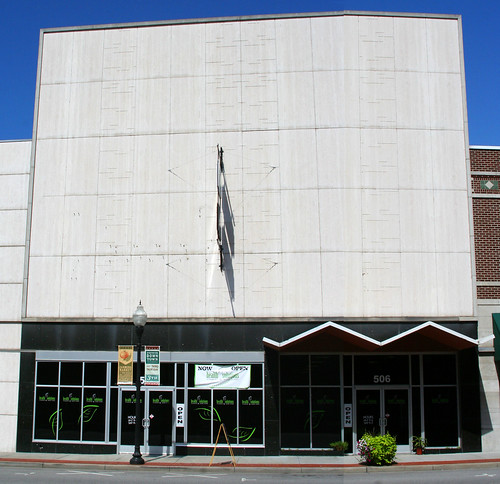
The Grome Building was constructed in 1901 at a cost of $24,000 (more than $548,436.36 in 2011 dollars) for Edward Zelleken, one of Joplin’s wealthiest German immigrants. The building at 506 S. Main Street was home to the Ben F. Wurzel Clothing Company and medical and dental offices. Notably, the offices of Garstang & Rea were located in the Grome Building home until their move to California. In later years, the building was home to Ralph L. Kassab’s business. At some point in the second half of the twentieth century, the beautiful facade was replaced with the current exterior. Nonetheless, the Grome Building still stands, one of the century old residents of Joplin’s historic Main Street.

Grome Building in Joplin Missouri Today

Grome Building as of July, 2010.

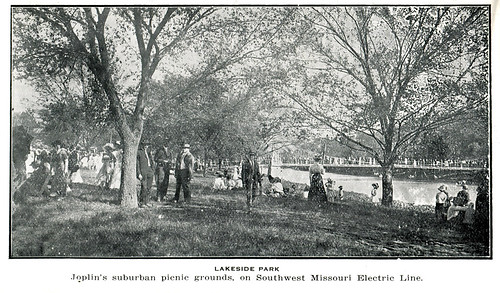
Take Me Out to Lakeside

Via Wikipedia.

Via Wikipedia.

African American ragtime musician James Scott, who spent his formative years in Carthage, Missouri, entertained crowds at Lakeside Park, just outside Joplin. In 1914, Scott wrote music for a song he called, “Take Me Out to Lakeside.” The words are by Ida Miller.

Take Me Out to Lakeside (1914)

First verse:

Take me to “Lake-Side” that beautiful place,
Where your life seems complete,
Orchestras playing and everyone swaying gives you such a treat,
Dancing and glancing with smiles so entrancing is all you can see
The Waltz hesitation is all the sensation,
Oh come and dance with me.

Refrain:

Take me out to Lakeside Sunday afternoon,
Where the band is playing, Flowers all in bloom,
Boys and girls together happy as a lark,
Take me out to “Lake-Side”
Beautiful Lake-side Park, park.

Second verse:

When twilight draws near and the whole world seems drear,
And you’ve no place to go,
You may sit guessing but no thought expressing The pleasures you love so,
You think of your only while you feel so lonely it all
Seems a dream
So while you are pining there comes a reminding,
A glorious thought it seems.

Refrain:

Take me out to Lakeside Sunday afternoon,
Where the band is playing, Flowers all in bloom,
Boys and girls together happy as a lark,
Take me out to “Lake-Side”
Beautiful Lake-side Park, park.

To listen to a sample of the song, visit this link at Pandora Radio.

George Sears

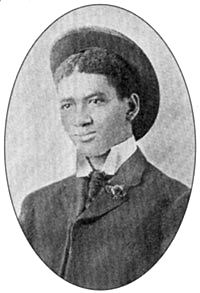
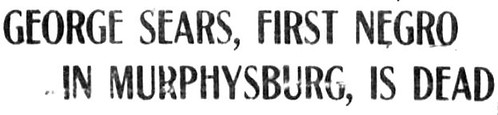
In 1907, the front page of the Joplin News-Herald featured the obituary of George Sears. Obituaries on the front page were not uncommon, but in this case it was unusual that Sears was featured so prominently because he was African-American. Both the Joplin Globe (a Democratic paper under Gilbert Barbee) and the Joplin News-Herald (the city’s Republican paper) failed to highlight the lives of the city’s African American residents, save for when they were caught committing crimes.

His obituary stated,

“’Uncle’” George Sears, one of the best known and most highly respected colored citizens of Joplin, died at his home, 112 Pearl Street [Avenue], this morning at 9:30 o’clock. Uncle George would have been 60 years old in seven days and has been a resident of Joplin ever since there was a Joplin. He was the first negro in Murphysburg.

He was born in Louisville, Kentucky, in 1847, and came to Joplin when a young man. When he first came to Joplin, he engaged in mining which he followed until he became too old to work in the ground. He then took up janitor work of the M.E. Church on Fourth and Wall Streets. He joined the Baptist church when young and was a Baptist deacon for about twenty years. He was also a member of the K.P. and Masonic lodges.

Uncle George has distinguished himself several times in the Republican convention by making speeches and exerting his influence for the party. He had gained a famous reputation as a barbecue cook and was always in demand.

He was married in 1885 and leaves a wife and three daughters and one grand-granddaughter. A few years ago, out of pity for two little orphan boys, Deacon Sears adopted them and they were often seen with him. The arrangements for his funeral have not yet been completed, pending word from a minister. Throughout his life in Joplin, Uncle George bore a spotless reputation and stood well among all those who knew him.”

Rarely does one see such an obituary for an African-American in any of the early Joplin papers. From his obituary, however, it is clear that George’s passing was featured on the front page for several reasons: One, he was the “first negro in Murphysburg.” Second, he was an active participant in local Republican politics. It is possible he worked to secure African-American votes for Republican candidates which, the News-Herald being a Republican paper, may have been grateful for. Third, he was known as a top-notch barbeque cook, and probably served up ‘cue to a large segment of Joplin’s population throughout the years.

Merry Christmas from Historic Joplin!

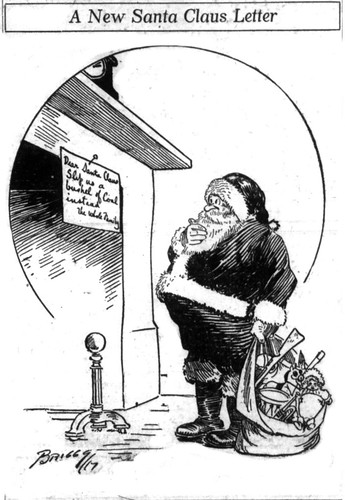
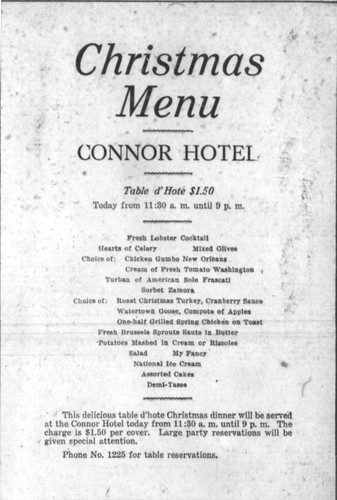
We hope everyone is has a Merry Christmas today, and if you happen to celebrate other holidays this time of year, we hope those were/are just as great! Above is a political cartoon from 1917, in which a child leaves a note for Santa Claus that puts the welfare of her family over wonderful new toys. Below is a menu from the Connor Hotel for those wanting to enjoy their Christmas dinner at the Connor in 1918.

Click on the menu to find a larger version.

Kansas City Bottoms: Part II

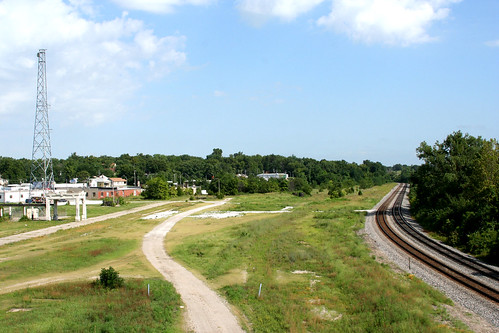
A portion of the Kansas City Bottoms was leveled to make way for the new Union Depot station (left side of photo).

As time passed and mining operations relocated across the area, the Kansas City Bottoms was transformed as “a few factories and mills” dotted the valley and its hillsides. Although there was talk that the Kansas City Southern Railway would build rail shops in the bottoms, the project never came to fruition.

This led to an effort to “more or less isolate the city’s riff-raff of humanity there. It became a sort of ‘red-light’ district, and flourished with gayety, containing gambling houses, saloons, dance halls, and rooming houses.” As Joplin continued to grow, the area grew more desolate, and “buildings were moved, burned, or fell in ruins.” The Kansas City Bottoms soon became a sprawling slum that doubled as a dumping ground. At the turn of the century, an angry mob descended upon the Bottoms and chased out a number of prostitutes who had taken up residence there. Soon the area became populated with African Americans, some of whom had been chased out of Pierce City in 1901, after a brutal race riot ended in the expulsion of Pierce City’s black residents.

A lifelong Joplin resident shared her memories of the Bottoms in a letter to the Joplin Globe:

“Where the [Union Depot] station is now and scattered throughout the valley were shanties occupied mostly by colored folk. This place was known as the Kansas City Bottoms. There was a footbridge over Joplin Creek near where the Union Station is now. Rather than walk around to Broadway, for four years I walked through the Bottoms and came onto Main Street at about A Street on my way to high school.”

“A girl or woman did not dare to cross the Bottoms without an escort. It was not even safe for a man,” the woman continued, “My boyfriend who later became my husband lived on the West side and he never crossed without a weapon. There were often holdups and sometimes murder in the Bottoms. There was no Broadway viaduct then.”

One former Joplin police officer claimed that “policemen were virtually given orders ‘not to bring any of the ‘bottomites’ out.’” This reportedly meant that a police officer should “shoot at the least provocation and shoot to kill.”
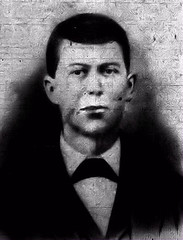
Burt Brannon, Joplin Police Officer

Officer Bert Brannon

Charles Sweeney, Joplin Police Officer

Charles Sweeney

These reputed orders presumably came after the death of Officers James Sweeney and Bert Brannon in 1901 after they were shot and mortally wounded after arresting a gang of vagrants in the Kansas City Southern rail yard and the death of Officer Theodore Leslie who was killed in 1903 while searching the rail yard for a burglary suspect. In 1909, work began on the Third Street viaduct, which spanned the Bottoms to connect East and West Joplin. (To Learn more about the Third Street Viaduct – click here) A year later, work began on the Joplin Union Depot, and a portion of the Kansas City Bottoms was leveled to make way for the expanded railyards and station. (To learn more about the leveling of the Bottoms for the Depot, click here)

By 1915, the condition of the Kansas City Bottoms was as close to a living hell as one could find in Joplin. One account painted a bleak picture of life in the bottoms: “Squatters, trash and garbage haulers, tramps and other transients” moved into the bottoms, living in shacks, shanties, broken down wagons, and tents. Men, women, and children lived in abject poverty. Few outsiders dared enter the bottoms as it had a reputation as, “a most dangerous place. It hardly was safe for a person to enter in daylight. After dark, entry into the hollow by an outsider was practically synonymous with suicide.”

That same year, however, the Kansas City Bottoms would experience a significant transformation for the first time since Sergeant first struck lead.

Architectural Legacy of Garstang & Rea: The Franklin G. Writer House in Joplin

Franklin G. Writer House in Joplin Missouri

The Writers and their home.

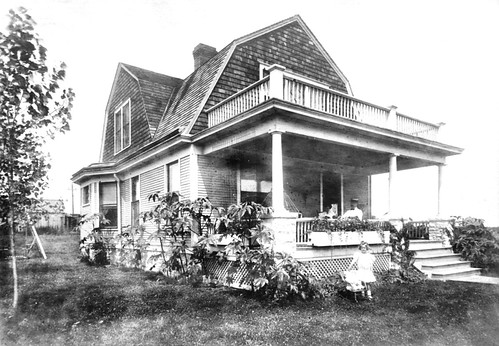
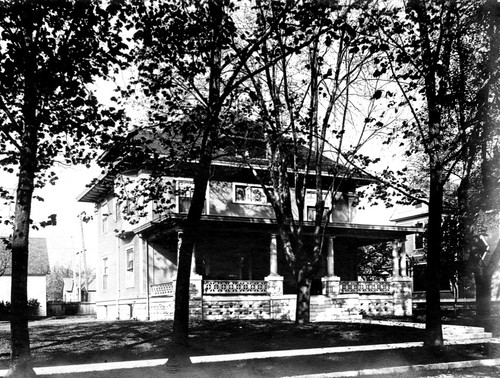
Today’s addition to the Alfred W. Rea portfolio series is the Franklin G. Writer house. Not much is known about Writer, other than he was a former mine operator and long time resident of Joplin. He passed away on January 16, 1933. Writer lived at a number of addresses, and as such, we are not quite sure if the cottage survives or not. One address from a Joplin directory in 1916 is 639 N. Pearl, but due to the presence of leafy trees, we are unable to confirm the cottage’s survival. According to the 1910 Census, the Writers resided at 720 N. Moffett Avenue, which at a glance appears to show the absence of a house. The Writer family would have lived just a few blocks away from Alfred W. Rea. None the less, the Writer family had the privilege of being captured in front of their home over a century ago. Presumably pictured is Franklin Writer, his wife Martha L. Writer, and their daughter, Harriet age 6 with what was most likely her favorite doll.

A Ride into the Past

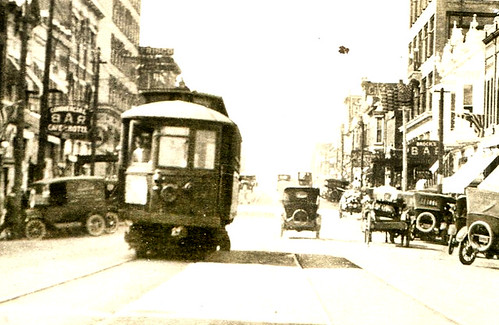
A street car makes its way up Main Street


It’s that time again, the Polar Express, a restored streetcar is now offering rides up in Webb City’s King Jack Park, on Saturday. Tickets are required and this is the last scheduled Saturday to catch a ride on a piece of Joplin’s past (at least until it’s warm again!). A ticket will gain you a 12 to 15 minute ride. The event, which includes a visit from Santa Claus, runs from 4:30pm to 9pm.

For a bit more history on the event, check out this Globe article.

The Architectural Legacy of Garstang & Rea: The Arthur H. Waite House in Joplin

Arthur H. Waite House in Joplin Missouri

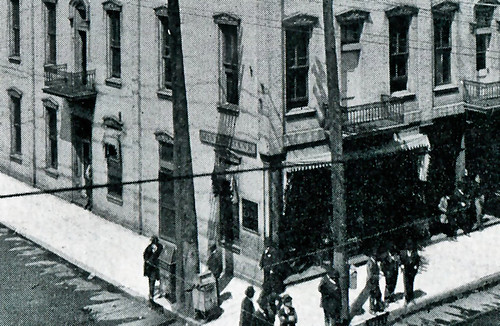
The subject of today’s post in the Alfred W. Rea portfolio series is still found at 616 S. Sergeant Avenue, the Arthur H. Waite house. Waite arrived in Joplin in 1880 at the age of 27. He grew up splitting rails in Nebraska and at the age of 21, applied and received a job at the country bank in Brownville, Nebraska. Thus began a lifetime career in the banking industry. Eventually he rode a “hog train” to St. Joseph, Missouri, and worked as a book keeper at the Merchant State Bank for Thomas Tootle. Tootle, meanwhile, was a partner of Joplin founding father, Patrick Murphy, in the ownership of the Miner’s Bank. It was a job at Miner’s Bank, located in the same building as the old Joplin Hotel, that brought Waite to Joplin.

Miners Bank in Joplin Hotel

Magnified here is the corner of the Old Joplin Hotel, displaying the Miners Bank sign, where Waite first worked in Joplin.


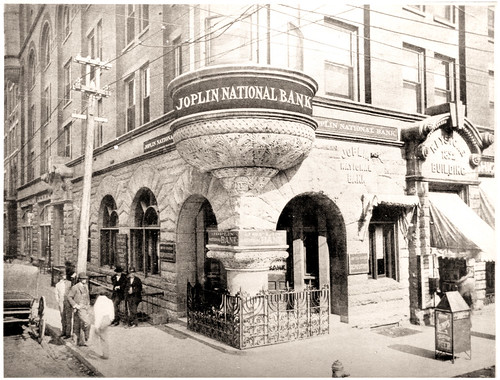
Joplin National Bank at Keystone Hotel

The Joplin National Bank at the Keystone Hotel where Waite worked.


Arthur H. Waite of Joplin MIssouri

Arthur H. Waite


Later on, Waite took a job as cashier at the Joplin National Bank, which for a time was located in the Keystone Hotel building. Eventually, Waite rose to the position of president of the bank. Established as a major figure in the Joplin banking community, he was the president of the Joplin National Bank and Trust Company, the Missouri Bankers Association, Jasper County Bankers’ Association and was a member of the Elks Lodge in Joplin.

Waite remained involved in banking and in the house that Garstang & Rea designed until his death in April, 1934.

Arthur H. Waite House in Joplin Present Day

The Arthur H. Waite House present day.

The Architectural Legacy of Garstang & Rea: Clendon V. Millar House in Joplin

Clendon V. Millar House in Joplin Missouri

Today’s photograph from Alfred W. Rea’s portfolio is the Clendon V. Millar house, located at 605 N. Pearl Avenue, in Joplin. Mr. Millar, a chemist and assayer, was born on April 10, 1871 in Mattoon, Illinois. Coincidentally, Millar graduated from the University of Illinois – Urbana in 1893, the very same year as Alfred Rea. It’s possible the two met while attending the university, or, at the very least, became acquainted while in Joplin. Millar must have been pleased by the house as he remained there until his death in April, 1956.

Clendon V. Millar House in Joplin Present Day

The Millar House today - though a bay window and a chimney have been added since the photograph was taken by Rea.