Rochester Kate

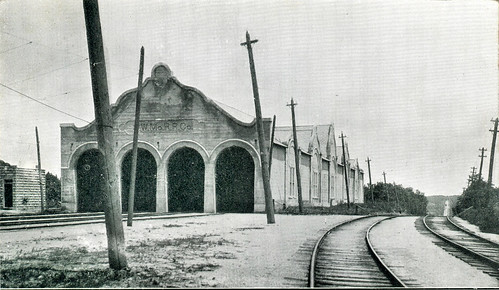
train tracks in Joplin

In the winter of 1907, Joplin received a visit from “Rochester Kate” a female hobo who ran away from home sometime in the late 1880s at the tender age of twelve. She claimed to have visited “in every state and territory in the union and made two trips through Europe, paying her way in the steerage once and hiding in the hold the second time.” According to Kate, her fare “across the Atlantic in the steerage was the only money she ever paid for transportation in her life.”

The world traveler, who was in her early thirties, arrived in Joplin via a car on the Kansas City Southern freight train. As the train passed the Frisco crossing she jumped off and walked into Joplin through the Frisco yards. She must have been an object of curiosity as the Globe noted she “despises dresses and wears a pair of corduroy trousers.” When interviewed by a Globe reporter, she was wearing a “very heavy sweater of good quality” and a coat. The only giveaway as to her gender was her long hair of which she was “very proud.”

Rochester Kate told the reporter, “I’ve been moochin’ since I was a kid. One day I got mad at Ma and got on a freight that was standing on a side track back of our shack. We hadn’t gone far when the brakey [hobo slang for brakeman] spotted me and put me off at the next stop. A guy let me ride on a wagon with him back home and I got a beating.”

But wanderlust was in Kate’s blood and she soon took to the rails again. She remembered, “I kept running off after that and when I was about 15, I guess, I lined out one day and didn’t come back. I couldn’t stand staying around a place very long after I lined out the first time. I mooched up to Buffalo and got a job in a factory and saved up a little and mooched it to Chicago on the blind most of the way, and I been a going since.”

The reporter observed, “Aside from the professional slang words picked up on the road, Rochester Kate does not use the rough language that would be expected from such a life, nor is her appearance as rough as would be thought.”

Kate would not tell the reporter how long she planned to stay in Joplin or where she was headed next, saying that “she did not care to have the police know too much about her movements, as she had spent too many days in jail for vagrancy.”

Source: Joplin Globe, 1907
A Very Brief History of the Joplin O.P. Morton Grand Army Republic (GAR) Post

Joplin’s O.P. Morton GAR Post was organized on May 17, 1882. It was named for Indiana Governor Oliver P. Morton. W.H. Fairbanks was elected commander; F.M. Redburn served as senior vice-commander; John C. Bailey elected junior vice-commander; S.B. Williams selected quartermaster; J.W. Lupton voted adjutant; C.T.G. Workizer elected chaplain; C.C. Wheeler, voted officer of the day; and H.C. Combs elected officer of the guard.

Other members included B.F. Joslin, T.H. Mintner, W.E.O. Rush, Edwin Whipple, F.M. Downing, F.D. Owen, N.L. Barner, E.W. Beach, G.O. Boucher, J.T. Everett, Jacob Lurwick, Samuel Ramsey, M.W. Stafford, Ira W. Gilbert, F.E. Eberhart, Samuel Lake, W.S. Scott, T.H. Short, William Stump, Ira Creech, Peter Bittmer, A.B. Adair, W.F. Cloud, T.P. Hill, W.W. Pate, William Sergeant, and W.C. Williams.

In the twenty-five years that followed, hundreds of other names were added to the post’s membership rolls. In 1907, only four of the original charter members were alive: Downing, Whipple, Boucher, and Joslin.

A list of the post’s commanders follows:

1882 W.H. Fairbanks and W.H. Pate

1883 E.W. Beach

1885 E.W. Beach

1886 E.W. Beach

1887 F.M. Redburn and Henry Phelps

1888 Henry Phelps

1889 E.W. Beach and J.L. Briggs

1890 J.G. Lurwick

1891 P.L. Schwartz

1892 A.H. Brewer

1893 J.L. Briggs

1894 H.W. Davison

1895 F.M. Redburn

1896 J.R.B. Roe

1897 H. Crandall and John R. York

1898 John R. York

1899 W.H. Crane

1900 J.R. Goheen

1901 G.W. Hight

1902 L.D. Middleton

1903 W. Jones

1904 M.M. Rice

1905 W.H. McCubbin

1906 G.W. Hight

1907 Henry Digby

1908 Henry Digby

1909 Henry Digby

1910 Albert McCann

1911 J.N. Theurer

1912 D.H. Rhodes

1913 J.M. Theurer

1914 F.L. Yale

1915 F.L. Yale

1916 F.L. Yale

Sources: Joplin News-Herald; Roster of O.P. Morton Post No. 14 G.A.R., Department of Missouri, July 1, 1916 Roster

It’s a Matter of Space

Questions

As you may have noticed, we’ve been following the latest developments regarding the proposed Joplin Museum move to the Union Depot.

After reading some of the comments on the Joplin Globe‘s website and in its “Letters to Editor” section over the last few months, we have questions.

As one Globe reader, posting under the name Av-I-tar, asked,  Why are visitors not allowed to take photography in the Joplin Museum Complex?

We here at Historic Joplin hate to brag, but we’ve been in a few of the world’s finest museums. We’ve also visited some pretty crappy ones. The kind filled with arrowheads, poorly preserved stuffed animals moldering away, and a bunch of junk that the “curator” decided to take lest he or she offend the donor. Oh, wait. Sound familiar?

So what’s the big deal? Afraid that professional thieves might take photographs to aid in robbing the museum of it’s “rare” mineral collection? Fearful that someone will attempt to profit from photographs of the exhibits? If you are going to enforce a nonsensical policy, you should at least provide a rational explanation to visitors.

Another issue that keeps popping up and one that we are familiar with: Brad Belk will not allow the public to access, view, or study the museum’s photo collection. We presume his salary is paid by the city. Why is a city employee allowed to deny the public, Joplin taxpayers in particular, access to the photograph collection? The answer given? “No space.”

The museum exists for the benefit of the public. The public should be accommodated, but it seems that Belk has established his own personal fiefdom and serves as the gatekeeper who perpetually denies the public an opportunity to review the city’s photographic history. It will probably remain this way until he retires which will probably be decades in the future because he is firmly entrenched.

Perhaps if we wrote a big enough check we could get access. Instead we hope the folks who sign his paycheck read our comments and those expressed on the Joplin Globe‘s website and ask him to reconsider his obstructionist  behavior. We’re curious to see if, once he gets all the museum space he desires, he will continue this absurd policy.

At least we have enough time to save our nickels and dimes to write that big check.

Museum Boards Meet to Discuss Depot Plans – HJ’s Response

Today’s Joplin Globe reported that the Joplin Museum and Historical Society boards met to discuss the Gryphon Building and Union Depot as potential locations for the Joplin Museum Complex. Both boards voted against a proposal to purchase the newly renovated Gryphon Building. The cost of the Gryphon Building was far too high for the museum.

Joplin Museum Complex Director Brad Belk then discussed the Union Depot. After noting, “It is better laid out than the current museum location” he claimed the size of the depot is smaller than the current museum facility and that it has water issues in the basement.

Gee.

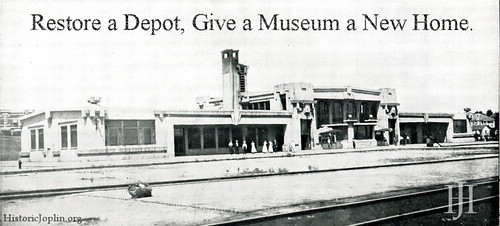
The depot is almost one hundred years old and has been sitting empty since the 1970s. With no windows, no doors, and no maintenance, it’s not surprising that it has a few issues. At least one architect and one contractor have expressed their opinion that the structure is sound and built to last.

It seems Belk and the museum/society boards are dragging their feet when there is a golden opportunity before them. They could be heroes! Imagine — revitalizing the Union Depot, a beautiful structure that stands on the site of the lead strike that led to Joplin’s very existence — and helping anchor and rehabilitate north downtown Joplin. Instead, they are letting a few puddles of water and space concerns constrain them.

Look into the water issue. Talk to architects about the cost and design of an addition to the current structure that would bring needed additional space that would, at the same time,  preserve the architectural integrity of the depot. The Nelson-Atkins Museum in Kansas City managed to do this.

Now, we realize that the museum complex is poor as a church mouse and that its board members are unable and/or unwilling to cough up a significant amount of funds needed to bring in a renown architect and build a modern addition like the Nelson-Atkins. That isn’t necessary. What is necessary is that the boards and Belk seize this opportunity. A local architect can be found who can create a tasteful and aesthetically pleasing addition.

They have no concept of vision. But, then again, it seems that the museum and society boards are populated by good old boys who know very little about museums and historic preservation.

Why not look into Mark Rohr’s proposals of grants and other funding methods to make the dream come true? It certainly would be better to try and fail in this case rather than just sit and do nothing but complain and grumble.

Let’s face it.

In April the voters declined to support the museum’s pathetic takeover of Memorial Hall. Memorial Hall is over. Move on. Move on to what people are actually voicing support for. Museum attendance across the nation has been declining for years. Either you march into the future or you wait to be swept up into the dustbin of history and irrelevance.

What will it be?

In memory of the feisty Joplin Globe and News-Herald editors of yesteryear who never failed to express their opinion whether popular or not.

Historic Joplin - Support the Union  Depot Proposal

Don't Let The Museum Board Balk at A New Home!

A Dog’s Story

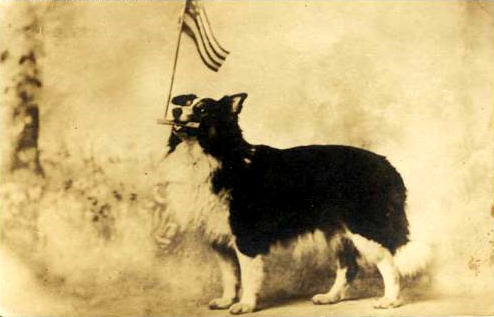
Moxie the Dog with flag in mouth

Moxie posing with her flag. From the "Bale Mill Odessey" by Judy Hurdle.

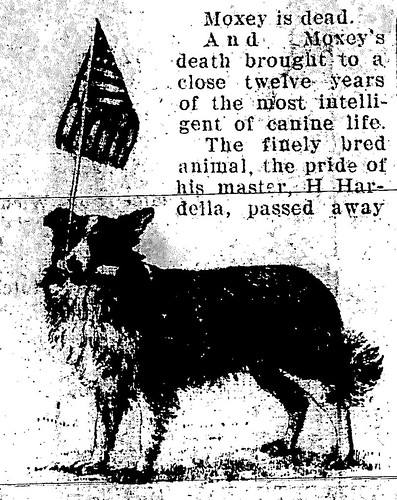
It is rare but not unheard of that a dog’s passing would make the news. Moxey was one of those dogs. Moxey, the beloved pet of Hardy Hardella, passed away from old age and indigestion at the age of twelve in the early summer of 1907. Moxey was given a “decent burial” for he “had earned recognition above that accorded to the average dog.”

Moxey or Moxie, a Scotch Collie, was born on February 27, 1895, in the kennels of Senator Julius C. Burrows of Michigan. Mr. Hardella, the manager of Hardella Dye Works, bought Moxey a month later.   Historic Joplin will dedicate a post to the interesting life of Hardy Hardella at a later time.  In Joplin, Moxey was “one of the best known residents of the neighborhood at Third Street and Jackson Avenue” and was “famous for its utilitarian service.” Moxey, it seems, did not believe in performing “foolish tricks” like shaking hands or rolling over.

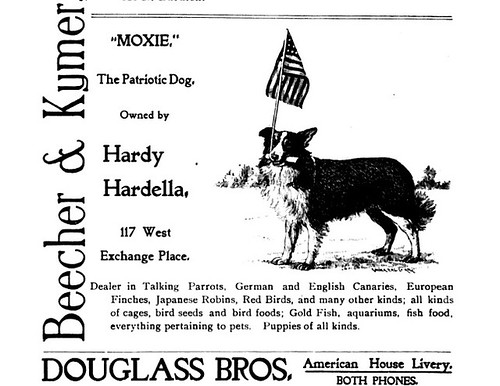
Moxie the dog Ad

An advertisement featuring Moxey.

Instead, he was known for carrying around a basket of “meat or vegetables all day if necessary.” Moxey “would quickly learn and gladly perform” any useful action. He and his owner were so close that it was said that Mr. Hardella never whipped Moxey so as not to “estrange the fine devotion of the sagacious animal.” Moxey’s owner turned down an offer of $300 to sell Moxey to the owner of the Wallace Show, a traveling circus that at one time was second in size only to Ringling Brothers and Barnum and Bailey Circus.  Moxie was known for leading parades while clutching an American flag in her mouth.

Moxey's image in her obituary.

Moxey's image in her obituary.

Upon Moxey’s death, Mr. Hardella purchased a “pretty coffin for the magnificent dog” and was buried with the same reverence “as would have been a child.” The Joplin News-Herald eulogized Moxey, “The small part of the world with which he came in contact is better, probably, because he lived. Such dogs seldom live. Their influence is good.”

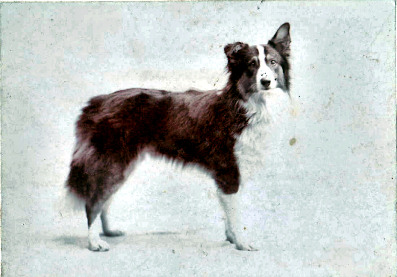
Moxey the dog

Moxey, from the private collection of Judy Hurdle.

Sources: Joplin News Herald, Missouri State Archives Death Certificate Database, Livingston’s History of Jasper County, Bale Milling Odyssey by Judy Hurdle

Renovation Proceeds on the Joplin Supply Company building and Gryphon Building

More news on other renovation projects going on in downtown Joplin from the Joplin Globe. First, we have the former Joplin Supply Company building at 228 S. Joplin Ave, where the renovation is proceeding under the ownership of a Kansas City developer, Donald Rosemann, and general contractor from Shawnee, Kansas, Straub Construction. The building will be rechristened the Ford Lofts and will offer 35 apartments, 7 of them single bedroom and the rest two bedroom. Rosemann believes that they’ll have high occupancy by completion next year.  Part of the key is that the building will receive federal funding to offer reduced rents for affordable living.   For bonus points, check out the comment section for the revelation that some individuals view “loft living” as an 8th deadly sin.

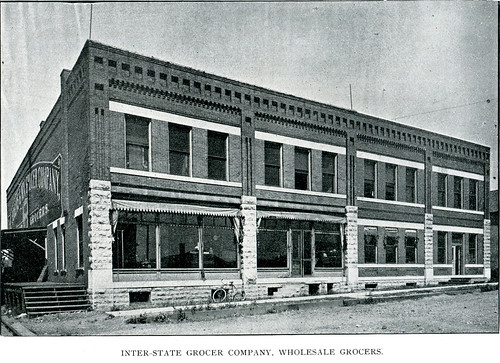
Second, is a follow up on the status of the Gryphon Building at 1027 S. Main Street.  The building, former home to the Interstate Grocers Association, will open in a few weeks with an expected 60% occupancy.  The cost of the renovation was around $8,000,000 and the building will be leased by floor in stages.  The first floor will feature “historic elements” that remain from the executive offices of the grocery company and provide restaurant and retail space; the third floor will have a “business incubator” that will feature 19 suites, with a “common reception area, conference room, kitchen and break room.”  In the basement will be a gym, and the other floors will all be business space.

Here are two links, one to the building’s facebook page and the other to the regular website for the building.

Here’s an earlier home of the Interstate Grocers.

Interstate Grocers Association home

The home of the Interstate Grocers before the present Gryphon Building

More Coverage on the Union Depot Proposal

Support the renovation of the Joplin Union Depot as a new home for the Joplin Museum Complex!

Support the renovation of the Joplin Union Depot as a new home for the Joplin Museum Complex!


On Sunday, July 11, 2010, the Joplin Globe featured two articles on the Union Depot.  The first article includes a brief history of the depot, when it was built, as well efforts twenty some years ago to renovate it (which only succeeded in putting on a new roof and new stucco on the walls).  Also in the article are some quotations from Clair Goodwin, president of the museum board, who appears reticent about the proposal.  A quote is also offered from Allen Shirley, president of the Joplin Historical Society, again along the lines of hesitance, this time due to space issues.  Historic Joplin yesterday posted a response to the current management of the Joplin Museum Complex with regard to these quotations.

The second article featured a walk through with David Glenn, a contractor and owner of Glenn Commercial Group, who participated in the attempt to renovate the depot twenty some years ago.  In it, Glenn points out how the building is in a good position structurally and has a relatively new roof.   Included with the article is an interesting video of the walk through with Glenn and a Globe reporter.

Pay Day

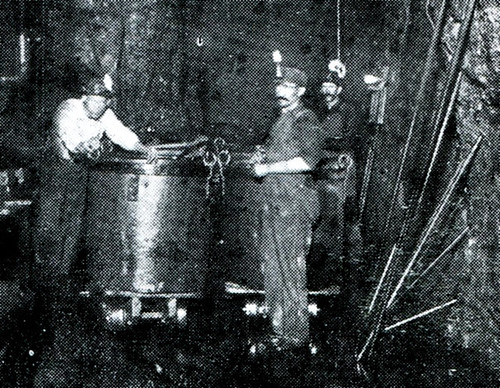
Joplin zinc miners

Undoubtedly, not a few miners dreamed of pay day while in the mines.

In Joplin, miners lined up for their weekly wages on Saturday. At the turn of the century, one paper reported that many of the leading mining companies were reluctant to pay workers on Saturday, but “the average miner will quit his job unless he is paid on Saturday and miners are scarce in this district.”

Paychecks were the primary method of payment. The ground boss kept track of his men’s hours and then the mine superintendent approved the final time statement. The statement was then delivered to the bookkeeper who then wrote out the checks. The mine superintendent then handed out the checks. Most mining companies reportedly employed fifteen to thirty men and their checks averaged $10 to $13 with each company shelling out anywhere between $300 to $700 for labor. As soon as they were paid, most miners went to the nearest bank to cash their checks, so Joplin bankers had to be sure to have enough money on hand on Saturdays, with many miners preferring to be paid in silver. Miners who had cashed their check were said to have “busted up.”

Banks were not the only ones who cashed checks. The saloon keepers of Chitwood and Smelter Hill may have cashed more checks than the banks. The paper observed, “The saloon man is accommodating; he always is.” One bank teller stated, “It used to be that we were obliged to keep open until 9 o’clock every Saturday night to transact the run of business, but now we finish and close by 8 o’clock. We do not cash near as many checks over the bank counter as a few years ago. The saloons and business houses are doing that part.”

The Joplin chapter of the Women’s Christian Temperance Union (WCTU) tried to convince local mine superintendents to refrain from “settling their men in saloons” but failed to sway a majority, thus leaving the saloons an inviting place for miners to cash their checks and have a drink. Thus the streets of Joplin remained a lively, bustling place to be on a hot Saturday night.

Source: Joplin newspaper

White Man’s Heaven Website Live

A couple weeks ago, we announced the publication of White Man’s Heaven: The Lynching and Expulsion of Blacks in the Southern Ozarks, 1894 – 1906, by Kimberly Harper.  Since that time, the official website for White Man’s Heaven has gone live.  In the future, you can check there for all the latest news and developments concerning the book.  Check it out at the following address: www.whitemansheaven.com .

The Mobile Joplin Fire Department

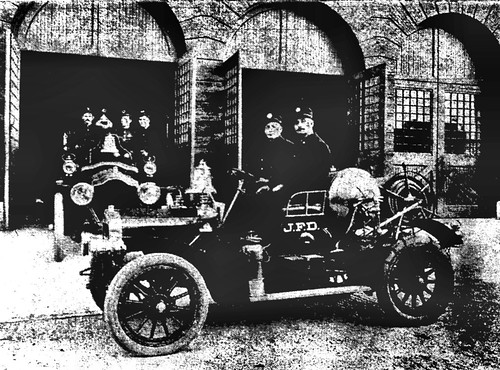
Here’s a view of the Joplin Fire Department proudly displaying their high tech fire fighting equipment in 1909.  The photograph was taken in front of the City Hall of the time, which served as both a jail, police station, and fire station.

Joplin Fire Department Goat

The accompanying article noted that the Kansas City Fire Department was impressed by Joplin's automotive capabilities.

Source: Joplin Daily Globe