The Reminiscences of G.O. Boucher — Part I

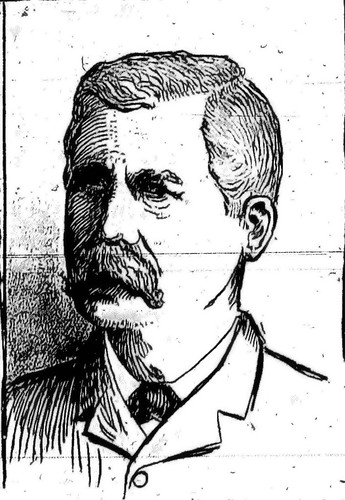
In the early months of 1910, a Globe reporter stopped by the home of G.O. Boucher at the corner of Joplin and Twentieth Streets to interview him about historic Joplin.  Boucher gladly obliged him.  Here at Historic Joplin our philosophy is to allow the voices of the past speak for themselves in their own words with as little interference as possible, even if we abhor the usage of some of the language used.  For those sensitive to the use of racial slurs, it may be for the best to skip this entry as it does include some graphic language.   What follows are Boucher’s recollections in his own words as they appeared in the Joplin Globe.

“I came from Mineralville in the spring of 1871 in company with John Sergeant, at that time a partner of E.R. Moffet.  They were the first men to start the wheel rolling for the building of the present city of Joplin.  Among the men who were interested in this undertaking were Pat Murphy and W.P. Davis who laid out the first forty acres in town lots, on which the largest and most valuable buildings of the city now stand.

The first air furnace built in the Joplin mining district was constructed by Moffet and Sergeant.  T. Casady, a man from Wisconsin, handled the first pound of mineral which was smelted in this district in the mill erected by them.  The smelter was located in the Kansas City Bottoms between East and West Joplin.  A. Campbell, H. Campbell, A. McCollum, and myself were the first smelter employees in this district.  The fuel used in the smelter was cordwood and dry fence rails, which were hauled from the surrounding country.  The first men who handled rails and sold to the smelters were Warren Fine and Squire Coleman, the latter now living in Newton County.

The hotel accommodations at that time were poor and the first ‘beanery’ was a 24×16 foot shack erected by H. Campbell.  His family occupied the house and they boarded the smelter crew.  We found sleeping quarters wherever we could find room to pitch our tents. the boys would stretch their tents and then forage enough straw to make a bed and this was the only home known to them.  E.R. Moffet and myself slept in the smelter shed on a pile of straw and for some time we slept in the furnace room on the same kind of bed.  About the last of August of the same year Mr. Campbell erected what was then quite a building.  It was two stories high, four rooms on the ground floor, and two above.  This was at the southwest corner of Main and First Streets, now called Broadway.  Just about this time Davis and Murphy began the erection of a store building just across the street from the hotel.

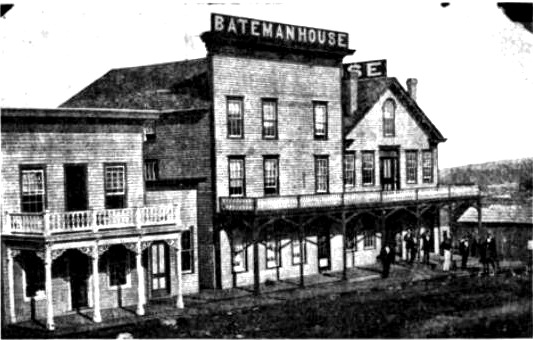
Photograph of one of Joplin's first hotels, the Bateman Hotel

Another early hotel was the Bateman hotel, moved from Baxter, Kansas, to Joplin in 1872. It promptly burned down three years later.

Speaking of the first business building erected in Joplin, William Martin built a 16×16 box building on Main Street between First and Second Streets and put in about $125 worth of groceries and a small load of watermelons.  Soon after this, a man known as ‘Big Nigger Lee’ established a grocery store on the opposite side of the street from Martin.  He put in a larger stock but did not have as good a trade as Martin on account of having no watermelons.  Some of the older residents remember ‘Big Nigger’ Lee as he was in business here for several years.”

More to come from the reminiscences of G.O. Boucher and in the future, Historic Joplin will address the issue of racism in Joplin to provide a clearer picture of how hatred affected the city’s African American citizens.

Source: Joplin Globe, “A History of Jasper County, Missouri, and Its People,” by Joel T. Livingston.

Celebrate St. Patrick’s Day at the Connor Hotel Restaurant

…only requirement is a time machine.

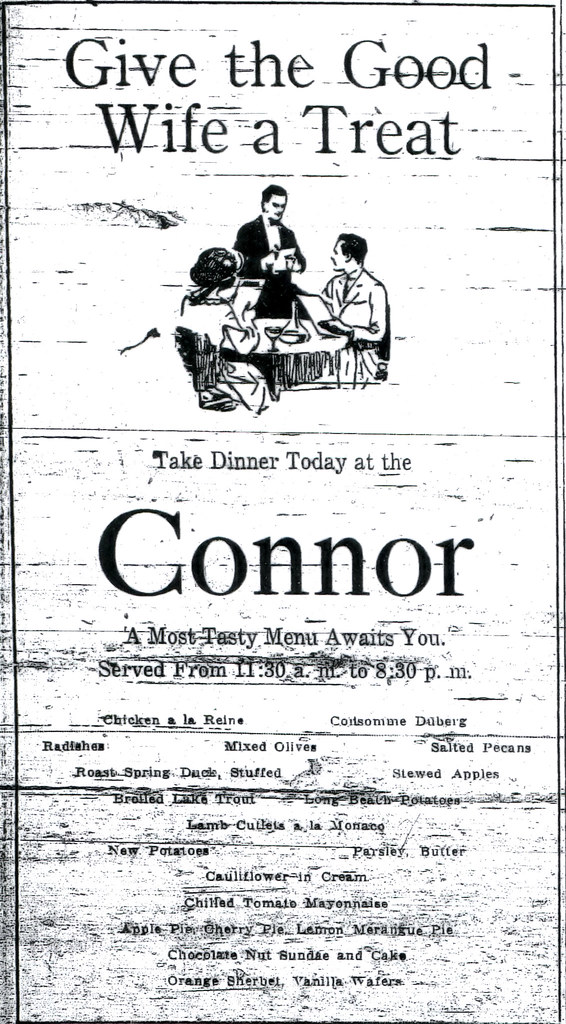
Of those who lived in Joplin, the city claimed not a few number of sons of Ireland.  Some of the city’s wealthiest citizens, such as Patrick Murphy and Thomas Connor, were the children of Irish immigrants or born in Ireland.  In a tip o’ the hat to Joplin’s Irish, presented below is a menu ad for the Connor Hotel’s restaurant.  The Connor, named after Thomas Connor, was once the architectural centerpiece of Joplin’s downtown.  Not bad for a true son of Ireland.

An ad for the restaurant at the Connor Hotel

A 1923 ad for the restaurant at the Connor Hotel

Source:  Joplin Globe

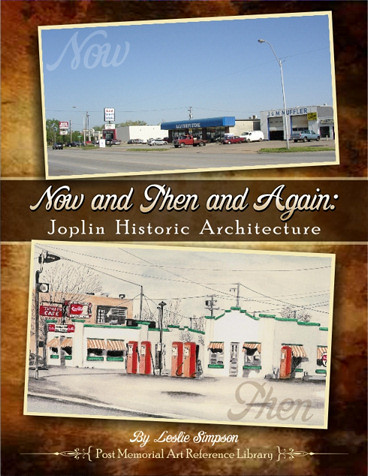
Review of Now and Then and Again by Leslie Simpson

Historic preservation in Joplin cannot be discussed without mentioning Leslie Simpson.  The director of the Post Memorial Art Reference Library, Simpson is a long established expert of Joplin’s architecture and historic past.  She is credited with initiating the push to preserve Joplin’s remaining historic buildings and homes. Simpson has played an instrumental role in the creation of the Joplin Historic Preservation Commission and Main Street Joplin.  She has produced numerous slide shows on the city’s past and published a pamphlet titled, From Lincoln Logs to Lego Blocks: How Joplin Was Built.  Such is her impact that the city proclaimed a day in her name and the Missouri General Assembly honored her achievements.

One of Ms. Simpson’s most well known works was a fascinating slide show presentation entitled, “Extreme Makeover: Joplin Edition,” that compared historic photographs of Joplin buildings and homes to present day photographs of the same locations.  In December, 2009, she published her latest book, Now and Then and Again: Joplin Historic Architecture Now and Then and Again is the published version of her popular lecture on Joplin’s architectural past.

Any fan of American architecture from the late 19th Century to the early 20th Century will both adore and loathe reading Ms. Simpson’s latest work.  Readers will love it for the photographs of grand old buildings and majestic finely cut stone homes that once populated Joplin.  It will, however, make the reader grimace at the lack of foresight and vision that cost Joplin some of its finest architectural masterpieces.

Now and Then and Again is written somewhat categorically, beginning with photographs of many of its former homes and buildings that represented the first several decades of the city’s prosperous growth.  This may well be the most painful part for those who mourn the loss of Joplin’s finest buildings. as it reveals the devastation of the period of Urban Renewal.  During the 1960s and 1970s, Urban Renewal oversaw the destruction of many of American’s turn of the century architecture under the belief that their replacements would spark economic growth and development. Sadly, such was not the case with Joplin. Downtown Joplin became a vast wasteland of empty parking lots and neglected store fronts.

Despite her passion for Joplin’s lost history, Ms. Simpson maintains a neutral tone, letting the devastation of Urban Renewal speak for itself. Buildings such as the Connor and Keystone hotels, the Worth Block, and other crown jewels of Joplin’s past were lost to the wrecking ball.  By the time the reader finishes with this first part of the book, he or she can begin to dry their tears with the knowledge that some buildings survived, though are now hidden behind more modern facades.   One example is the home of the Joplin Globe whose gaudy outdated facade belies the fact that it still has the bones of a century old brick building underneath.

Now and Then and Again opts for an ending on a happier note.  The last two sections of the book are devoted to those structures still standing decades after their construction, and in a somewhat smaller part, those buildings which have recently been renovated.  Now and Then and Again is not entirely made up photographs.  Each photographic subject is accompanied with a paragraph or two of information which generally consists of the history of the building or house, the architectural style, and the individuals who owned them.  Conveniently, Ms. Simpson provides two indexes, one by name and the other by address.

In the unfortunately limited pantheon of resources for those seeking to learn more about the history of Joplin, Ms. Simpson’s Now and Then and Again is a welcome addition.  It serves as a wonderful reference for both the trained and untrained to a past built by stone, brick, and beam.  Any collection is better for its inclusion, and knowledge of its contents most certainly help to bring alive the Joplin of the past, and to discover its wonder in the present.

The cover of Leslie Simpson's work, "Now and Then and Again: Joplin Historic Architecture."

The cover of Leslie Simpson's work, "Now and Then and Again: Joplin Historic Architecture."

For information about purchasing a copy of Ms. Simpson’s work, follow this link to the Post Memorial Art Reference Library websiteNow and Then and Again consists of 95 pages, sells for $17.95 and is published by the Winfred L. and Elizabeth C. Post Foundation, Joplin, Missouri.

Globe Coverage of the Joplin Supply Company

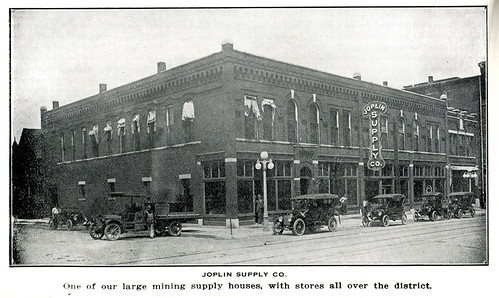
On Saturday, the Joplin Globe ran an article about the Joplin Supply Company.  The one time location where later on Ford Model Ts were built within and moved within the building by large elevators.  That building is now one of the historic locales receiving the renovation treatment.

The article here.

Below is a photograph of one of the earlier locations for the company on Fourth Street.  The parking lot adjacent to the former Federal building and located behind the library is all one will see if they attempt to hunt down this building today.

The Joplin Supply Company building at Fourth and Wall Streets.

The Joplin Supply Company building at Fourth and Wall Streets.

Source: Historic Joplin

Growth of A City – Fourth Street Looking East

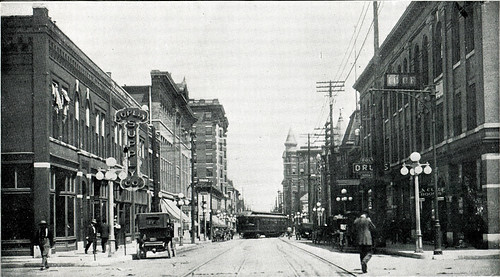
At the height of Joplin’s boom days, the intersection of Fourth and Main streets was the beating heart of the city’s commercial district.  It was no coincidence that the city’s two greatest hotels, the Connor and Keystone, faced one another from opposite corners, or that Democratic party boss, Gilbert Barbee owned the House of Lords on another corner.  Along Fourth Street, particularly that west of Main, was prime real estate.  One venturing down west Fourth Street found themselves passing the Club Theater, as well the Elks Club lodge and the home of the Miners Bank.  In the next few photos, we’ll examine the change to the street over just a few years.  In addition, with a nod to Leslie Simpson’s latest book, Now and Then and Again: Joplin Historic Architecture, a present day view of the street.

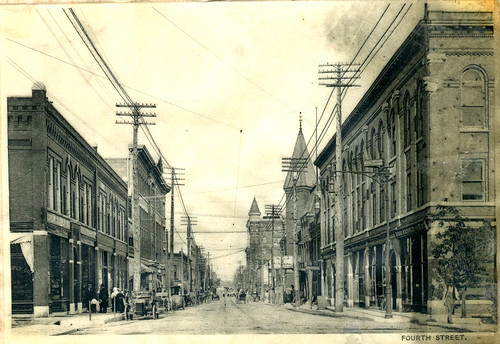
A view of Fourth Street looking east - sometime before 1906.

A view of Fourth Street looking east - sometime before 1906.

In this first view there are several clues to time the photograph was shot.  First, visible to the right is the steeple roof of the Club Theater.  The Club Theater was completed in 1891.  The conical roof further down the street marks not only the Keystone Hotel, built in 1891 and completed a year later, marks the intersection of Fourth and Main.  On the left side of the street, a block down and hardly noticeable is the old Joplin Hotel.  What is not in this photograph is the Connor Hotel, an eight story building that was built where our squat Joplin Hotel now stands.  The Joplin Hotel was razed in 1906.  As such, we know this photograph dates from before that time.  Speculatively, sometime from 1891 to 1906.

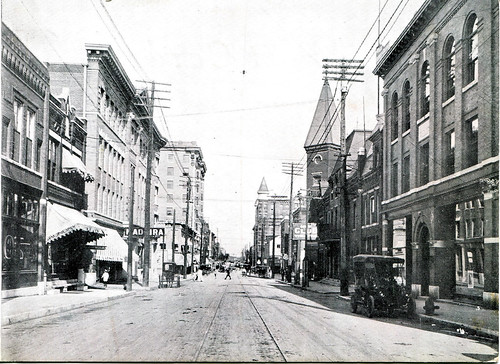
View of Fourth Street looking east sometime after 1908.

View of Fourth Street looking east sometime after 1908.

In this view we have some familiar faces.  The Club Theater on the right, the Keystone down the block, and on the immediate right, the once Elks Lodge and offices of the Joplin Water Works.  The main difference is now the reverse of our previous photograph.  Where the old Joplin Hotel stood, now stands the Connor.  Its presence lets us know that this photograph was taken after its completion in 1908.  Note the change in design of the automobiles on the street and the lack of horse drawn wagons or carriages that were present in the previous view.

Fourth Street looking east - sometime before 1913.

Fourth Street looking east - sometime before 1913.

Our third view of Fourth Street.  The Connor and the Keystone are both present.  The steeple roof of the Club Theater is conspicuously absent, though you can see the roof line of the club’s western side.  Incidentally, by this time, the Club Theater, despite a renovation in 1905, had lost its status as the finest theater in town to the Shubert Theater which was located several blocks down to the south.  The vehicles are a little more modern and a subtle aspect is the switch from one set of trolley tracts to two.  Also different, which allows us to place this photograph as more recent, is the addition of electric signs to the facades of the buildings.  Now, we state that this photograph is dated as having been taken before 1913.  How did we come to that number?  In this case, its simply knowing your source.  This photograph came from a booklet published in 1913 to publicize the city, which allows us to place that hard date.

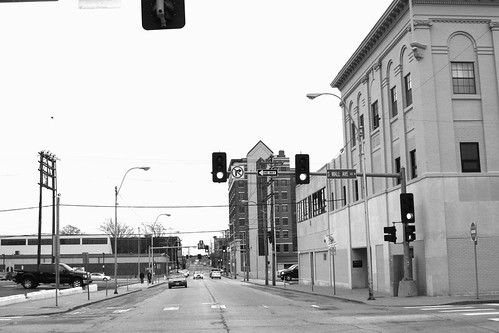
Fourth Street looking east - present day.

Fourth Street looking east - present day.

This photograph, taken on March 13, 2010, is not for the faint of heart for those who love the architecture of bygone days.  All that remains from the previous photographs is our friend the one time host of the Elks and Joplin Water Works building on the immediate right.  The row of buildings on the left are gone, though a few halfway down the block disappeared in the 1920’s when the Connor built an annex further down the block from its Fourth and Main location.  The Club Theater is gone, the front of a car, marks the parking lot that now remains in its place.  On the left down the block is the Joplin Public Library, situated where the Connor Hotel stood until 1978.  The Keystone, destroyed several years before the Connor, is gone.  The building visible beyond the library is the Joplin Globe office, visible only because the Worth Block was demolished (taking with it the House of Lords).  On a bright note is the tall building at the end of the block on the right side.  It was built around 1923 and managed to survive the devastation that was “Urban Renewal.”

If any comfort can be taken from this view of modern day Fourth Street it is that the City of Joplin has embarked on a mission to restore and recognize the city’s remaining historic buildings.  A drive down Main Street reinforces the belief that while a lot has been lost, that which remains will be saved.

Sources: Historic Joplin collection, Missouri Digital Heritage.

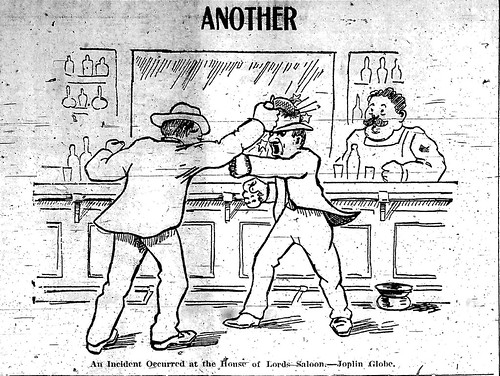
Another Fight at the House of Lords

A political cartoon about the House of Lords

Criticism in ink of Joplin's Democratic boss Gilbert Barbee, owner of the House of Lords

This image is taken from a 1906 issue of the Joplin News-Herald.  It depicts a scene from Joplin’s famed House of Lords.  The House of Lords was a world reknowned saloon, brothel, and political watering hole.  Gilbert Barbee, who was Jasper County’s Democratic political boss (when he wasn’t sharing the title with William Phelps of Carthage), bought an interest in the Joplin Globe in 1899.  From that point forward, Barbee used the Globe as a cudgel against his Republican opponents, who often took their own swipes at Barbee. Barbee, who built a walkway between his office at the Globe and the House of Lords, was intimately associated with the saloon.  This cartoon is the News-Herald‘s attempt to link Barbee to the brawls and violence of the House of Lords, a cunning parallel to the political battles he often fought against rivals and opponents at the state and local levels.   Despite his politically combative demeanor, Barbee left $100,000 to the poor in the city of Joplin upon his death.

Sources: Joplin News Herald

From Fire: The Origin of the Joplin Fire Department

Fires today still make the headlines, but the risk to communities as a whole are not as significant as they were one hundred years ago. Before the emergence of professional fire fighters with modern training and equipment, fires posed a considerable risk to towns and cities populated by wooden structures and defended by brave but untrained bucket brigades.  Joplin, like many other cities across the country, learned the hard way of the necessity of a professionally trained and equipped fire department. As one would expect, this story of historic Joplin begins with a fire.

More than thirty years had passed, but the crusty pioneers who witnessed the city’s birth still recalled the first great blaze that occurred in 1874.  Only a year old, Joplin was just beginning to build on the success of the mines. For a city in its infancy, the fire was incredibly destructive. Joplin’s volunteer fire department, formed in 1872, was headed by Edward Porter. Porter oversaw a ragtag collection of twenty men who rode on horseback to fires carrying only their axes and water buckets. It was this small, determined band of men who were able to beat back the fire of 1874. Despite the volunteer fire department’s best efforts, an entire block on Broadway was lost, which at the time consisted of two residences and a store room. The only building that survived the blaze was the Masonic Hall which was built of brick. The potential for devastation had been great and had only been narrowly avoided.  The limited success of the volunteer fire department convinced Joplin’s city leaders that something had to be done to improve the department’s ability to combat fires.

The answer was a 100 gallon tank filled with a chemical fire suppressant set on the back of a handcart.  It was stored in Joplin City Hall which at the time was situated in the bottoms that lay roughly in the middle of town, or rather, between the two former towns of Joplin and Murphysburg that had combined only a few years before.  The fire suppressant’s record was mixed.  A year after its purchase, it failed to stop a fire that burned down two homes, including one on Mineral Street that belonged to John Allington.  This defeat may have been made even more embarrassing as Allington was an influential resident.
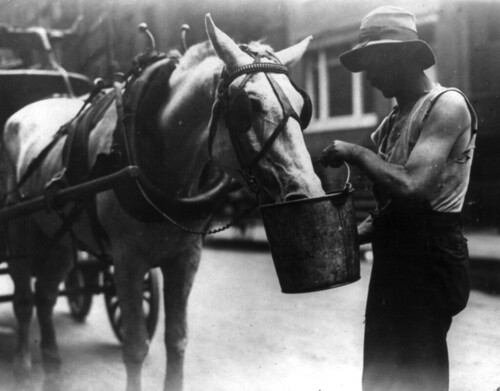
Man holding bucket up to horse

A bucket, like the one featured in this photograph from the time period, was one of the main tools available to combat fires.

By this time, Edward Porter had resigned from the position of volunteer fire chief and was succeeded by Frank Williams. It was Williams who was likely in charge when a destructive fire rampaged through near what is now Joplin’s Murphysburg neighborhood.  At that time, the main financial district ran from First Street to Fourth with a few homes located south of Seventh Street.  The heart of the commercial district was situated at the intersection of Third and Main, but buildings extended south to the corner of Fourth Street and Main, where the Worth Block building later stood.  The Joplin News Herald described the fire thus:

“At an early hour one morning two of the buildings in the middle of the block were discovered to be in flames.  The alarm was given and the volunteer company turned out.  The fire had a good headway and before any efforts could be made to check its spread the center of the row was ablaze.”

It did not take long for the volunteers to realize that the buildings that made up the majority of the block between Third and Main were lost.  Built entirely of wood frame construction, a fire could not have asked for any better source of fuel.  Firefighters began a valiant effort to save the buildings located at opposite corners of the block as they were considered cornerstones that anchored their respective intersections. Onlookers crowded to watch the fire feed upon the block’s buildings and the fight by the firefighters to save the corner buildings.  The firefighters succeeded in their desperate battle but the center of the block was reduced to charred ashes.  The next great fire came four years later in 1880 at the famed White Lead Works of Joplin.

The White Lead Works arose from the idea of E.O. Bartlett, a young professor from Pennsylvania.  Bartlett believed the process of smelting lead at the time was a wasteful one that allowed lead carbonate to be lost in the exhaust fumes.  To curb waste, Bartlett devised a redesigned exhaust system that tripped a flour-like substance, commonly known as white lead.  Bartlett requested the permission of Joplin’s largest lead producers to build his experimental lead factory on their site which would use his new exhaust system.  The owners, E.R. Moffett and John B. Sergeant, agreed to the idea.  Such was the success of Professor Bartlett’s plan that Moffett and Sergeant quickly implemented the process in their primary lead factories.  White lead quickly became a valuable commodity due to its use as a paint pigment and was even used by the United States Navy to paint their ships.  It was also commonly used in house paint and posed a great threat to the health of children who might consume the paint flakes.

It was late in the afternoon on April 3, 1880, that a great column of white smoke rose upward into the sky.  If that was not enough to garner the attention of the people of Joplin, then the constant shrill screams of the plant’s steam whistles certainly did.  Something was wrong.  Perhaps someone had stacked the sacks of white lead too tightly together and the cumulative heat of the contents had reached a critical point where the bags had burst into flame. At least, that was the theory settled upon later, but at the moment, all that was known were shouts in the streets of Joplin, “The white lead works are on fire!”   The white lead works employed a significant number of the city’s population and an even greater number arrived to watch it burn and look for loved ones that worked there.
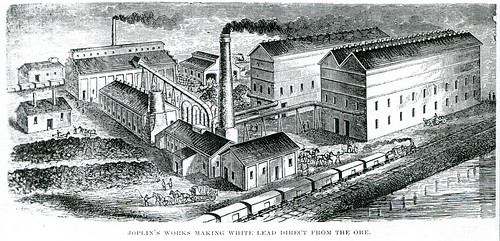
The white lead works of Joplin, Missouri

The white lead works of Joplin after they were rebuilt following the devastating fire.

Moffett, who was at work at the time, coolly remarked, “Well, she’s gone.”  Moffett and Sergeant’s employees had been at their posts with the factory running at full capacity when the fire started. Fortunately, employees were quickly evacuated and Moffett was credited with keeping the crisis in check. All that remained was for the fire department to attempt to save the factory. It was a lost cause before the department even arrived. Joplin’s volunteer firefighters failed due to the enormity and hazardousness of the blaze and they nearly lost the fire department’s chemical tank after it became trapped between two buildings.  The overall loss was valued at $20,000, a great sum in 1880.

It was a jarring loss for both the city and its growing economy.  The white lead works would be rebuilt, twice its former size, but the city recognized the need to reorganize the volunteer fire department. Volunteer Fire Chief Frank Williams may have stepped down at this point and handed the reins over to Taylor Mayfield, although it is not clear. The city ordered water hoses for the department to use and requested that every business keep a barrel of water and bucket handy.  The city also asked for additional volunteers.  It would be another fire the same year that spurred the city to continue its efforts to modernize the fire department.

During the late hours of the morning the city’s sole opera house, the Blackwell, erupted in flames. Rouse from their sleep at two in the morning, volunteers valiantly tried to save the large three story structure that lined fifty feet of Joplin’s Main Street.  Located just north of the city’s courthouse, the flames could easily leap to the next building and destroy the civil center of the community.  Clark Claycroft, a volunteer at the time and later a fire chief, recalled, “We tried our chemical tank but the fire was too much for that, and the bucket brigade did but little better.” As the flames consumed the Blackwell, volunteers recalled the fire hoses that lay inside the fire barn nearby, having arrived only the day before.

“So a bunch of us went to the fire barn, broke open the boxes, and put the hoses together and carried it to the fire.  In half an hour, we had two streams of water going.” It was not enough to save the opera house.  The Blackwell was lost, but the efforts did protect Joplin’s City Hall which briefly caught fire.  The damage was severe and pushed Joplin’s city leaders to continue to improve the volunteer fire department.

Clark Claycroft was selected as fire chief with former city marshal J.W. Lupton appointed as his second in command. Three hose companies were established with their own stations.  George Payton, a future fire chief, oversaw Station One located in East Joplin.  Station Two stood at Second and Joplin and was commanded by A.B. “Tony” McCarty, and further south, at Seventh and Main, Station Three was overseen by L.A. Fillmore.  It was this foundation upon which the Joplin Fire Department was built upon when George Payton became the first paid fire chief at $50 a year.  The year was either 1882 or 1884 as various sources dispute the founding date.
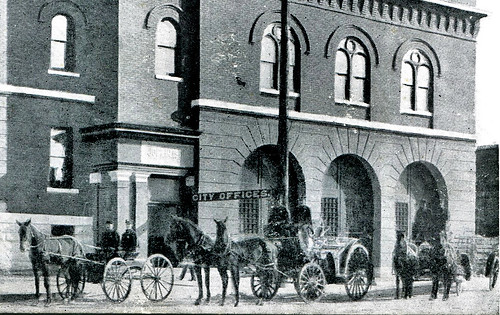
Joplin Fire Department prior to mechanization

Before the adaptation of the automobile, horse drawn carries were the main method for the Joplin Fire Department to move their fire fighting equipment about the city.

By 1890, the city’s water works had been expanded and improved upon which assisted the fire department with one hundred pounds of water pressure.  Up to and past 1900, the companies used horse drawn carriages to respond to fire alarms, but one man would change that. Alfred Webb of Joplin, who operated an automobile livery across the street from one of the fire stations, revolutionized fire fighting. With permission of the fire chief, he mounted one of the chemical tanks and some hose on a motor car and a new era of fighting fires was born.  The mechanized apparatus, dubbed “The Goat,” raced swiftly to the scene of fires, and often times was, as Joplin historian Joel Livingston reported, “ready to return when the hose company, drawn by horses, arrived on the scene.”  By 1908, the city equipped all its stations with the motorized units and was perhaps one of the first cities to take such a step in the first years of the twentieth century.
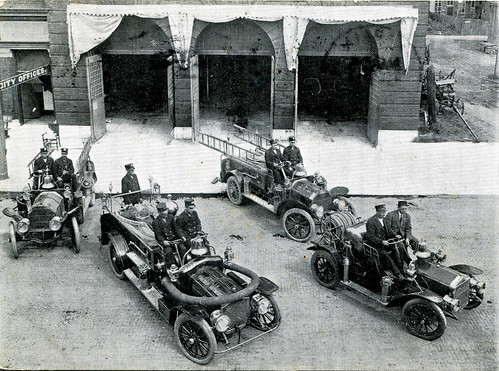
The motorized Joplin Fire Department

The motorized Joplin Fire Department with its two ladder trucks, chemical truck, and fire chief's engine.

This innovation even made the pages of a 1909 issue of Popular Mechanics, which reported on the “up-to-date fire fighting machines.”  The four cylinder gas engines of the cars also powered the pumps and worked at a furious 75 horse power.  The chief fire engine carried a thousand feet of hose and numerous four gallon tanks of chemical suppressant, in addition to a water pump.  The chemical engine, as it was called, hauled a sixty gallon tank, 200 feet of hose, and was powered by only a 25 horse power engine.  In addition, the department owned two ladder trucks powered by 50 horsepower four cylinder engines which carried a thousand feet of hose, plus two 30 foot extension ladders.

Fire chief's engine and chemical engine of the Joplin Fire Department

Another view of the fire chief's engine and chemical engine of the Joplin Fire Department.
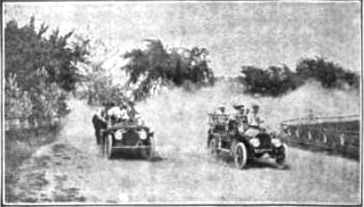
The Joplin Fire Department's two ladder trucks racing on a track

The Joplin Fire Department's two ladder trucks racing on a track.

From a small crew of twenty volunteers with buckets and axes to a modernized fleet of fire engines, the Joplin Fire Department entered the new century.  Despite the hazards it had already faced, it was not until 1923 when the department lost its first fireman, one of four honored by the department for their service and sacrifice.
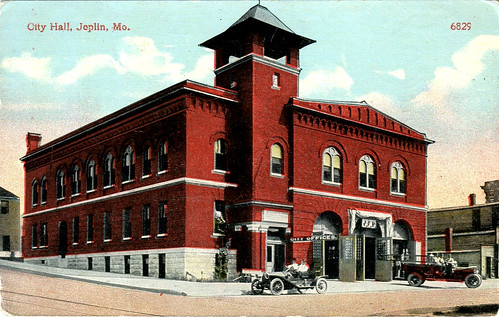
Joplin City Hall, which also housed the Joplin Fire Department station.

Joplin City Hall, which also housed the Joplin Fire Department station. Note the ladder truck on the right.

Sources: “A History of Jasper County, Missouri, and It’s People,” by Joel T. Livingston, Popular Mechanics, “The Story of Joplin” by Dolph Shaner, “Tales about Joplin…Short and Tall,” by Evelyn Milligan Jones, the Library of Congress, and the Joplin News Herald.
Joplin’s First Police Matron: Ellen Ayers

In the immediate years following 1900, Joplin continued to aggressively expand with more mines, more buildings, more wealth, and more vice. Back alley crap shoots, billiard halls, saloons, bars, and brothels were common sights. Just like mining towns in the American West, Joplin had its share of soiled doves. In 1904, a mix of Victorian morals, a steady number of prostitutes, and petty crime led to the public to demand that the Joplin Police Department hire a police matron.  A police matron, often an older woman, was placed in charge of female prisoners in the city jail.  The Joplin city council responded to the growing problem in the spring of 1904 when it unanimously passed an ordinance that required the city to hire a police matron.  The only hitch was that the hiring would have to wait until the next fiscal year as there was no money in the then city budget to pay the matron’s salary.

It was not until two years later, in 1906, that the city hired a police matron.  Over forty eager women applied for the position, but many were quickly turned aside for lack of skills, deportment, and experience deemed necessary for a qualified police matron. The field of candidates was narrowed down to three women: Mrs. Dona Daniels, matron of the city’s children’s home; Mrs. Agnes Keir, who oversaw Joplin’s chapter of the Young Women’s Christian Association (YWCA); and Mrs. Ellen Ayers.  Mrs. Daniels refused the offered position.  Mrs. Keir had her admirers and fans amongst the members of the YWCA, who all threatened trouble to the city council should they attempt to steal her away.  Through the process of elimination, Mrs. Ellen Ayers was selected as the successful applicant.

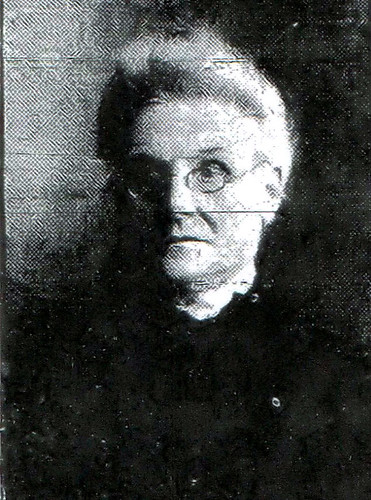
Joplin's first police matron, Ellen Ayers

Pictured here, Ellen Ayers took on the role of police matron at the age of 64.

Described by both a local Joplin paper and the city council as highly qualified and trained for the position, Ellen Ayers’ appointment was closely followed by the newspapers.  She was described as a “kindly faced, white haired woman of 64 years,” originally from near Portsmouth, Ohio, and moved as a young child several times, first to Trenton, Missouri, and then to Pleasant Hill, and finally to Paola, Kansas.  The uncertainty of safety found in the border counties between Kansas and Missouri prior to the outbreak of the Civil War may have been the reason her family moved temporarily to Kansas City, only to return after the war ended.  During the war, Ellen Fields, as she had been christened by her parents, met Felix M. Ayers, whom she married in 1864.  A farmer and Union veteran from Kentucky, Felix was gave up his plow for the miner’s pick and moved his family to Joplin in search of a more prosperous life.  He worked as miner until his health failed him, which may have prompted his wife to take on the candidacy of a police matron.

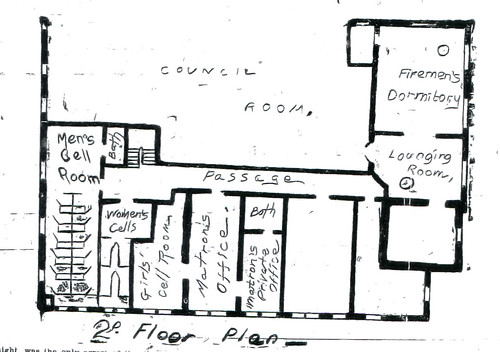
Although she was selected sometime around the end of 1906, she had to wait several weeks due to the fact that the city, despite the passage of the ordinance two years earlier, was still not ready for its new police matron to assume her duties.  On November 27th, Mayor C.W. Lyon formally recommended that she begin her duties, which some hoped would allow the Joplin police to “much better work” at in “exercising influence to restrain wayward feet.” It was not until December 1, 1906, that Mrs. Ayers officially began her job looking after the female prisoners of Joplin’s city jail.  While she had a residence at 1922 Pearl Street, an office and private apartment were prepared for her on the second floor of the city building, which was shared by both the city’s police and fire department. Described as inexpensive but “substantial” the paper promised a certain amount of coziness for its inhabitant.  Adjoining her living area was a wooden door, built to conceal a barred one behind it which had a cement floored cell for female prisoners.

Floor plan for the second floor of the Joplin Police Station

Floor plan for the second floor of the Joplin Police station, which also served as the fire station and city hall.

Mrs. Ayers approached her job nervously, admitting that the work was new to her, but professed her resolute determination to do a good job.  While unaware of what was entirely expected of her, she told a reporter that she thought that “firmness and kindness” were the most essential elements of her job.  Likewise, it was thought that the new police matron would provide motherly reassurance to the wayward women of Joplin.  Mrs. Ayers was the mother of four children; the only surviving child, a daughter, was Mrs. Myrtle Gobar.  One of the duties assigned to the police matron was inspection of the food served to the women, and on her first go Ayers quickly rejected a breakfast for her first charge, Nettie Waters.  Declaring the meal inedible, the police matron demanded a new one.  Nettie may have appreciated the care, but unfortunately did not get to experience much more of it as she was ordered off to the State Industrial School for Girls in Chillicothe for a year.

One week and twenty-four women later, a reporter caught up with Mrs. Ayers to obtain her reaction to her new job.  It was a job, Mrs. Ayers said, that demanded constant attention and required her presence nearly twenty-four hours out of the day at the city jail.  With the exception of when she left on business or for meals, the police matron found herself always in the city building.  The most striking and shocking revelation for Mrs. Ayers, was the “depravity” of the women she encountered.  While ages varied, many of the women were jailed for prostitution and street walking.  Of their vices, the police matron complained that many were addicted to cigarettes and “coke.”  Coke in this sense was the local term for morphine and cocaine.  She estimated two-thirds of the women were addicted to either morphine, cocaine, or both.  The police matron experienced the needs of an addict in one of her first days when a new arrival grew terribly sick and demanded a physician.

“She awakened me with the most painful screams.  I went to the door, and she was crying loudly, and complained that she was very sick.  I immediately went down stairs to see about getting a physician but the officers informed me that it wasn’t a physician she wanted, but rather some morphine.”

Beyond the dark and depressing side of Joplin’s prostitution problem, she also encountered women who arrived at the jail for other reasons.  One was a young girl, perhaps 16 or 17, who to Mrs. Ayers dismay constantly smoked during her conversations with the police matron.  Another girl was Alma Richards.  Described as appearing to be 14 years old, despite being much older, and possessing “dark eyes,” the girl had been to the Missouri State School for the Deaf and Dumb in Fulton, and despite being ascribed those qualities, communicated to Ayers through writing.  By this communication, the matron explained, she learned that the girl refused to go home due to the presence of an abusive father, who reportedly brutally beat her after she broke a window.  Alma’s presence at the jail caused its own news, as the city did not want to release her, and the Industrial School at Chillicothe refused to take her as she was older than 18 and reportedly, “unmanageable.”  Alma Richards’ fate is unknown.

Joplin's city hall, police and fire station

This building served as Joplin's city hall, fire station and police station. Mrs. Ayers' office was likely along the left side of the building pictured here.

For three more years, Ellen Ayers performed the role of matron for the Joplin Police Department before leaving the position in 1909.  After a period of time, she was replaced two years later in 1911 by Vernie Goff who worked the job until 1914.

As for Ellen Ayers, at some point before 1920, her husband Felix passed away.  In 1920, she lived a widow with either a nephew or niece, but by 1930 had her own room in a boarding house at age 87.  Despite the trials and undoubted stresses of the position as Joplin’s first police matron, Ellen Ayers did not let the job overwhelm her and hopefully lived the next 20 years of her life knowing she made a valuable contribution to her community as the city’s first police matron.

Sources: 1880, 1920, 1930 United States Censuses, Joplin Daily Herald, 1918 History of the Joplin Police Department.

The Miners Bank

As the riches of the mining fields of Jasper County drew investors, miners, and speculators in the 1870s, the need for a banking institution was obvious. One of the first men to step into this void was one of the fathers of modern day Joplin, Patrick Murphy, originally of Carthage. He and an associate established the town of Murphysburg, which later merged to form Joplin in 1873, and two years later, Murphy opened the Banking House of Patrick Murphy. A two story brick building, it was located on Main Street between Second and Third Streets. Murphy’s endeavor was a success.

A sketch of Patrick Murphy in his prime.

A sketch of Patrick Murphy in his prime.

Such was the success that the financial institution attracted investors and in 1877, the Banking House of Patrick Murphy was re-chartered and organized as the Miners Bank of Joplin. Murphy served as the first president of the bank, and was followed by Thomas E. Tootle. The first head cashier was Frank Kershaw. Kershaw’s successor was A.H. Waite. Most customers would have more likely known and recognized C.H. Spencer, who served as head cashier for at least sixteen years leading up to 1906. Local magnate Thomas Connor had served two terms as bank president. In fact, the board of directors included many of the wealthier citizens of the city, such as Connor, Howard C. Murphy, Edward Zelleken, C.W. Glover, and H.O. Bartlett.

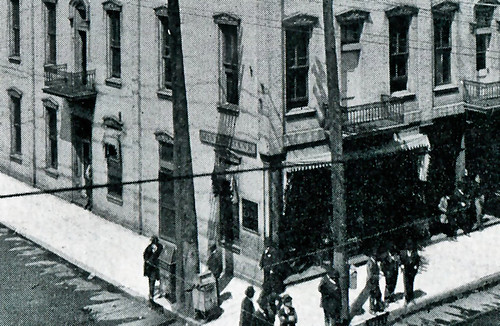
Miners Bank in Joplin Hotel

Magnified here is the corner of the Joplin Hotel, displaying the Miners Bank sign.

Miners Bank’s success was also reflected in its financial holdings. At its inception the bank held $25,000, by 1890 this was increased to $50,000 and a year later doubled to $100,000. Due to growth of its assets and the increasing number of depositors, Miners Bank moved from its location between Second and Third to take up residence to offices in the Joplin Hotel, and there remained from about 1885 to 1905. Over a slightly longer period of time than its stay at the Joplin Hotel, reported deposits at the bank grew from $35,700 to $949,000. Loans increased from $6,500 to $425,000. Cash on hand went from $15,000 to a bank robber’s dream of $97,000. Figures from 1905 listed the six most successful banks by deposits, and the Miners Bank was first and foremost, besting its nearest competition by more than $55,000. Until the bank’s move in 1905 from the Joplin Hotel, its chief competitor and runner up in the 1905 figures was the Joplin National Bank, located just across the intersection situated on the bottom floor of the Keystone Hotel.

Miners Bank opening

The Miners Bank building as featured in an article announcing its opening.

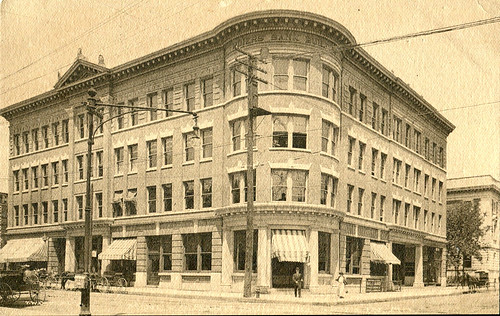
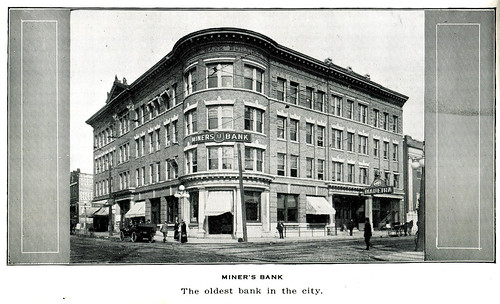
The move in 1905 may have been prompted by the plans of Thomas Connor to raze the three story Joplin Hotel with plans to build a larger, grander establishment, or may simply have been due to the banking institution’s success. The bank’s new home was just a block away from Main Street, where Fourth Street intersected with Joplin Street. The new building was described by one of Joplin’s paper as a “beautiful modern building, with elevators and all modern conveniences.” The offices were equally beautiful and constructed of marble, tile and steel. Designed by August Michaelis, one of Joplin’s most prolific and talented architects, the building was designed to accommodate an additional four more stories should the need arise. It was built at a cost of $125,000 by the firm of C.A. Dieter who later oversaw the construction the Connor Hotel.

The Miners Bank building sometime after its opening, but before a prominent sign

Another photograph of Miners Bank not long after it opened.

From July 1st of 1905, Miners Bank inhabited the ground floor, leaving the upper floors open to paying tenants, architect Michaelis included, and remained there until 1930 when it merged with Conqueror First National Bank. After the merger, the bank moved back to Main Street for the first time in twenty-five years, and with its departure ended an illustrious history that began in 1877. The last home of Miners Bank remained in use until a disastrous fire prompted its demolition in 1982.

Miners bank a few years after its opening.

The Miners Bank building a few years after its opening.

Miners Bank on corner of Fourth and Joplin Streets

A view of the Miners Bank building in context at the intersection of Fourth and Joplin Streets.

Sources: Missouri Digital History, Joplin News Herald, and the Story of Joplin by Dolph Shaner.

Growth of a City – Northwest Joplin

Sometimes it’s worth letting photographs speak for themselves.   Below are three photos taken from what is likely the Keystone Hotel of northwest Joplin, essentially a view of Fourth Street heading west.

1902 or earlier view of Northwest Joplin centered on Fourth Street

A photo of northwest Joplin, particularly Fourth Street from at least as early as 1902.

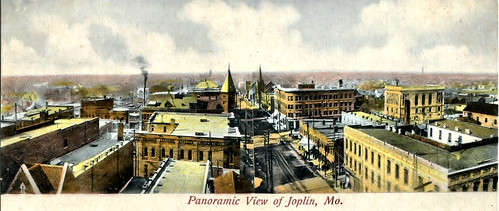
In the first photo we can see the Club Theater, which is on the left with the steeple at the intersection of Joplin and Fourth Street.  On the immediate right, we have the old Joplin Hotel which was constructed like the Club Theater prior to 1900.  What is missing  is the Miners Bank building which has not yet been built across the street from the Club Theater, as well the new Joplin post office building that was completed the same year as the aforementioned bank in 1905.

1905 - 1906 view of northwest Joplin featuring Fourth Street

1905 - 1906 view of northwest Joplin featuring Fourth Street

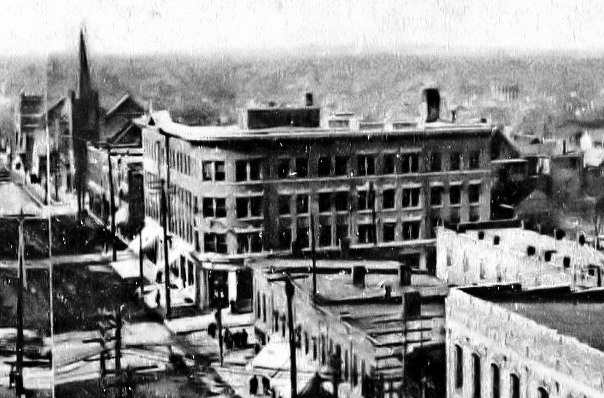
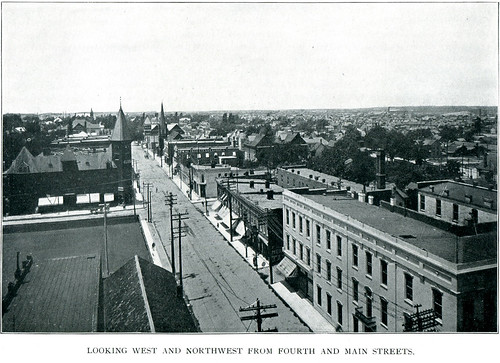
A few years later and there’s a recognizable change in Fourth street and the northwest view of Joplin.  Now across the street from the Club Theater is the Miners Bank building and to the right of it on Joplin Street is the brand new Joplin post office.  The vacant lot across the street from the Club Theater (the other side of Joplin Street) now has a two story building and laid down the center of Fourth Street are trolley rails.  The old Joplin Hotel is still in the right hand corner, but by this time Thomas Connor is likely already planning to tear it down to build a brand new hotel that one day would bear his name.  It was demolished at some point in 1906, which helps date this view.  Thus, sometime after 1905 and before a point in 1906.

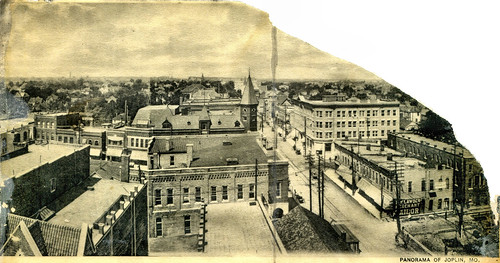
1906 to 1907 view of northwest Joplin featuring Fourth Street

1906 to 1907 view of northwest Joplin featuring Fourth Street

If only this photograph was not torn, we might have had a better view of the Joplin of 1906 or 1907.  Not much has changed from the last photograph except the absence of the old Joplin Hotel in the lower right hand corner.  Instead, we have the beginning excavations for the foundation of the future Connor Hotel.   Constant in all three photos are two narrow buildings in the center bottom or left, one with a flat roof and the other with a peak.  In a few short years, a seven story building would take their place and might have contributed to the decline of the Keystone Hotel as a popular spot to take a northwest view of Joplin.

Thus, in three photos that likely cover a time span of less than a decade, you can get an inclination of the rapid growth of Joplin.

Sources: Historic Joplin’s private collection.