The Keystone Hotel – Before and After

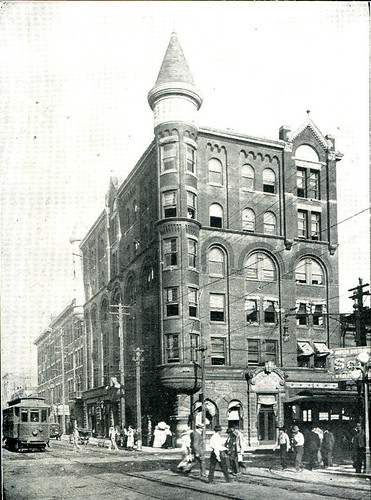
As you drive north up Main Street and come toward the intersection of 4th and Main Street, you may find yourself blinking from the sun in your eyes.  The sun is there because the tall and towered Keystone Hotel is not.  Below is a photograph of the Keystone (which was built prior to the turn of the century – HJ will be writing up a post on the hotel later) from before 1913.

Keystone Hotel circa 1913

The Keystone Hotel at the busy intersection of 4th and Main Street

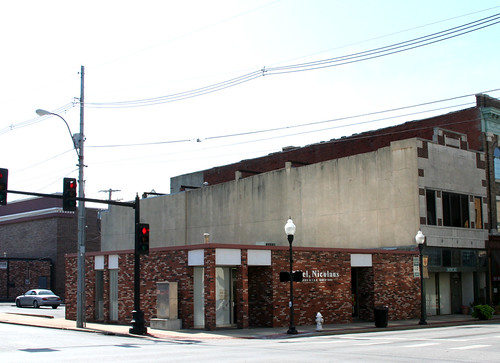
And here is today’s occupant of the same bit of earth.  We suppose it’s a step up from simply being a parking lot.

SE corner of 4th and Main Street

The new occupant of the southeast corner at 4th and Main Street

The Keystone Hotel was demolished in the late 1960’s under the “progressive” wave of urban renewal.  Joplin has lost too many of its historic buildings to allow anymore to follow a similar path.

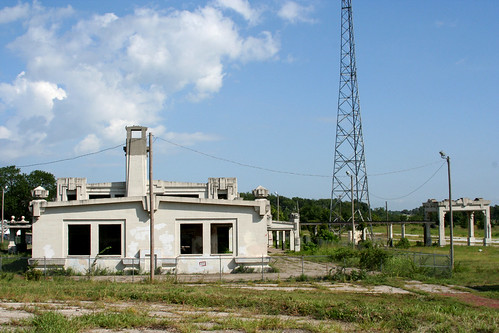
Joplin Union Depot Today

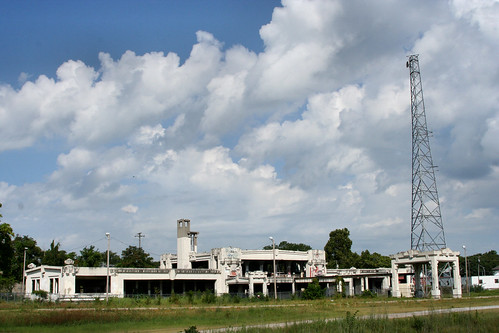
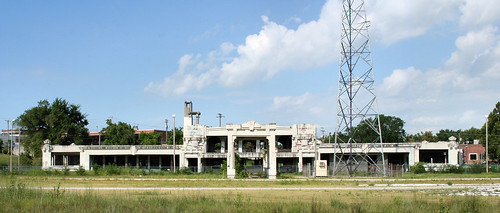
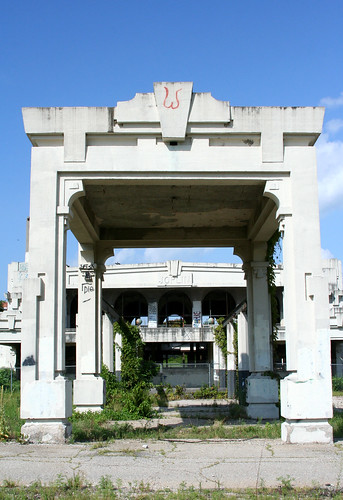
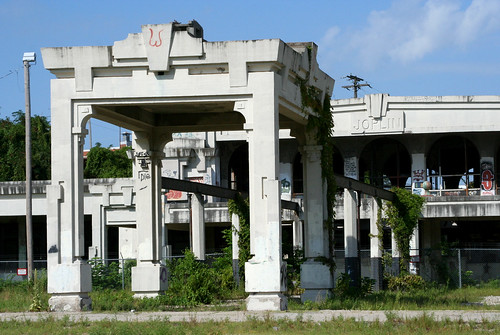
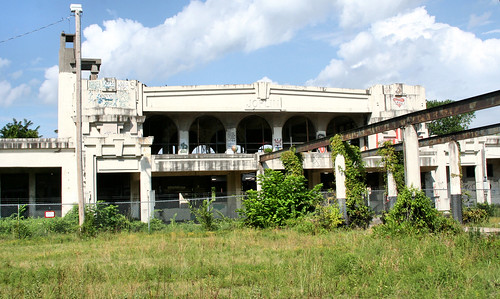
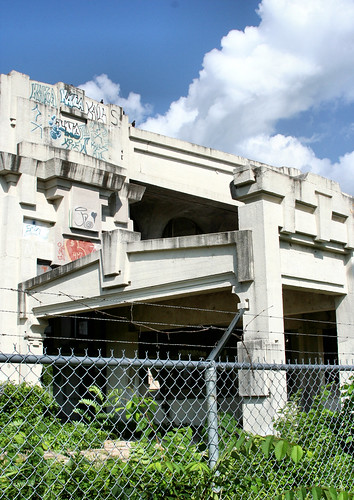
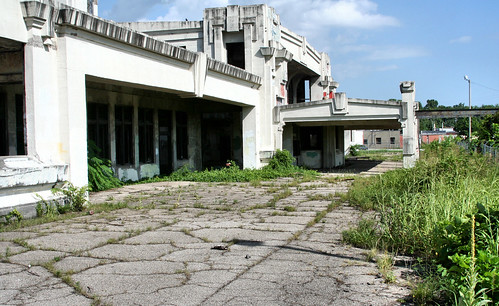
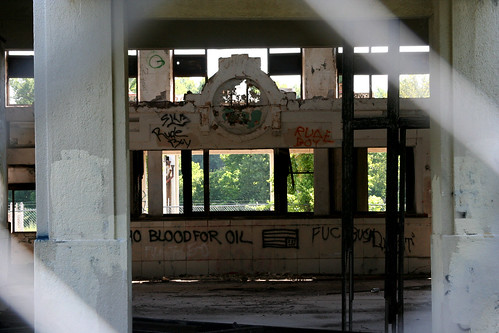
While Historic Joplin is currently at work on a post about the Union Depot’s history, we took the opportunity to visit the beautiful building last week.  Below are some photographs (but not all) of the building designed by Louis Curtiss, an architect of Kansas City.  There would be no folly greater than to allow this treasure to be loss for lack of a will to take action to restore it.

Joplin Union Depot

Joplin Union Depot East Facade

Joplin Union Depot East Facade

Joplin Union Depot

East Awning

Joplin Union Depot

Joplin Union Depot

Grass, Stucco, and Metal

Joplin Union Depot

Fence, Sky, Green, and East Facade Detail

Joplin Union Depot

Joplin Union Depot West Facade

Joplin Union Depot West Facade

Joplin Union Depot Interior

Joplin Union Depot Interior

Joplin Union Depot South Facade

Joplin Union Depot South Facade

For more photographs, see this Flickr set.

The Worth Block – Before and After

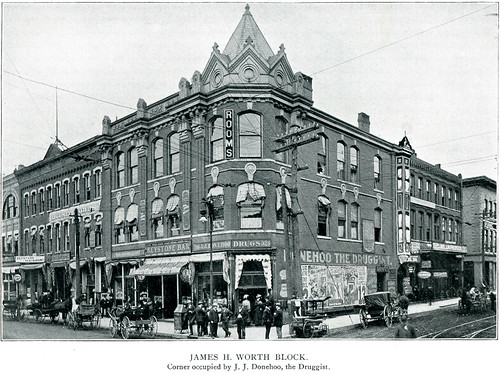
Named for the flamboyant James H. “Jimmy” Worth, the Worth Block was originally the property of the widow, Gertrude Bertz. Ms. Bertz’s ownership extended back to the earlier days of Joplin. We’ll go more into the fascinating background of how Jimmy and Gertrude at a later date. For now, we’ll leave you with this depressing example of the effect of Joplin’s urban renewal. The economic heart of Joplin’s downtown, 4th and Main, which hosted the Connor Hotel, the Keystone, and the Worth Block, will never be the same again. One more reason why it’s so important to preserve what still remains from Joplin’s glorious past for its future.

Worth Block - Joplin, Missouri

The Worth Block circa 1902

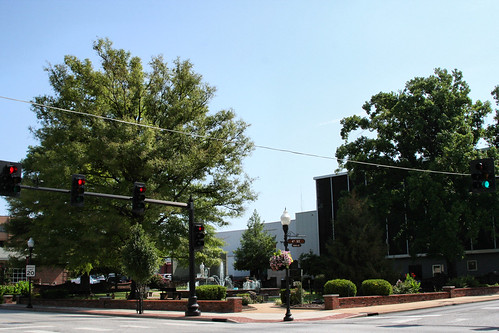
And now the present appearance of the northeast corner at 4th and Main.

The park at 4th and Main Street

Little remains that offers evidence of the once busy intersection.

On the right side of the above photograph is the home of the Joplin Globe, which has been at this location since it took over the city’s original YMCA building (the YMCA moved to its present downtown building at that point).  The original building should still be under the modern facade and perhaps someday, it will see the light of day again.

Renovated Union Depot Proposed Home For Museum

At last night’s City Council meeting, City Manager Mark Rohr proposed that the Union Depot be renovated to be used as a new home for the Joplin Museum Complex. As covered by the Joplin Globe, Rohr believes that existing sources of funding exist and as a result, no new taxes would be required for the project.

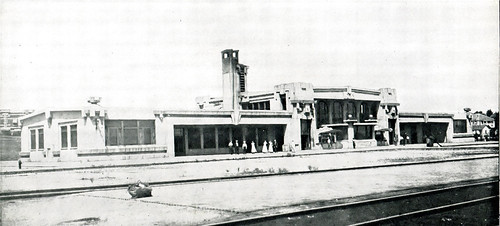
Joplin Union Depot

The Joplin Union Depot not long after it was opened. A great future home for the Joplin Museum Complex.

We, here at Historic Joplin, strongly support this proposal.  We hope that it becomes reality and that someday in the near future, we can walk in and enjoy a beautifully restored depot.  Even though the Carnegie Library appears not to have been part of the new plan, we hope it too has a bright future.

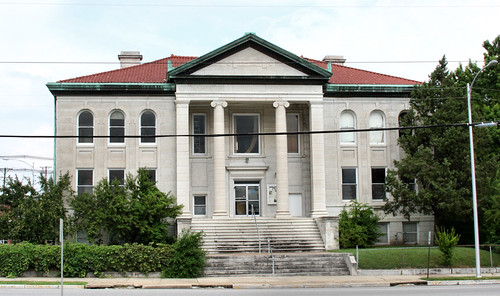
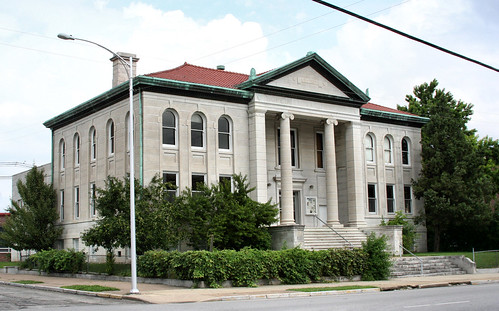
Joplin Carnegie Library

The Joplin Carnegie Library as it appears in 2010.

Joplin Carnegie Library – Then and Now

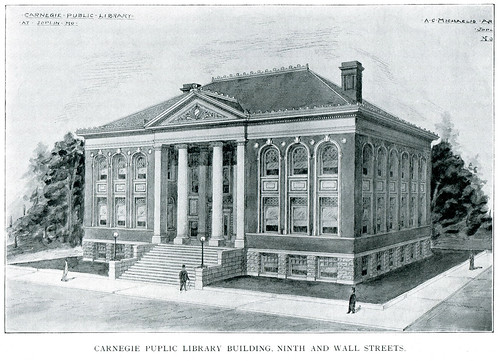
The Joplin Carnegie Library may come up in a city plan to be discussed tonight, July 6, 2010, by City Manager Mark Rohr, as part of the redevelopment plan for the city. As such, we figured to show a series of photographs (and one drawing) of the Joplin Carnegie Library.

First, we have the award winning sketch of the library by August Michaelis, a distinguished Joplin architect of the time.

August Michaelis' winning design for Joplin's Carnegie Library

August Michaelis' winning design for Joplin's Carnegie Library

Next we have a photograph not long after it was built:

The Joplin Carnegie Library

The Joplin Carnegie Library not long after completion.

Now we have the library as it appears today. It is privately owned, but in need of restoration. It is easily one of the most beautiful buildings in Joplin.

Joplin Carnegie Library

The Joplin Carnegie Library as it appears today.

Source: Historic Joplin Collection

The Joplin Carnegie Library and the Origins of Joplin Public Library: Part Two

Under a bright October afternoon sun, a crowd of ten thousand gathered to watch a parade snake its way from Fourth and Joplin streets to Main Street.  It turned under the watchful gaze of the Keystone Hotel and then proceed south to Ninth, where it turned again to the right and came to a stop at Ninth and Wall.  It was October 8th, and the people of Joplin had come to celebrate the laying of the cornerstone of the new Carnegie Library.

The parade had formed at 2:30 pm and consisted of a number of different groups.  In the vanguard was Police Chief Jake Cofer with a platoon of police officers.  Behind the police, the South Joplin band played and stomped in celebration, and were followed by 66 members of the Knights Templar from Joplin and the surrounding area.  The contingent of Knights Templar was outnumbered by the 151 members of the Masonic Blue Lodge.  Behind the Masons came 2,386 excited school children, headed by 29 high school students and teachers, walked four abreast down the city streets.
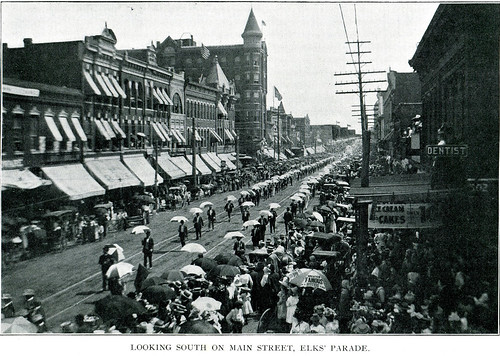
An Elks Parade on Joplin's Main Street

A different parade, but an example of a parade down Main Street and how the Elks might have marched that October afternoon.

Behind the flood of children came 24 grey headed members of the Grand Army of the Republic from  Joplin’s O.P. Morton Post. As in 1865, the veterans marched proudly behind a cherished battle flag.  Approximately 60 individuals of the Elks and Eagles followed the veterans and then bringing up the rear were thirty members of the Knights of Pythias commanded by Joplin attorney Joel T. Livingston.

Thousands surrounded the construction site of the library.  The limestone walls soared over the crowd, such was the progress that had been made since Augustus C. Michaelis was selected as the architect in February.  A platform rested against the side of the building next to where the cornerstone was to be laid.  Children, anxious to see the ceremony, climbed the surrounding trees and hung perilously from branches.

A band took up position beside the platform while the mayor of Joplin, John C. Trigg, climbed onto the platform to address the crowd.  His speech, the lengthiest of the day, began with the origin of the movement for the library.  The mayor boasted that the tax revenue from property valued at $4,000,000 was more than sufficient to support the library, but also noted that it had not been enough for the construction of the building.  For this, Mayor Trigg credited industrialist Andrew Carnegie who, “came to the rescue and dissipated all doubts and disquieting fears.”  Trigg continued:

“No event in the history of the city of Joplin will perhaps stand out in bolder or more prominent relief in the future than the laying of the corner stone of the Carnegie public library building…It should be accentuated as a distinct epoch in the annals of the city, from which to date as from the dawn of the new century, an augmented zeal in the material, moral and intellectual improvement of our people of all classes and conditions…”

After the mayor established the effect of the library on the city, he then described the benefit of books, “The inestimable value of books is no longer a vexed or mooted question.  The wise, the good and the great of all ages and nations, divines, poets, philosophers and statesmen, have contributed the most cogent and convincing testimony in support of the premise.”  Trigg went on, reading excerpts from such authors as Joseph Addison, Richard DeBury, and Louisa May Alcott.  Finally, and perhaps to the relief of some in the crowd, the mayor concluded his speech.  This was followed by a brief rendition of the song, “Remember Now Thy Creator,” that setup the next speaker, Reverend Paul Brown.  Brown was a substitute for Judge Picher, who had been unable to attend the ceremonies that day.

Reverend Brown reflected on the origin of free libraries and then spoke of libraries as essential to democracy:

“What is the end of democracy?  I answer the end of democracy is a natural aristocracy.  There is an aristocracy of nature which no contract or statute can ever abolish….Here in the district, our chief industry, mining, weeds out weaklings and cowards, and creates a natural aristocracy of physical courage and vision in the depths of the earth.  Now what does democracy guard against?  Not natural aristocracy, but artificial, the aristocracy of mere birth or place or force or accident.  Democracy means that equality of opportunity which will give the natural aristocracy a chance.”

It was books, Brown argued, that provided the opportunity for men to overcome the privileged aristocracy who were born to fame, title, or fortune.  Brown, after noting famous authors of history, praised the city’s superintendent, J.D. Elliff, whom Brown stated, had played the crucial role in seeing the library created.  Brown soon concluded his remarks, followed by a song from the band, and again, when the time finally came for the actual laying of the cornerstone.
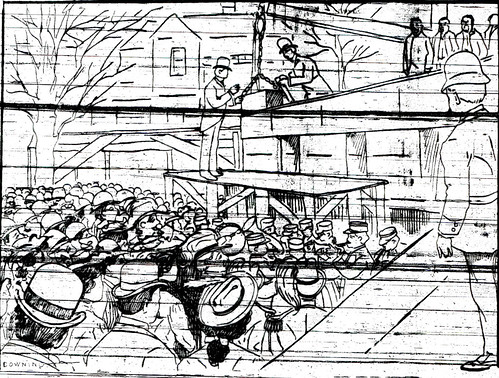
Laying of the Joplin Carnegie Library cornerstone

The laying of the cornerstone of the Joplin Carnegie Library.

This august moment was overseen by the Most Worshipful Grand Master of the Masons, John C. Yocum.  The Grand Master announced the placement of the cornerstone, as it was guided by a small crane and lowered carefully into place.  An invocation was given by the Mason’s Grand Chaplain, who was accompanied by the Masonic ceremonies of deposit and consecration.  One last speaker arose, Dr. W.P. Kuhn, a senior grand warden of the Masons from Kansas City.  Dr. Kuhn opted to win the crowd through praise of the children present, as well a quick joke about Methodist and Presbyterian preachers:

“ The Methodist preacher never prepared a sermon or at any rate never had any reference notes, but his services were largely attended, while the Presbyterian divine labored conscientiously over his discourses, wrote them painstakingly out and read them with painstaking fidelity.  But, his flock was few, and in a spirit of discouragement he came to the Methodist preacher and asked him why it was that the people crowded to hear him who never prepared a sermon while his own church was all but empty.  And the Methodist replied, “My good friend, you write out your sermons and the devil is right there behind you.  He knows every word that you’re going to say and he is able to circumvent every effort you make, no matter how praiseworthy.  Now I don’t know what I’m going to say and I know the devil don’t know what I’m going to say either, and that’s the difference between us.”

Dr. Kuhn concluded by stressing the importance of free libraries, as they were part of the “three planks that the structure of every American community is founded.”  The other two planks were free thought and free speech.  Immediately after the crowd sang, “America,” and the cornerstone laying ceremony ended with a benediction offered by the Rev. Charles A. Wood.

With the cornerstone laid, construction on the library resumed.  The building incomplete, the actual Joplin library, which was already in existence was housed at the Joplin high school and overseen by Lucile Baker, the first librarian.  Ms. Baker was a writer for the Joplin News-Herald and used the byline of “Becky Sharp” in a nod to Missouri’s own Mark Twain.

The library was finally completed a year later.  The city received its first check from Andrew Carnegie at a sum of $5,000.  Twelve years later, the city sought and received another $20,000 from the generous benefactor for an addition to the west side of the library.  In charge of the library, now at home in its new building, was Mary B. Swanwick, who was joined by assistant librarians Blanche Trigg, Mary Scott, and Hattie Ruddy Rice.
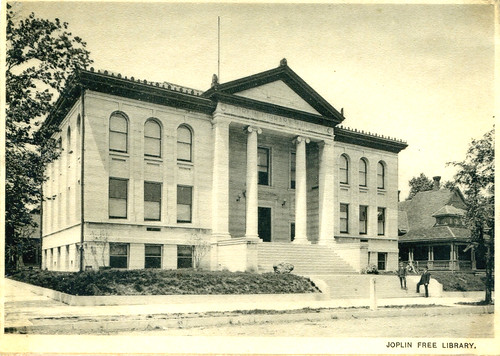
The Joplin Carnegie Library

The Joplin Carnegie Library not long after completion.

As of 1911, the library had 15,737 books as well as 2,643 magazines and periodicals.  Over the year, over ten thousand people used the library, around 1/4th of the city’s population, and almost 65,000 books were circulated.  Active card holders numbered almost 7,000.  Ten years later, the head librarian, Swanwick, passed away and was eventually replaced by Blanche Trigg, daughter of Joplin Mayor John Trigg. She oversaw the institution until 1949.  It was under the oversight of Trigg’s successor, Margaret Hager, who helped lead the movement in the 1970s to purchase the Connor Hotel and the rest of the 300 Block as the site of a new library building.  That building, the present home of the Joplin Public Library, opened in April, 1981.

Sources: Joplin News Herald, Joplin Globe, “A History of Jasper County, Missouri and its People,” by Joel Livingston, and Missouri Digital History.
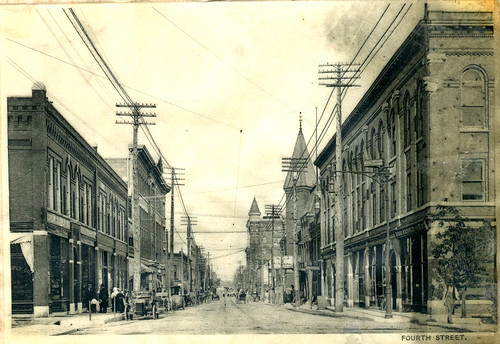
Growth of A City – Fourth Street Looking East

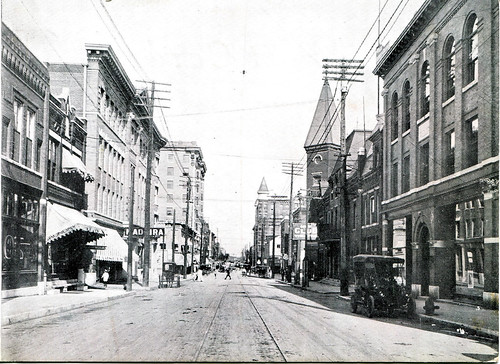
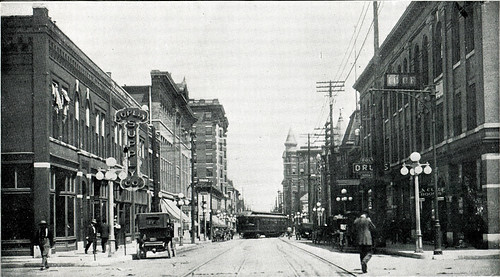
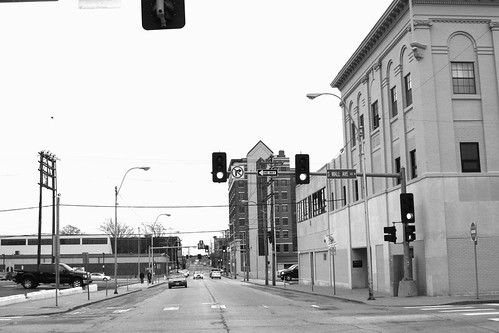
At the height of Joplin’s boom days, the intersection of Fourth and Main streets was the beating heart of the city’s commercial district.  It was no coincidence that the city’s two greatest hotels, the Connor and Keystone, faced one another from opposite corners, or that Democratic party boss, Gilbert Barbee owned the House of Lords on another corner.  Along Fourth Street, particularly that west of Main, was prime real estate.  One venturing down west Fourth Street found themselves passing the Club Theater, as well the Elks Club lodge and the home of the Miners Bank.  In the next few photos, we’ll examine the change to the street over just a few years.  In addition, with a nod to Leslie Simpson’s latest book, Now and Then and Again: Joplin Historic Architecture, a present day view of the street.

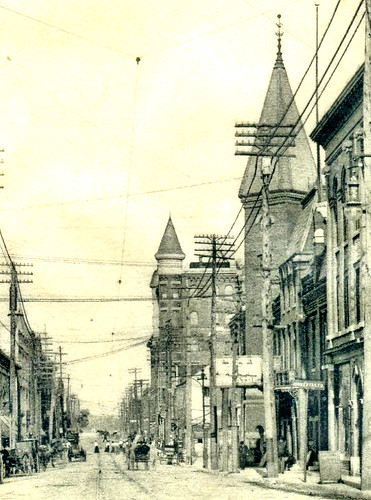
A view of Fourth Street looking east - sometime before 1906.

A view of Fourth Street looking east - sometime before 1906.

In this first view there are several clues to time the photograph was shot.  First, visible to the right is the steeple roof of the Club Theater.  The Club Theater was completed in 1891.  The conical roof further down the street marks not only the Keystone Hotel, built in 1891 and completed a year later, marks the intersection of Fourth and Main.  On the left side of the street, a block down and hardly noticeable is the old Joplin Hotel.  What is not in this photograph is the Connor Hotel, an eight story building that was built where our squat Joplin Hotel now stands.  The Joplin Hotel was razed in 1906.  As such, we know this photograph dates from before that time.  Speculatively, sometime from 1891 to 1906.

View of Fourth Street looking east sometime after 1908.

View of Fourth Street looking east sometime after 1908.

In this view we have some familiar faces.  The Club Theater on the right, the Keystone down the block, and on the immediate right, the once Elks Lodge and offices of the Joplin Water Works.  The main difference is now the reverse of our previous photograph.  Where the old Joplin Hotel stood, now stands the Connor.  Its presence lets us know that this photograph was taken after its completion in 1908.  Note the change in design of the automobiles on the street and the lack of horse drawn wagons or carriages that were present in the previous view.

Fourth Street looking east - sometime before 1913.

Fourth Street looking east - sometime before 1913.

Our third view of Fourth Street.  The Connor and the Keystone are both present.  The steeple roof of the Club Theater is conspicuously absent, though you can see the roof line of the club’s western side.  Incidentally, by this time, the Club Theater, despite a renovation in 1905, had lost its status as the finest theater in town to the Shubert Theater which was located several blocks down to the south.  The vehicles are a little more modern and a subtle aspect is the switch from one set of trolley tracts to two.  Also different, which allows us to place this photograph as more recent, is the addition of electric signs to the facades of the buildings.  Now, we state that this photograph is dated as having been taken before 1913.  How did we come to that number?  In this case, its simply knowing your source.  This photograph came from a booklet published in 1913 to publicize the city, which allows us to place that hard date.

Fourth Street looking east - present day.

Fourth Street looking east - present day.

This photograph, taken on March 13, 2010, is not for the faint of heart for those who love the architecture of bygone days.  All that remains from the previous photographs is our friend the one time host of the Elks and Joplin Water Works building on the immediate right.  The row of buildings on the left are gone, though a few halfway down the block disappeared in the 1920’s when the Connor built an annex further down the block from its Fourth and Main location.  The Club Theater is gone, the front of a car, marks the parking lot that now remains in its place.  On the left down the block is the Joplin Public Library, situated where the Connor Hotel stood until 1978.  The Keystone, destroyed several years before the Connor, is gone.  The building visible beyond the library is the Joplin Globe office, visible only because the Worth Block was demolished (taking with it the House of Lords).  On a bright note is the tall building at the end of the block on the right side.  It was built around 1923 and managed to survive the devastation that was “Urban Renewal.”

If any comfort can be taken from this view of modern day Fourth Street it is that the City of Joplin has embarked on a mission to restore and recognize the city’s remaining historic buildings.  A drive down Main Street reinforces the belief that while a lot has been lost, that which remains will be saved.

Sources: Historic Joplin collection, Missouri Digital Heritage.

The Miners Bank

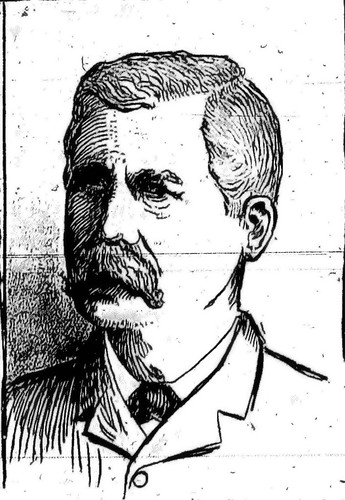
As the riches of the mining fields of Jasper County drew investors, miners, and speculators in the 1870s, the need for a banking institution was obvious. One of the first men to step into this void was one of the fathers of modern day Joplin, Patrick Murphy, originally of Carthage. He and an associate established the town of Murphysburg, which later merged to form Joplin in 1873, and two years later, Murphy opened the Banking House of Patrick Murphy. A two story brick building, it was located on Main Street between Second and Third Streets. Murphy’s endeavor was a success.

A sketch of Patrick Murphy in his prime.

A sketch of Patrick Murphy in his prime.

Such was the success that the financial institution attracted investors and in 1877, the Banking House of Patrick Murphy was re-chartered and organized as the Miners Bank of Joplin. Murphy served as the first president of the bank, and was followed by Thomas E. Tootle. The first head cashier was Frank Kershaw. Kershaw’s successor was A.H. Waite. Most customers would have more likely known and recognized C.H. Spencer, who served as head cashier for at least sixteen years leading up to 1906. Local magnate Thomas Connor had served two terms as bank president. In fact, the board of directors included many of the wealthier citizens of the city, such as Connor, Howard C. Murphy, Edward Zelleken, C.W. Glover, and H.O. Bartlett.

Miners Bank in Joplin Hotel

Magnified here is the corner of the Joplin Hotel, displaying the Miners Bank sign.

Miners Bank’s success was also reflected in its financial holdings. At its inception the bank held $25,000, by 1890 this was increased to $50,000 and a year later doubled to $100,000. Due to growth of its assets and the increasing number of depositors, Miners Bank moved from its location between Second and Third to take up residence to offices in the Joplin Hotel, and there remained from about 1885 to 1905. Over a slightly longer period of time than its stay at the Joplin Hotel, reported deposits at the bank grew from $35,700 to $949,000. Loans increased from $6,500 to $425,000. Cash on hand went from $15,000 to a bank robber’s dream of $97,000. Figures from 1905 listed the six most successful banks by deposits, and the Miners Bank was first and foremost, besting its nearest competition by more than $55,000. Until the bank’s move in 1905 from the Joplin Hotel, its chief competitor and runner up in the 1905 figures was the Joplin National Bank, located just across the intersection situated on the bottom floor of the Keystone Hotel.

Miners Bank opening

The Miners Bank building as featured in an article announcing its opening.

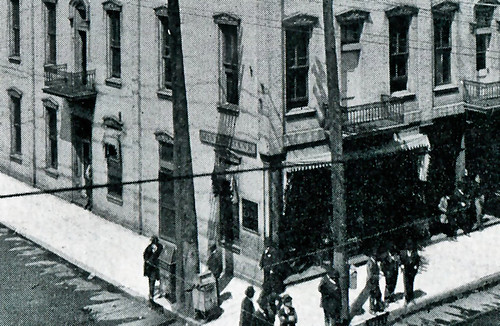
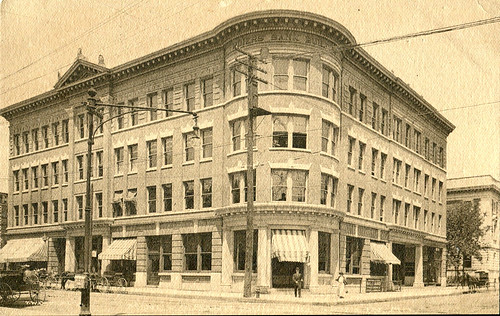
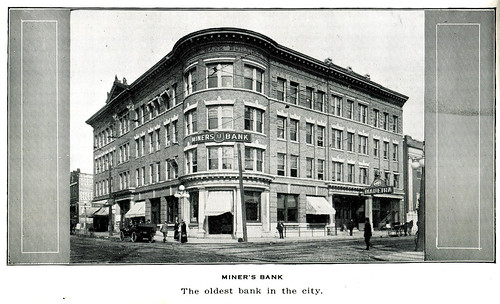
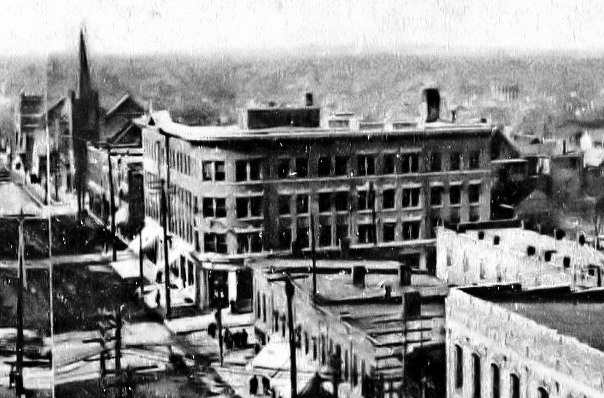
The move in 1905 may have been prompted by the plans of Thomas Connor to raze the three story Joplin Hotel with plans to build a larger, grander establishment, or may simply have been due to the banking institution’s success. The bank’s new home was just a block away from Main Street, where Fourth Street intersected with Joplin Street. The new building was described by one of Joplin’s paper as a “beautiful modern building, with elevators and all modern conveniences.” The offices were equally beautiful and constructed of marble, tile and steel. Designed by August Michaelis, one of Joplin’s most prolific and talented architects, the building was designed to accommodate an additional four more stories should the need arise. It was built at a cost of $125,000 by the firm of C.A. Dieter who later oversaw the construction the Connor Hotel.

The Miners Bank building sometime after its opening, but before a prominent sign

Another photograph of Miners Bank not long after it opened.

From July 1st of 1905, Miners Bank inhabited the ground floor, leaving the upper floors open to paying tenants, architect Michaelis included, and remained there until 1930 when it merged with Conqueror First National Bank. After the merger, the bank moved back to Main Street for the first time in twenty-five years, and with its departure ended an illustrious history that began in 1877. The last home of Miners Bank remained in use until a disastrous fire prompted its demolition in 1982.

Miners bank a few years after its opening.

The Miners Bank building a few years after its opening.

Miners Bank on corner of Fourth and Joplin Streets

A view of the Miners Bank building in context at the intersection of Fourth and Joplin Streets.

Sources: Missouri Digital History, Joplin News Herald, and the Story of Joplin by Dolph Shaner.

Growth of a City – Northwest Joplin

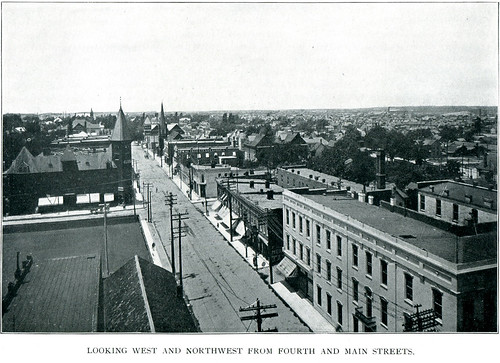
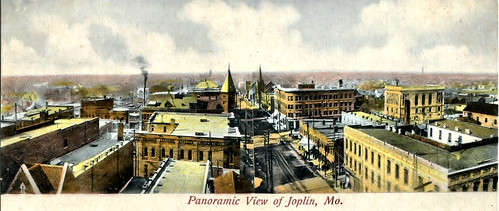
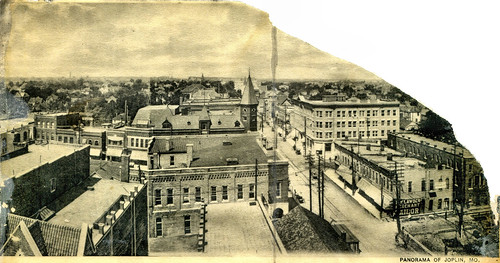
Sometimes it’s worth letting photographs speak for themselves.   Below are three photos taken from what is likely the Keystone Hotel of northwest Joplin, essentially a view of Fourth Street heading west.

1902 or earlier view of Northwest Joplin centered on Fourth Street

A photo of northwest Joplin, particularly Fourth Street from at least as early as 1902.

In the first photo we can see the Club Theater, which is on the left with the steeple at the intersection of Joplin and Fourth Street.  On the immediate right, we have the old Joplin Hotel which was constructed like the Club Theater prior to 1900.  What is missing  is the Miners Bank building which has not yet been built across the street from the Club Theater, as well the new Joplin post office building that was completed the same year as the aforementioned bank in 1905.

1905 - 1906 view of northwest Joplin featuring Fourth Street

1905 - 1906 view of northwest Joplin featuring Fourth Street

A few years later and there’s a recognizable change in Fourth street and the northwest view of Joplin.  Now across the street from the Club Theater is the Miners Bank building and to the right of it on Joplin Street is the brand new Joplin post office.  The vacant lot across the street from the Club Theater (the other side of Joplin Street) now has a two story building and laid down the center of Fourth Street are trolley rails.  The old Joplin Hotel is still in the right hand corner, but by this time Thomas Connor is likely already planning to tear it down to build a brand new hotel that one day would bear his name.  It was demolished at some point in 1906, which helps date this view.  Thus, sometime after 1905 and before a point in 1906.

1906 to 1907 view of northwest Joplin featuring Fourth Street

1906 to 1907 view of northwest Joplin featuring Fourth Street

If only this photograph was not torn, we might have had a better view of the Joplin of 1906 or 1907.  Not much has changed from the last photograph except the absence of the old Joplin Hotel in the lower right hand corner.  Instead, we have the beginning excavations for the foundation of the future Connor Hotel.   Constant in all three photos are two narrow buildings in the center bottom or left, one with a flat roof and the other with a peak.  In a few short years, a seven story building would take their place and might have contributed to the decline of the Keystone Hotel as a popular spot to take a northwest view of Joplin.

Thus, in three photos that likely cover a time span of less than a decade, you can get an inclination of the rapid growth of Joplin.

Sources: Historic Joplin’s private collection.

The New Club Theater

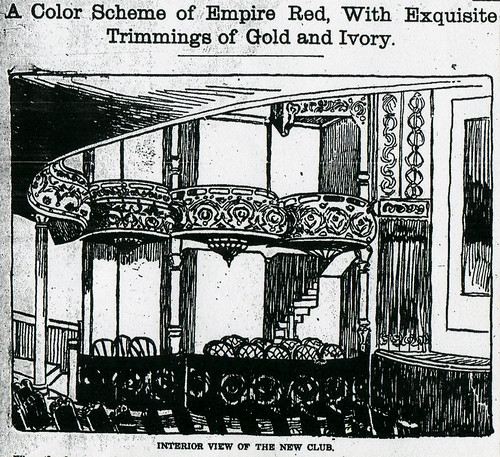
When the Club Theater was renovated in 1902, the interior was trumpeted as a “color scheme of Empire Red, with Exquisite Trimmings of Gold and Ivory.” The theater, originally built in 1891, stood watch at the intersection of Fourth and Joplin Streets. After its renovation it was commonly referred to as the New Club Theater. The idea for its construction originated as a meeting place for Joplin’s business and social elite.

The Joplin Club, formed in 1889, was comprised of Joplin’s most influential and powerful citizens. They were civic minded men who were inspired to promote and improve Joplin.  The club members played a key role in the construction of the Keystone Hotel in the early 1890’s, the finest lodging in the city until it was eclipsed by the Connor Hotel which opened in 1908.

Once a week Joplin’s captains of commerce, men like German born brewer Charles Schifferdecker and real estate mogul Thomas Connor, met to discuss the future of Joplin.  Members of the club realized two things.  First, the club needed a proper meeting place to hold their gatherings. Second, and most importantly, they realized that Joplin lacked what they believed every up and coming city needed, a first class theater. Intent on building a clubhouse for the betterment of Joplin, the club purchased lot located a block west of the center of city’s commercial heart at Joplin and Fourth Streets. The lot was reportedly purchased at a price of over five thousand dollars (though this may have included cost of construction).

On January 26, 1891, the Club Theater formally opened. It boasted seating for 1,400 patrons in a theater situated in on the west side of the building along Joplin Street.  A painted scene of local landmark Grand Falls adorned the stage curtain.  On the north side of the second floor was an area reserved for the Joplin Club to host its formal and informal functions and meetings.  This area may have consisted of two grand rooms.

Street view of Club Theater

This photograph likely taken prior to 1902, the Club Theater is the steepled building on the right. The Keystone Hotel at Fourth and Main Street is just down the block with the conical roof.

The first production to grace the stage of the theater was Shakespeare’s King Henry VIII.  Centuries before, when Shakespeare’s Globe Theater had produced the play, an accident during the show had resulted in a fire that burned the theater to the ground.  Tragically, the Club Theater would later suffer a similar fate.

The clubhouse section of the theater was formally dedicated on March 4th, 1891, with Joplin’s finest in attendance.  It was a scene of well-dressed gentlemen sipping spirits and filling the air with the rich aroma of Havana’s finest. Speakers included the head of the Joplin Club, W.H. Picher, who spoke and then read from a letter sent to the Joplin Club from Governor David Francis.  The next to speak was the Honorable Gabriel Schmuck, who had traveled from Galena, Kansas, and then a local judge, O.H. Picher.  Other speakers, from nearby Carthage, Webb City, and Neosho all spoke of the prominence and promise of Joplin.

The New Club Theater as pictured in 1902

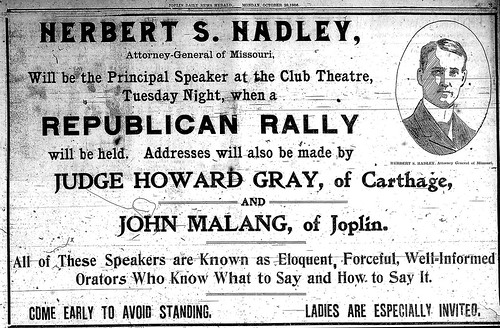
An ad for Attorney General Herbert Hadley is evidence of the powerful and important figures who the Club Theater hosted in its heyday.

Eleven years later, wear and tear had taken its toll upon the Club Theater. By this time the Joplin Club had sold its interest in the theater to other investors, and renovations were begun in August, 1902 at a reported cost of at least $15,000. Period newspapers claimed the newly refurbished theater had no equal in the great state of Missouri with the exception of perhaps the Willis Wood Theater in Kansas City.  Renovation work had taken three months to complete. Workers replaced stained and worn panels with new panels of empire red and ivory wainscoting trimmed with gold.  Gold and ivory were also used to dazzling effect throughout the interior in the ornamentation of the boxes, gallery and balcony fronts.

Interior illustration of Club Theater

An interior illustration of the Club Theater

For the wealthy, eight boxes were available as well as six loges. All were carpeted with plush red velvet.  The same lush carpeting extended to the gallery floor for the enjoyment of those of more modest means.  The stage was expanded to a size of forty-five by sixty-five feet, with an arch overhead complete with a sounding board painted a soft blue and decorated with white clouds and branching red roses.  The stage even had the capability to expand even greater to allow for the production of the most modern and elaborate plays or musicals.

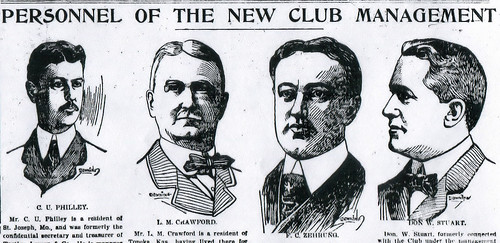
Of the men in charge, only one was a local to Joplin, Don W. Stuart. Stuart had worked at the theater under its previous management.  The other three were essentially absentee owners, C.U. Philley from St. Joseph, L.M. Crawford of Topeka, Kansas, and F.C. Zehrung of Lincoln, Nebraska.  All three men were involved in the entertainment business.  For another six years, the New Club Theater was the premiere venue in Joplin, attracting operas, minstrel shows, and famous conductors as they swept across the nation entertaining Americans with the music of a new century.  In that time, the theater charged anywhere from ten to thirty cents for admission.
Sketches of the New Club Theater's managers

The New Club Theater's Managers: From Left to Right is C.U. Philley, L.M. Crawford, F.C. Zehrung, and Don W. Stuart

However, in 1908, the Shubert Theater opened several blocks away, and assumed the position as the premier theater of the city of Joplin.  All that was left to the New Club Theater was the low brow amusements of vaudeville and memories of the great operatic performers and productions.  An implicit indication of this loss of status was the absence of the New Club Theater in a promotional photo booklet put out by the city of Joplin in 1913, where as the theater had been included in a 1902 version of this booklet.

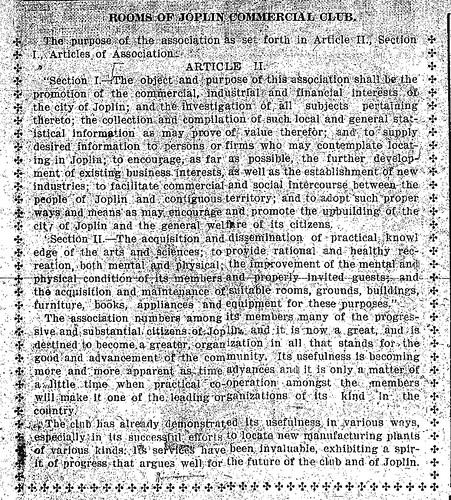
Ad for Commercial Club

By 1906, the Joplin Club had moved out of the premise and the Joplin Commercial Club placed an ad in the local paper describing its value and place in Joplin society. (For easier to read version just click on image).

Ten years  following the opening of the Shubert, in 1918, the theater portion of the building burned and was never replaced.  What remained of the New Club Theater continued on regardless, eventually being remodeled as an office building.  A fire struck again in 1939, but the building persevered, but ultimately was unable to escape a fiery fate when in 2003 a grease fire from a restaurant located within brought the once proud building down to ashes.  Today only a parking lot remains.

Sources: History of Jasper County by Joel Thomas Livingston, Missouri Digital Heritage, and the Joplin Daily Globe.