A Bed In Joplin

Curious to know how much it would have cost to stay in some of Joplin’s hotels?

In 1914, Joplin had an estimated population of 32,073 and had 21 hotels.

Here’s what it would have cost you to stay at some of Joplin’s finer establishments:

Blende Hotel

D.H. McHeeman, Proprietor

Rates: 50 cents and $1.00 per day

Clarendon Hotel

L.S. Branum, Proprietor

Rates: $1.00 per day

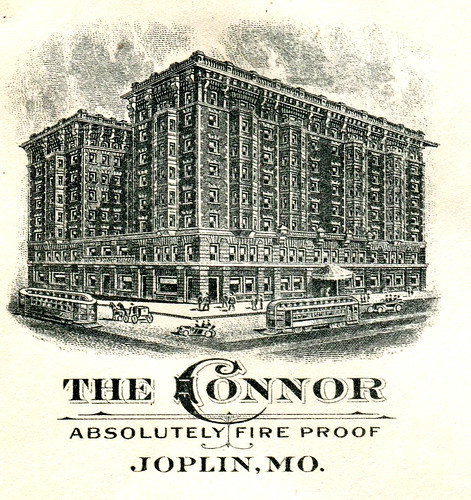
Connor Hotel

T.B. Baker, Proprietor

Rates: $1.00 per day and up

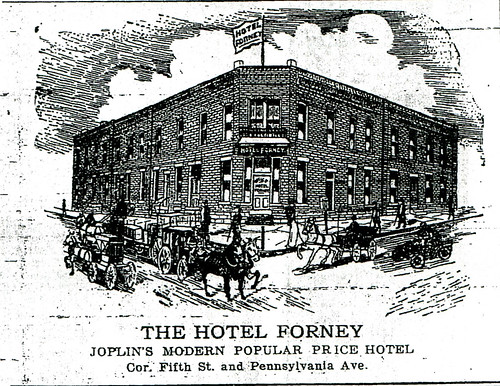
An illustration of the Hotel Forney from an advertisement.

Hotel Forney

I.P. Forney, Proprietor

Rates: $1.50 and up

Keystone Hotel

W.P. Walton, Proprietor

Rates: 75 cents and up

South Joplin Hotel

Gus Searr, Proprietor

Rates: $1.00 and up

Turner Hotel

William D. Turner, Proprietor

Rates: $1.25 per day

Yates Hotel

C.E. Yates, Proprietor

Rates: 1.75 per day

Robert Avett, proprietor of the House of Lords, did not respond to the questionnaire and thus while the hotel was listed in the directory, the cost of a room was not listed. The same went for many other Joplin hotels, including the following: Roosevelt Hotel, La Grand Hotel, Clarkton Hotel, Cliff House, Southern Hotel, Crescent Hotel, and Crystal Hotel.

Hotels in Springfield, hailed as the Queen City of the Ozarks and Joplin’s rival, had similar rates. The finer hotels, such as the Colonial, charged $2.50 and up per day in comparison to Joplin’s Connor Hotel, which charged $1.00 and up.

Source: Official Hotel Directory of Missouri

Glimpses of Yesterday

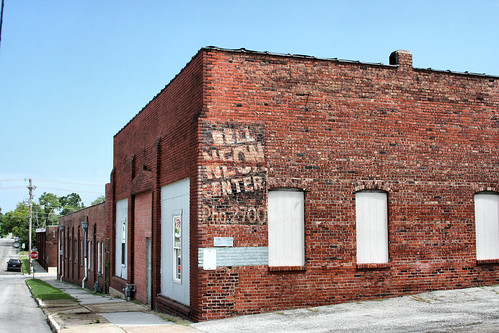
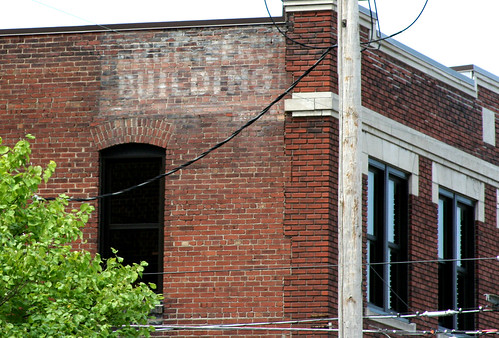
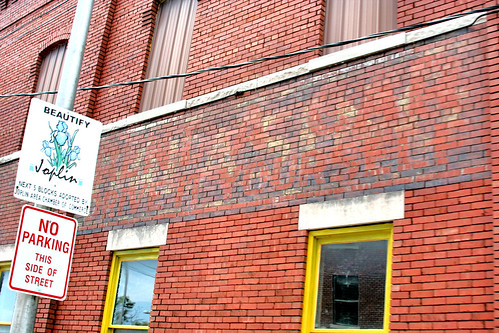
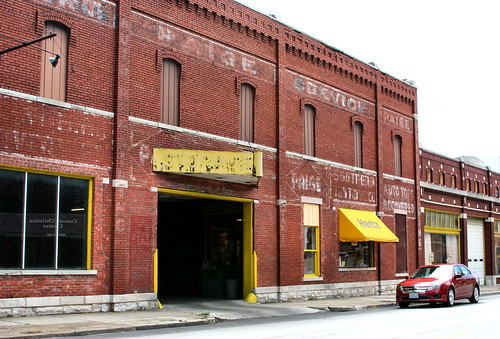
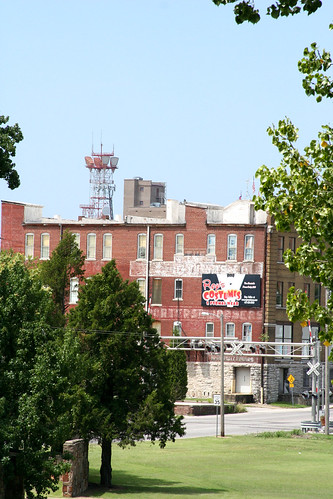
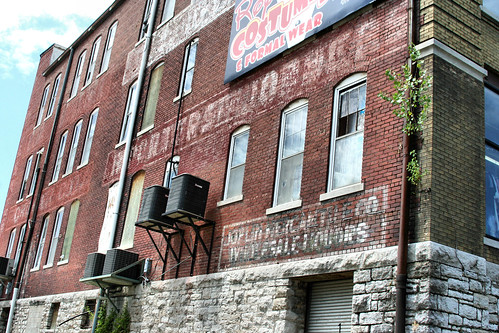
Painted on the sides and fronts of buildings are glimpses of another time in Joplin.  Prior to the more popular use of neon, plastic, and other materials, paint, often applied straight onto the building, was the most common form of advertising.  A drive around downtown Joplin reveals the remnants of these past days long gone.  Below are a number of shots of some, but not all such wonderful instances:

Joplin Main Street

An early photo of Joplin's Main Street reveals a number of painted signs.

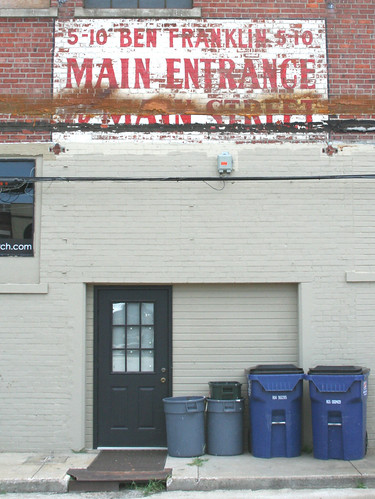
Joplin's Ben Franklin Five and Dime

Ben Franklin Five and Dime

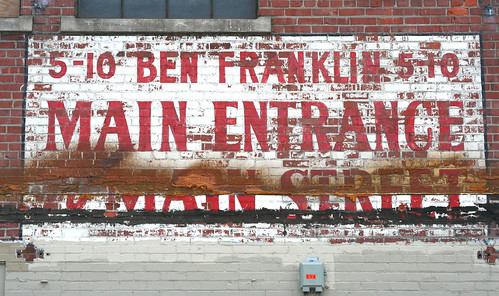
Franklin Five and Dime close up

Close up of the previous image.

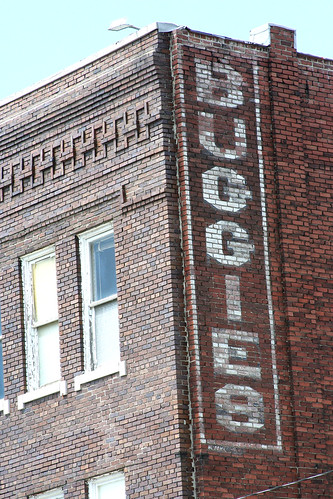
Buggies

Buggies

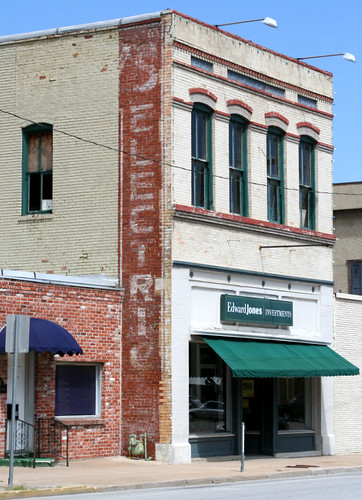
Select Right

'S Electric

Bell Neon Center

Bell Neon Center

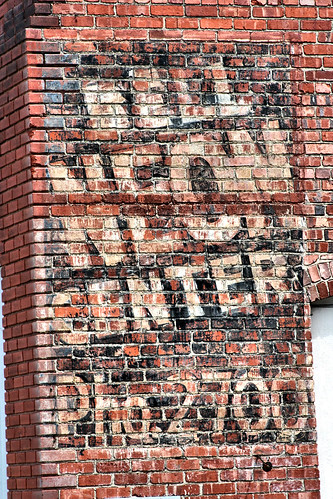
Bell Neon Center close up

Note the length of the phone number for the business.

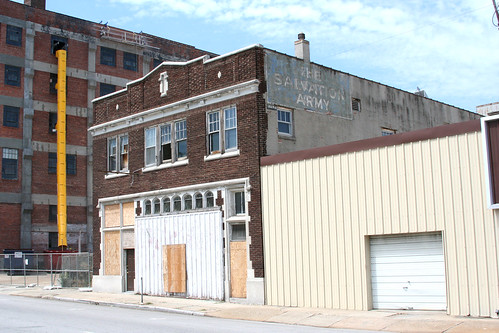
Salvation Army

Salvation Army sign on the Hulbert Chapel (which is part of the next proposed historic district)

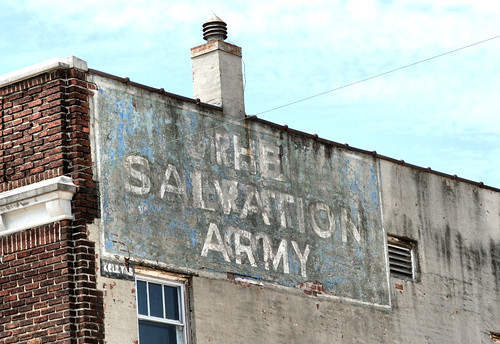
Salvation Army Close Up

Close Up of the Salvation Army sign

Engineers Building

Engineers Building

Rent-A-Car

Rent-A-Car / Drive Yourself

Paige Service

Paige Service

Joplin Mercantile Company

Joplin Mercantile Company

Joplin Mercantile Company close up

Joplin Mercantile Company close up

These legacies of the past are easily lost, be it from neglect or intentional destruction.  Let’s treasure the ones we have, as they serve as a direct connection to the past and offer a glimpse of another time.

The Murphy Mansion

In 1889, a reporter with the Joplin News Herald met with P. Monneron, architect of Patrick Murphy’s new mansion. According to Leslie Simpson’s From Lincoln Logs to To Lego Blocks: How Joplin Was Built, the house was a prime example of the Romanesque Revival style of architecture. Located at 402 Wall, the Herald reporter described the house as follows:
 
“The building will comprise cellar and two stories. The ground plan somewhat irregular in outline to conform with the artist’s design of the superstructure, is about 40×60 feet. The basement will be constructed of a 24 inch stone wall, rising above the surface sufficiently to afford ample light and ventilation to the cellar. The portion above ground will be constructed of cut stone. In the cellar will be located the furnace and boiler for heating the entire structure by steam. It will in addition furnish ample room for all other purposes.”
 
The reporter remarked that the location of the house was “the handsomest building site in the vincinity of Joplin, lying directly south of the cemetery. The tract contains forty a cres, a greater part of which is already set in trees.” The land had a small rise on which Murphy planned to build the house so that it sat a reported 21 feet above a nearby reservoir.
 
The house itself was situated so that it faced east with a carriage drive “with walks on either side and lines of shade trees flanking both.” There was a second entrance located at the north end of the property. It too would be lined with trees and passed behind the house and on to the barn. The house itself had a “wide veranda with receding angles below; a short stretch of balcony in front of the upper story and a tower reaching a height of fifty feet rising from the southeast corner.” With a total of 17 rooms, the house cost an estimated $8,000. In today’s money, with inflation taken into consideration, the house would probably cost around $200,000 to build today.

Sources: Joplin News Herald, Leslie Simpson’s From Lincoln Logs to To Lego Blocks: How Joplin Was Built.

Globe Overview of the Union Depot

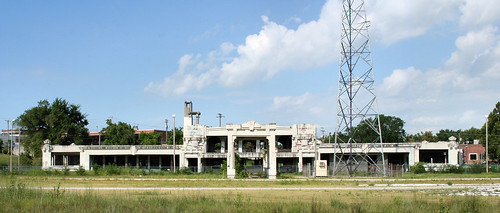
Joplin Union Depot

East Facade of Joplin Union Depot

This last weekend, the Joplin Globe offered up a summary of the present situation with the Union Depot.  In addition, the Globe put together a short timeline of events for the Depot from its opening over 99 years ago.

The summary covers in brief the past attempts at restoring the Union Depot, including an offer in 1973 by the Kansas City Southern to deed the Depot to the city.  That proposal was nixed by the then head of the Joplin Museum Complex, Everett Richie.  The excuse given then was the danger that the active train tracks posed to the museum and its collection should it be moved to the location.

The Globe managed to speak briefly with Nancy Allman, who was the lead in the effort to restore the Union Depot in the 1980’s.  Allman did confirm that she still had in her possession some items from the Union Depot.  This is good news for the restoration of the Union Depot.  Even if Ms. Allman may not want to donate or sell the items, perhaps she would at least allow the restorers to photograph and measure the items for reproduction purposes.
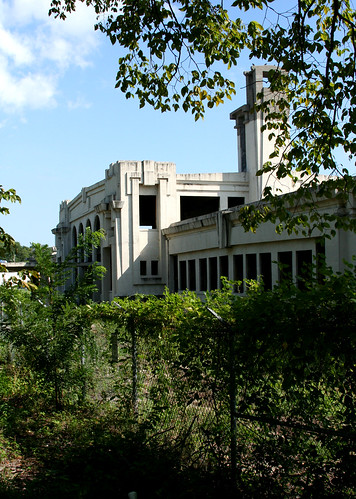
Joplin Union Depot

West Facade of Joplin Union Depot

The article also brings us via Allen Shirley the 3 Key Issues for the JMC about a move to the Union Depot.  Let’s look at them one by one:

1) The Union Depot’s structural integrity.

Reports indicate that the work done in the prior restoration attempt went along way toward reinforcing and repairing structural integrity issues.  In the walk through by the Joplin Globe with David Glenn, who was part of the restoration team from the 1980’s, Glenn comments on the strength of the building.

2) There’s less than 400 sq foot than the current museum.

As we’ve pointed out in previous coverage of the Union Depot question, there are two measurements being offered of the Union Depot’s space; one from the JMC and company, and one from Mark Rohr.  It really boils down to the basement.  One side counts it and the other side doesn’t.  The basement also brings about another issue, as we’ll address below.  There’s no reason more space cannot be constructed to supplement the Union Depot and done so in a simple, elegant and complimentary manner to the Union Depot.  Here’s an off the cuff idea: enclose the concourse extending from the depot with glass, creating a beautiful glass hallway, and have the end of the concourse connect to a secondary building.  There’s plenty of space available for such an addition.  None the less, an addition may not even be necessary.

3) Environmental Control

Appropriately, the JMC Board is concerned about the presence of environmental control in the Union Depot.  It seems that it would be a matter a fact element of any renovation of the Depot, particularly a restoration performed with a archival purpose in mind.  In many ways, as photographs will often attest, the Depot is a blank canvas and now is the time where such improvements can be made and without the cost of tearing out existing material to replace it.  (That former material has already been torn out!)   Again the basement and the standing water.  Here’s a simple answer: pump any water out, replace any water damage and effectively seal the basement walls.  We’re not contractors here at Historic Joplin, but this solution does not seem to be one of great complication.

Mr. Shirley claims that the JMC board has not taken a position about the proposed move.  We would disagree.  No member of the board, or JMC Director Brad Belk, have not once said anything positive about the idea.  In the summary, Mr. Shirley does note they support the preservation of the Depot, as we would hope of those who are charged with protecting the city’s history.  However, supporting the saving of the Depot does by no means equate to supporting the idea of moving the museum.  Fearfully, three members of the City Council appear ready to allow the Board to do as it wishes, which means doing absolutely nothing.  The Board wanted Memorial Hall for a new home, turned down the offer by the Gryphon Building, and will have to be dragged into the Union Depot.

This is not the time for inaction.  Joplin has embarked on a push of re-establishing itself as a city of beautiful buildings and one engaged not only with its past, but with an active present focused on its increasingly vibrant downtown.  The relocation of the museum to the Union Depot would not only give more people a reason to visit downtown, but its better accessibility than the remote location by Schifferdecker Park would mean more would take the time to learn about the city’s glorious past.

The leadership of the city has proven itself innovative and bold by the successful and ongoing restoration downtown, we hope that the leadership does not back down at this important juncture.  The City holds the purse strings of the JMC and if the Board of the JMC is not willing to play a part in the revitalization and the new beginning of Joplin in the 21st century, the City should tighten those strings.  The Board of the JMC needs to accept that they will not always get what they want and assume a much more forward thinking position, lest they end up as dust covered exhibits they profess to preserve.
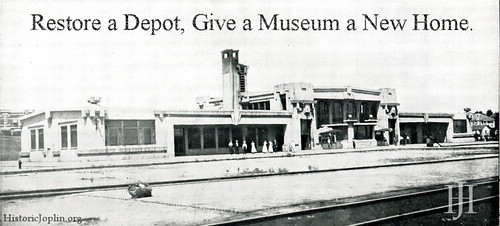
HJ Joplin Union Depot

Be Bold, Joplin!
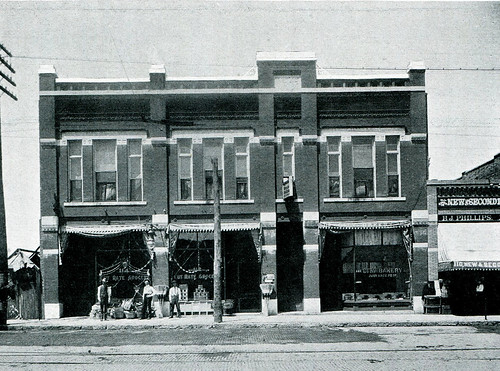
A Quick History In The News Round Up

Joplin's Missouri Pacific Depot as of July, 2010

Joplin's Missouri Pacific Depot as of July, 2010

A couple things have popped up in the Joplin Globe over the last few days.  In good news, the old Missouri Pacific Depot that was saved and moved to its present location by David Glenn has found new owners.  Glenn bought the depot when it was scheduled to be destroyed and carefully relocated it to its spot off of Rangeline where it opened up as Timberline restaurant.  In the future, we’ll provide a little more history on this smaller depot of Joplin’s past.   The new owners are Raymond and Amy Yen, who will re-open it later this year as a far eastern restaurant.  Let’s hope when it comes to decoration that they don’t alter anything original!

The other news item has to do with the arrival in Joplin of general American history, a restored B-17 Flying Fortress, the Liberty Belle. Just like another restored B-17, Aluminum Overcast, the Liberty Belle, never saw combat due to being produced at the end of the war.  However, that doesn’t make her any less grand a lady.  It’s highly recommended to go visit the Liberty Belle when she arrives on August 29 at the Joplin airport.  For those of you in Springfield, she’ll visit Springfield’s airport a day earlier on August 28.   Check here for her schedule and more information about the Liberty Belle.

Music Video Joplin

For those of you who just want to sit back and look at photographs of historic Joplin and listen to good music in the process, we present to you Patrick McPheron’s work, Presenting Joplin (click here!).  McPheron is a free lance designer in Los Angeles with Joplin roots and crafted this music video using photographs and images from Digital Postcard Collection at the Joplin Public Library’s website.

For a look at the rest of McPheron’s work, including photographs, other videos, and music, just follow this link to Interiorstate.com.

Tepidness Reigns Supreme at Museum Board Meeting

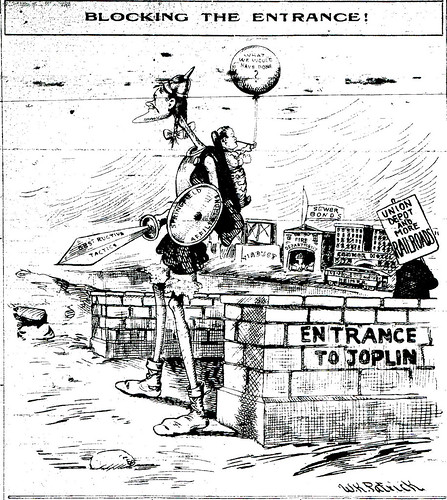
Joplin newspaper cartoon

Don't Let the Obstructionist Win!

This last week’s meeting of the Joplin Museum board was a showcase in tepid response to bold planning for the future.  The topic of the meeting, covered by the local news station KODE, was the possible relocation of the museum to the Union Depot.  The news segment featured interviews with board member Allen Shirley and City Councilman Benjamin Rosenberg.

Shirley continued what is now becoming a two month long hem haw of expressing a cautious disapproval for the idea of moving to the Union Depot.  The main point expressed by Shirley in his interview was the lack of exhibit space, a point raised by Museum Director Brad Belk previously.  The matter of sufficient space appears to be growing into the banner to be waved by the Joplin Museum Board, we expect to hear it raised again and again as their argument against the move.

From even before City Manager Mark Rohr’s presentation, the Joplin Museum Board has not wanted to move to the Union Depot, and since the presentation, have protested as much as possible without appearing reactionary.  It is clear that if the Joplin Museum Complex is to be moved to the Union Depot, the board will have to be dragged kicking and screaming.  The angry child who did not get its prized relocation and taxes to take over Memorial Hall now just want to take their ball and go home, rather than settle for something less than they desired.

Disconcertingly, the meeting was attended by three city council members, which as the news report explained were there in support of the museum board.  Of the three, only Benjamin Rosenberg opted to speak with a reporter and offered a fascinating rebuttal against Mark Rohr’s well grounded plans for Joplin’s growth over the next five years.  Rosenberg, when asked about the plan declared, “I had no part in the city manager’s vision.  I had no pre-warning. I had no consultation with the city manager.”  By all appearances, it seems Mr. Rosenberg does not like or agree with Rohr’s plan that was presented earlier this summer.

Rosenberger also told the reporter that he strongly believed the fate of the museum should be left in the hands of the museum board and not forced by the hand of the city.  This would be a rational position to take were the museum lead by forward thinking, competent and experienced individuals, but that is not the case.  The only imaginative thinking the museum has displayed in recent years has been to spring an idea that was overwhelmingly disapproved of by 75% of the city’s voting residents.  Meanwhile, the popularly supported plan of moving the museum to the Union Depot languishes because neither the museum board nor apparently some of the city council are willing to take bold steps for Joplin’s future.

Is Joplin anymore the city of Thomas Connor, Charles Schifferdecker, or Thomas Cunningham?

We say nay!

Where is the vision?  Why the desire for mediocrity?  Where is the leadership that has helped to restore downtown?  Joplin became the city that is resplendent with beautiful buildings and good people because its leaders in the past were unwilling to quietly abide.  It would do the museum board well to remember this, a lesson they should learn if they are at all familiar with the history they have sworn to safe keep.

HJ Union Depot image

It Is Time To Be Bold!

Update on Nominated Historic Districts

Becky Brill, of the city of Joplin, was kind enough to drop by and leave us an update on the status of the nominations that went before the Missouri Advisory Council on Historic Preservation on Friday.  For those of you following the status of the Joplin and Wall Historic District and the South Main Street Historic District, Becky had some good news!  Both districts were approved by the council and were recommended to be placed upon the Federal Register of Historic Places as commercial districts (which bring important tax benefits).  That final decision will be made by the Federal government in Washington, D.C.   Becky’s comment noted that that decision will probably come in October.  Let’s hope for good news in the fall!

For those of you who missed our initial coverage of the nomination of the districts, here’s the post with all the details.

Downtown Areas Up For Historic Designation

Today’s Joplin Globe features an article on the Missouri Advisory Council on Historic Preservation and its consideration of several areas in downtown Joplin for historic district status.   The two areas that the city wants to join the Sunshine Lamp District include an area located between Joplin and Wall and 1st and 3rd streets and would be known as the Joplin and Wall Historic District, the other would be the South Main Street Historic District, an area on the west side of Main Street between 1st and 2nd Streets.   If the Missouri Advisory Council on Historic Preservation signs off on these nominations, they would then be forwarded to the Federal Register of Historic Places.  If placed on the register, buildings in the districts could qualify for Federal and state tax credits.

Here’s a link to a draft of the Joplin and Wall Historic District nomination.

The draft describes the historic area:

“”The Joplin and Wall Avenues Historic District (Photos 1‐11) consists of an approximately three square‐block 5‐acre area in the northern reaches of the central business district of Joplin, which is in Jasper County, in southwestern Missouri. The district is topographically flat and contains a total of 13 buildings dating from c. 1900 through the 1930s, all of load‐bearing masonry construction, flat‐roofed, and ranging in height from one story to five stories; no residential buildings are in the district. (continued below…)

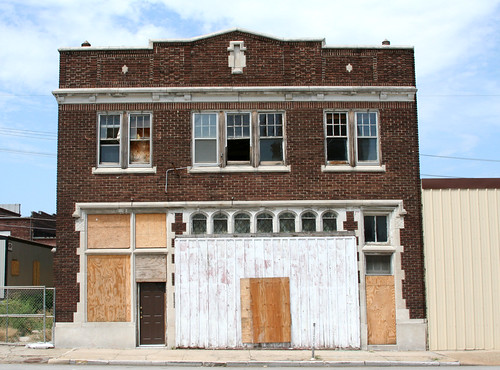
Joplin Supply Company building

Joplin Supply Company building is included in the Joplin and Wall Historic District

“(continued…) The nominated area is located along a grid of three blocks of Joplin and Wall Streets which run north‐to south and are intersected by West First, West Second, and West Third Streets and unnamed alleys running both north‐south and east‐west. Of the 13 buildings in the district one, the Joplin Supply Company (Resource No. 13; Photos 3, 6), was previously listed in the National Register (NR 2007). Of the remaining 12 unlisted buildings, 11 contribute to the character of the district and one is a noncontributing element with reference to the district as a whole. The overall appearance of the district is entirely commercial, lacking landscaping and characterized by a grid of paved streets and alleys, concrete sidewalks, with most buildings built flush with one another. Some buildings have associated surface parking; the largest vacant parcel is associated with a 1936 former bus depot (Resource No. 5); this parcel was used historically for bus parking.”

Hulbert Chapel 2010

Hulbert Chapel, next door to the Joplin Supply Company building is also part of the nominated Joplin and Wall District

The draft provides a list of the properties, a brief description of each, as well some history.  Such recognizable buildings are the Joplin Supply Company building, the Greyhound Bus Depot across from the library, and the old court house post office building.

Here’s the link to the draft for the nomination of the South Main Historic District.

The draft describes the area as:

“The South Main Street Historic District (Photos 1‐8; Figs. 1‐4) is located in the City of Joplin, Jasper County, in southwestern Missouri. This one‐block long linear district encompasses less than one acre and occupies all of the west side of South Main Street between West First and West Second Streets and consists entirely of commercial architecture dating from the turn of the twentieth century through c. 1910. The district is located at the northern periphery of the central business district and contains ten buildings of one and two stories in height, all of load‐bearing masonry construction. Two buildings are non‐contributing elements within the context of the district as a whole and the remaining eight are contributing.

The district retains the characteristic dense concentration of development which typifies most downtown areas, with all buildings constructed without front‐lot setback. Rear‐lot setbacks vary
from building to building, and surface parking is provided behind most properties. All but two of the district’s buildings are built flush with one another; two adjacent buildings are separated by a narrow walkway. The district fronts on South Main Street, West First and Second Streets form the district’s north and south boundary, respectively, and an unnamed alley establishes the district’s western boundary. New construction and vacant lots are immediately adjacent to the nominated district, and the Joplin and Wall Avenues Historic District, nominated concomitant with this district but distinct in its own right, is to the west.”

Miles Block circa 1902

The Miles Block as it appeared around 1902.

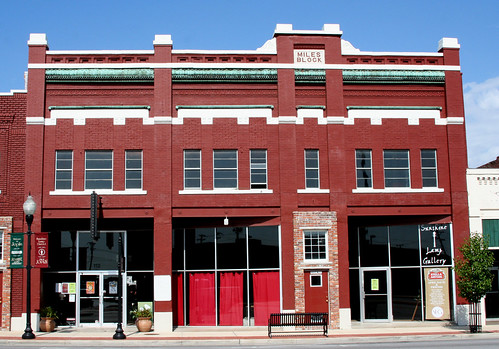
The district primarily concerns the strip of beautiful buildings on the west side of Main Street from 2nd street up that include the striking Miles Block.

Miles Block 2010

The Miles Block, as it appears today, is included in the South Main Street District nomination

For those of you interested in learning more about the architecture used in the construction of these buildings, as well as for some brief histories, we encourage you to read the drafts in greater detail.  The Council will meet this Friday to discuss the nominations.

August Michaelis House – Before and After

Yes, another before and after photograph!  (There will be written content again – we promise!)

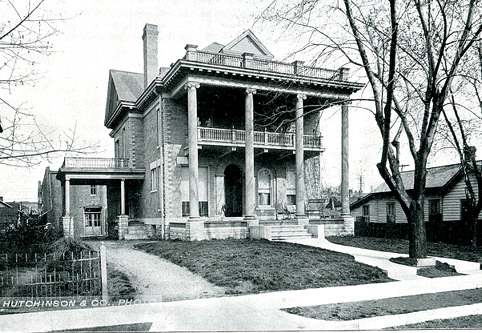
In this example, we have the home of August Michaelis.  Michaelis, who deserves and will get his own post, is responsible for many of Joplin’s beautiful buildings, such as the Carnegie Public Library and Memorial Hall.  He also designed the Miners’ Bank Building (which is no longer with us).   For coverage of the library, see here and here.  For coverage of Miners’ Bank, see here.  Needless to say, there are only a few other architects who can claim to have left such a stamp on the legacy of Joplin’s architecture.

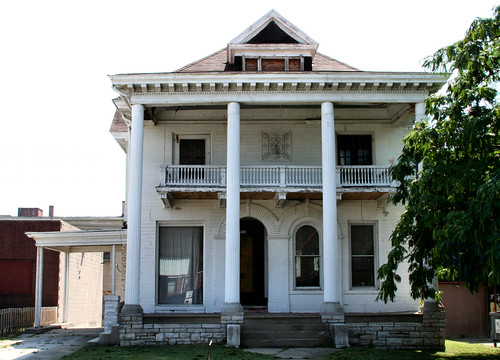
The home of an architect, it obviously was designed with care and consideration.  At the moment, it is in the process of wasting away and currently for sale, and thus at risk of being bought and bull dozed.   Below are two photographs that show the past of a home more than a century old and its present state.

August Michaelis' home in 1902.

August Michaelis' home about 1902. Note the lack of the business development that eventually would surround it.

And now the present state of the Michaelis home.

August Michaelis' home in 2010

August Michaelis' home today and in need of preservation.