A Glimpse of Capitalist Foul Play

Natural to any mining boom town was the belief that one could setup shop and quickly begin to reap in the riches.  As Joplin grew in size, more companies and businesses sprung up to line Main Street and other current downtown avenues.  One of those businesses was the Joseph S. Baum Mercantile Company.  Another was the Levin clothing store.  By chance the two found themselves neighbors to the chagrin of Joseph Baum.  By appearances, it seems that Baum was successful and his neighbor decided to help himself to that success by holding his store out as part of his neighbors.

From that point on, Baum Mercantile Company struggled through  a 2 year odyssey to force their neighbor to quit their deceptive practices.  The practices went so far as one employee of Levin’s pretending to be Joseph Baum, himself.  In the end, it took court action to silence Levin’s employees and their deception.  None the less, as a glance at the ad will attest, Baum felt it necessary to place an ad in the local paper to further clear up the issue.

Ad for Joseph S. Baum Merchantile Company

Click on the image to view a larger version.

Roy Always Gets His Man

After stealing coal from the House of Lords, fourteen-year-old Roy Smith began serving a four month sentence at the Joplin city jail. What was notable about the young African American’s stint at the city jail was that no one filed a complaint against him and he was not tried for theft in police court. Instead, Smith’s guilty conscience led him to serve a self-imposed sentence. Deputy Chief Frank Sowder remarked it was the, “strangest case on record.”

Roy’s friends tried to convince him to “shake” the police after a few days, but he stubbornly stayed at the jail. He busied himself sweeping the police courtroom, building fires in the station in the morning, and running errands for the officers. When asked, Roy told a reporter that he planned to follow the law and serve his sentence.

Officers who may have thought Roy was good at keeping the jail tidy found out that he had even more to offer. Two small paperboys arrived at the jail and reported they had been assaulted by two black boys who pelted them with rocks and struck them with their firsts. Roy, whom officers had nicknamed “Cooney,” listened to their story. He then volunteered that he could identify and find the two black boys. Chief McManamy granted Roy permission to go apprehend the suspects, laughing at the boy as he headed out the jail. But the chief found himself surprised when ten minutes later he heard a “terrible commotion” in front of the jail. Looking outside, McManamy saw Roy dragging two “much larger negro lads by the coat collars.”

Roy proudly announced, “Here they are.” He then proceeded to drag the two boys into the jail. According to Roy, he used the power of verbal and physical persuasion to get the two boys to accompany him to the jail. Roy, who had observed officers over the last few weeks, took every precaution: He searched his prisoners before he handed them off to Chief McManamy, who performed the duties of desk sergeant. A few minutes later, Roy announced he “had scared them into making a complete confession.”

Roy formed a close friendship with Bosco Busick, the assistant deputy poundmaster and patrol wagon driver. The two of them would fall asleep in the big cushy armchairs in the jail at night after talking for hours. Despite fleeting moments of relaxation, Roy continued to serve as Joplin’s junior Sherlock Holmes.

A few weeks later, Roy was called to service once more. When the police needed to question a young African American girl about the whereabouts of some suspected criminals, the officers brought her to the station, put her in the sweatbox, and pressed her for information for over thirty minutes. She professed ignorance. Roy, who had been out buying tobacco for one of the officers, arrived and observed the interrogation. He winked at Night Captain Loughlin and began to talk to the girl. Soon he had obtained the information the officers sought. His task finished, Roy grabbed a broom and started sweeping the jail, which was now decorated with pictures and cartoons he had drawn for the officers.

Like many of Joplin’s other characters, we’re not sure what happened to Roy Smith, but it’s clear he made quite the impression on the Joplin police. One can only hope he stayed on the straight and narrow.

John Artwood – Survivor of the Seas

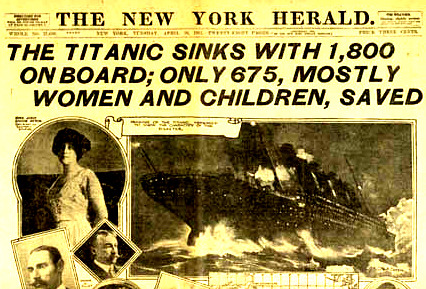
Headline of New York News Herald from Titanic Disaster

As the sinking of the Titanic flashed across headlines over America, one Joplin miner recalled his own near death experience at sea.

In early April, 1912 the headlines of all three Joplin newspapers were devoted to the tragic sinking of the RMS Titanic. The Joplin Morning Tribune featured an interview with John Artwood, a Joplin miner, who almost suffered a similar fate.

Before arriving in Joplin, Artwood spent ten years at sea. The last ship he worked on was the Keyton, a “fishing smack,” that boasted a crew of twenty-one men. The Keyton was four hundred miles off the coast of Newfoundland when it collided with a “derelict” and sank. Of the twenty-one crew members, only five survived.

As Artwood recalled, he and four of his fellow crew members scrambled into a raft and spent the next twenty-eight hours adrift at sea at the mercy of the open sea and “treacherous currents.”

According to the former sailor, “So far as the sinking part of it was concerned our suspense didn’t last any four hours because the Keyton went down in forty minutes after she struck the derelict and not more than two minutes before five of us succeeded in getting away from her on a raft. Several other members of the crew made a desperate attempt to get on the raft, but it was in vain and we witnessed the horrible and never-to-be-forgotten spectacle of seeing some fifteen brave men drown like so many rats.”

When the Morning Tribune reporter asked Artwood about his experience, he took a minute to reflect upon what had happened to him before he confessed, “Well, your first feeling is one of fright, but this is quickly succeeded by one of determination to help your comrades as well as yourself to escape an awful fate.” Artwood continued, “Your body becomes numb as our mind becomes doubly active and you have little feeling in a physical sense during the excitement. Your flesh may be torn on an arm as a result of your desperate efforts to ear up decks to get timber for you raft but you will never feel the slightest pain until you are relieved by the realization that you have been saved, that you have been snatched from the jaws of death.”

Artwood felt his experience was similar to that of the Titanic survivors. “Yet, in a way it was worse,” he explained, “because on the small craft we could feel her sink very rapidly while on the mammoth liner there were many who did not know she was sinking for some time, so slow was the movement downward.” In his case, “When the Keyton went down she displayed little resisting power for she had not the semblance of such bulkheads as doubtless tended to prolong the Titanic’s sinking. Every man on board could feel her settling from the minute she struck the downward with about the speed of a slow-moving freight elevator, which seems speedy to one out on the sea hundreds of miles away from land.”

His freight at his situation, Artwood managed to mash a finger and had the flesh on his right arm cut to the bone in an effort to carry some heavy timbers to hastily build raft. He “never felt one bit of pain from either injury until several hours after they were inflicted. There was no part of my mind at liberty to think about physical pain, but there was a mental anguish instead and this was ten thousand times worse, although it tended to urge me on to do things I never knew I was capable of. Every second it seemed as though I had lived a whole day of terrible anxieties and a minute seemed like weeks.” After twenty-eight hours, a fishing “smack” boat arrived on the scene to rescue the Keyton’s survivors.

After his rescue, Artwood said he “got to the United States as quickly as he could and he has never been on water since” and arrived in Joplin sometime in 1910 when he became a miner. Perhaps Artwood may not have realized it at the time, but he had traded one dangerous vocation for another as our previous post “Death in the Mines” illustrates.

Source: Joplin Morning Tribune

Cocaine Jimmy

When one thinks of cocaine, they may think of the 1980s, Nancy Reagan, and the War on Drugs. Cocaine, however, was in Joplin long before tv commercials showed eggs frying in a skillet while a voice somberly intoned, “This is your brain…This is your brain on drugs.”
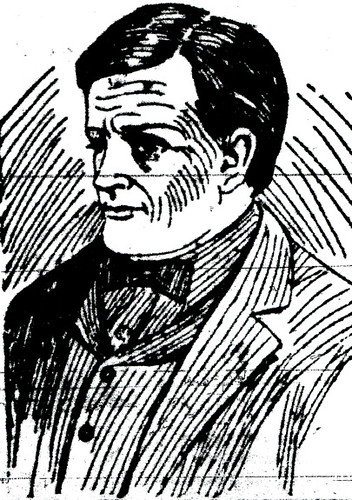
Cocaine Jimmy aka Daniel Shannon

A sketch of Daniel "Cocaine Jimmy" Shannon

Perhaps the most infamous cocaine user in Joplin was Daniel “Cocaine Jimmy” Shannon. One day, Shannon was found passed out behind the House of Lords by members of the Joplin police department in what one physician thought was “the last stage of drug poisoning.” He was taken to the city jail to spend the night and was transferred the next day to the Jasper County Poor Farm in Carthage. One doctor remarked, “He can hardly survive this attack, and at the poor farm the drug will be taken away from him altogether. He is too far gone to be benefited by that treatment, and I am inclined to think that his days are numbered.”

Cocaine Jimmy granted an interview following his near fatal drug overdose. He told a reporter, “I have been a drug fiend for 18 years. The average life of the cocaine or morphine fiend is five years. I think the Lord must have let me live this long in order that I may be cured and live to do some good in this world.”

Jimmy, it turned out, had not always lived on the edge. As a young man, he attended the Chester Military Academy in Chester, Pennsylvania, and then attended a music conservatory in Philadelphia. This fact, the reporter noted, “many of the people of Joplin are ready to believe, for they have heard him play at the music stores. When under the influence of the deadly drug to which he is addicted and at just the right state, he has shown himself many times to be a brilliant performer upon the piano.”

According to Jimmy, his father was wealthy, and even played host to President James Buchanan at the family home in Pennsylvania. But after becoming addicted to cocaine, Jimmy left behind a career as a lawyer, and instead spent his time working on and off as a janitor at the Sergeant building at the corner of Fifth and Main. The reporter observed that Jimmy talked little of his past. One lawyer who doubted Jimmy’s former occupation as a lawyer was stunned when Jimmy began quoting sections from Blackstone’s law almost verbatim. In manners, he was always extraordinarily polite, always thanking anyone who helped him and making sure to say hello to others.

The paper remarked, “Those who knew Shannon in his brighter moments and could see what the man had been and what he might have been, will hope ‘Cocaine Jimmy’ himself that after all the Lord will see to it that he is cured; that he may live to accomplish something in this world.”

A few years later, Jimmy was still alive, and granted another interview to a Joplin reporter. Jimmy was described as a, “little, old appearing man, with a wrinkled face and a tinge of gray in his air, and although he is only 40 years old, his beard, when not closely shaven, is as white as snow.” His cheeks were hollow and there were “great hollows under his eyes.”

Although the moniker “Cocaine” was understandable, there was no explanation as to why he was called “Jimmy” when his given name was Daniel. His friends had pooled enough money to put Jimmy through an unspecified treatment program which seemed to be working until he suffered a painful bout of inflammatory rheumatism and relapsed.

Jimmy told the reporter he first used cocaine while receiving medical treatment at a hospital in the Dakotas. He used small amounts at first so that it was not readily apparent that he was using the drug. He “began the use of cocaine by dipping the needle in it when I wanted to take a ‘shot’ of morphine in order to keep the needle from hurting me. The desire for cocaine grew on me until I now use the two drugs equally mixed.”

He did not like practicing law, so his father set Jimmy up in the musical instrument business. He enjoyed teaching music and soon took “one of the prettiest little women there was” as his wife. Jimmy’s love of cocaine, however, was stronger and he began to abuse cocaine at a greater rate. He abandoned teaching, left his wife, and took all of his money out of the bank. Jimmy proclaimed, “There is not an hour in the day when I do not wish I could be cured of the terrible habit and straighten up and be a man.”

Jimmy told the reporter, “I cannot understand why any young man or young woman will begin the use of cocaine or morphine. My body from head to foot is a complete mass of scars which have been made by the hypodermic syringe.” The craving for the drug was so bad, he said, “there is nothing short of murder that will prevent him from getting it.” On average, he used fifty to seventy-five cents worth of cocaine per day. He then gave a lengthy description of the hellish existence of a cocaine user, described the multiple ways one could use the drug, and then sadly said, “My one ambition is to get enough money to take the cure and if I can get thoroughly cured of the habit I feel that I would never again touch a drop either of cocaine or morphine.”

Sadly, Daniel “Cocaine Jimmy” Shannon did not live much longer. He was discovered unconscious behind Ferguson’s Saloon by members of the Joplin Police Department who carried him to the Joplin City Jail. He was remembered for his daily plea of, “Give me a nickel.” Although he “was a well known character upon the streets, he never figured conspicuously in police court, and was but seldom arrested.” When arrested, it was for begging or for passing out on the street. In his obituary, it was noted that he “was an expert pianist and during his career in Joplin frequently was employed by proprietors of beer gardens and north resorts as a pianist.” Despite three desperate attempts to be cured of his habit, Jimmy died, and his body was held at the Joplin Undertaking Company until family members claimed the body. Where he was laid to rest is unknown, but one wonders if his ghost still lingers on the streets of Joplin, still looking for one last fix.

Source: Joplin Newspapers

Urban Renewal circa 1907

Downtown Joplin has seen its share of buildings come and go over the years. One might think that urban renewal, which ravaged much of the United States in the 1960s and 1970s, is to blame. But as much as urban renewal makes us howl here at Historic Joplin, it’s not always at fault. Back in 1907, it was announced that the Peter Schnur residence, one of Joplin’s oldest surviving buildings, would be demolished.

The Schnur residence was built in 1871 by Peter Schnur, one of the first residents of Joplin, and founder of the Joplin Evening News. When he was appointed postmaster of Joplin, Schnur sold the newspaper. According to Joel Livingston’s history of Jasper County, Mr. Schnur died in 1907 “after marching in a parade.”

The house originally consisted of two small rooms. In subsequent years the house was added on to and received an interior coat of plaster. It reportedly bore the distinction of “being the only plastered house in Joplin. The house was later sold to Charles Workizer, G.B. Young, and then to the Bell Telephone Company. The phone company planned to demolish the house in order to build an office building.

Peter Schnur’s widow, when asked about the home, said, “When we first came to Joplin and built the old house in 1871 the present city of Joplin was nothing but a prairie, not a fence, and but few buildings in sight. There were not even any laws over the place; everybody did as they pleased. My daughter, now Mrs. Ed Poter, and my son, Burt Schnur, were at that time but three and two years old, respectively.”

Mrs. Schnur recalled, “I remember well the annoyance I underwent from the fact that there was no fence around our home behind which I could corral my children. One day Burt, then about three years old, wandered away from home and got lost in the tall prairie grass on what is now Wall Street. We found him, finally, within ten feet of an open shaft, and I that night issued an ultimatum to the effect that if there was not a fence around the house within a week, I was going to leave the district. I got the fence, and I have been glad of it ever since.”

The Globe estimated that the demolition of the house would take several days before the original two rooms of the home were reached.

A Very Brief History of the Joplin O.P. Morton Grand Army Republic (GAR) Post

Joplin’s O.P. Morton GAR Post was organized on May 17, 1882. It was named for Indiana Governor Oliver P. Morton. W.H. Fairbanks was elected commander; F.M. Redburn served as senior vice-commander; John C. Bailey elected junior vice-commander; S.B. Williams selected quartermaster; J.W. Lupton voted adjutant; C.T.G. Workizer elected chaplain; C.C. Wheeler, voted officer of the day; and H.C. Combs elected officer of the guard.

Other members included B.F. Joslin, T.H. Mintner, W.E.O. Rush, Edwin Whipple, F.M. Downing, F.D. Owen, N.L. Barner, E.W. Beach, G.O. Boucher, J.T. Everett, Jacob Lurwick, Samuel Ramsey, M.W. Stafford, Ira W. Gilbert, F.E. Eberhart, Samuel Lake, W.S. Scott, T.H. Short, William Stump, Ira Creech, Peter Bittmer, A.B. Adair, W.F. Cloud, T.P. Hill, W.W. Pate, William Sergeant, and W.C. Williams.

In the twenty-five years that followed, hundreds of other names were added to the post’s membership rolls. In 1907, only four of the original charter members were alive: Downing, Whipple, Boucher, and Joslin.

A list of the post’s commanders follows:

1882 W.H. Fairbanks and W.H. Pate

1883 E.W. Beach

1885 E.W. Beach

1886 E.W. Beach

1887 F.M. Redburn and Henry Phelps

1888 Henry Phelps

1889 E.W. Beach and J.L. Briggs

1890 J.G. Lurwick

1891 P.L. Schwartz

1892 A.H. Brewer

1893 J.L. Briggs

1894 H.W. Davison

1895 F.M. Redburn

1896 J.R.B. Roe

1897 H. Crandall and John R. York

1898 John R. York

1899 W.H. Crane

1900 J.R. Goheen

1901 G.W. Hight

1902 L.D. Middleton

1903 W. Jones

1904 M.M. Rice

1905 W.H. McCubbin

1906 G.W. Hight

1907 Henry Digby

1908 Henry Digby

1909 Henry Digby

1910 Albert McCann

1911 J.N. Theurer

1912 D.H. Rhodes

1913 J.M. Theurer

1914 F.L. Yale

1915 F.L. Yale

1916 F.L. Yale

Sources: Joplin News-Herald; Roster of O.P. Morton Post No. 14 G.A.R., Department of Missouri, July 1, 1916 Roster

A Dog’s Story

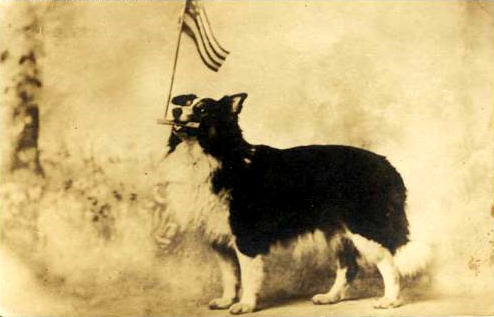
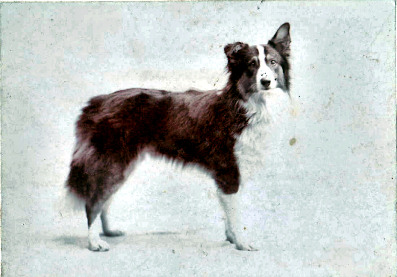
Moxie the Dog with flag in mouth

Moxie posing with her flag. From the "Bale Mill Odessey" by Judy Hurdle.

It is rare but not unheard of that a dog’s passing would make the news. Moxey was one of those dogs. Moxey, the beloved pet of Hardy Hardella, passed away from old age and indigestion at the age of twelve in the early summer of 1907. Moxey was given a “decent burial” for he “had earned recognition above that accorded to the average dog.”

Moxey or Moxie, a Scotch Collie, was born on February 27, 1895, in the kennels of Senator Julius C. Burrows of Michigan. Mr. Hardella, the manager of Hardella Dye Works, bought Moxey a month later.   Historic Joplin will dedicate a post to the interesting life of Hardy Hardella at a later time.  In Joplin, Moxey was “one of the best known residents of the neighborhood at Third Street and Jackson Avenue” and was “famous for its utilitarian service.” Moxey, it seems, did not believe in performing “foolish tricks” like shaking hands or rolling over.

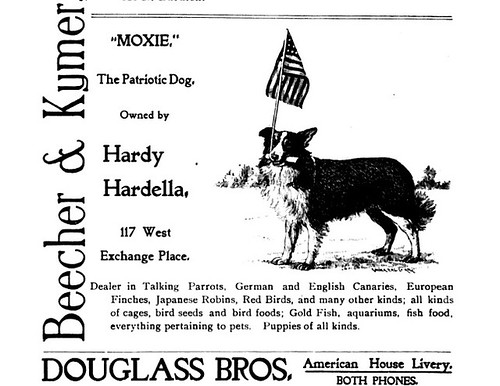
Moxie the dog Ad

An advertisement featuring Moxey.

Instead, he was known for carrying around a basket of “meat or vegetables all day if necessary.” Moxey “would quickly learn and gladly perform” any useful action. He and his owner were so close that it was said that Mr. Hardella never whipped Moxey so as not to “estrange the fine devotion of the sagacious animal.” Moxey’s owner turned down an offer of $300 to sell Moxey to the owner of the Wallace Show, a traveling circus that at one time was second in size only to Ringling Brothers and Barnum and Bailey Circus.  Moxie was known for leading parades while clutching an American flag in her mouth.

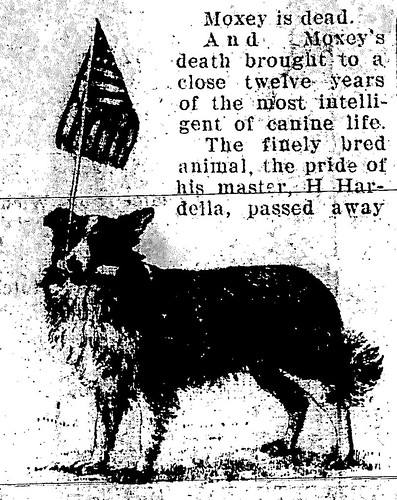
Moxey's image in her obituary.

Moxey's image in her obituary.

Upon Moxey’s death, Mr. Hardella purchased a “pretty coffin for the magnificent dog” and was buried with the same reverence “as would have been a child.” The Joplin News-Herald eulogized Moxey, “The small part of the world with which he came in contact is better, probably, because he lived. Such dogs seldom live. Their influence is good.”

Moxey the dog

Moxey, from the private collection of Judy Hurdle.

Sources: Joplin News Herald, Missouri State Archives Death Certificate Database, Livingston’s History of Jasper County, Bale Milling Odyssey by Judy Hurdle

Thomas Hart Benton Documentary to Air 7/10/2010 on KODE at 6pm

As reported by the Joplin Globe, a documentary produced by the late KODE newsman, Bob Phillips, of the creation of Thomas Hart Benton’s “Joplin at the Turn of the Century” mural, will air on KODE on Saturday, July 10, 2010, at 6pm.  The documentary is a rare look at how Benton created his artwork, from research to painting.  “Joplin at the Turn of the Century” is located in the Joplin administrative building on Main Street.

He Knew the West As It Was – Lovell McCown

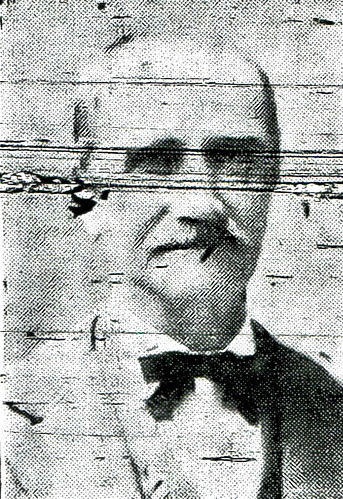
Lovell McCown - 1836 - 1911

Lovell McCown, He knew the West as it was.

Around the turn of the 20th Century and for a few decades after, a particular type of obituary could be found in the Joplin papers.  They were articles that noted the passing of one of the city’s pioneer citizens.  The pioneers were the men and women who first settled the area that became modern day Joplin and the eulogies often played up the hard conditions and hard pasts of these individuals.  In September, 1911, one such pioneer was Lovell McCown.

McCown’s pioneering past began approximately in 1838, when as a 2 year old, his parents moved their family across the Cumberland mountains to the Ohio River.  There they floated down the river to the Mississippi, where they then took a wagon to Independence, Missouri.  At age 17, the young pioneer set off seek his fortunes across the Western Plains to eventually participate in the California Gold Rush.  He later found success as a gold producer.  Sometime not long after on a freighting trip, McCown purportedly participated in a battle with Cheyenne Indians in the vicinity of the Big Sandy river.  The battle arose when Cheyenne warriors spot McCown and his fellow travelers and quickly amassed a number of over 500.  Thus outnumbering the “pale faces” by a margin of 5 to 1, the fight commenced.

In the battle, which McCown received a Indian lance to the leg, and at one point he was close to being brained by Indian clubs before rescued by his fellow travelers.  They eventually managed to fight off the attackers through superior firepower.  It was a battle, the obituary noted, that lasted for hours with an untold number of Cheyenne warriors slain.  Even after, the defeated Indians trailed the survivors for days.  More than half of the obituary concerned itself with the battle with the Cheyenne and offered little to McCown’s life in Joplin, which amounted to the last 27 years of his life.  It may well be that it was a story that McCown loved to tell and thus was essentially known for.

He succeeded in wrapping himself in the stories of the Old West, as for when the 75 year old passed away, the newspaper obituary began so:

Death came unexpectedly to Lovell McCown of 710 Hill street, East Joplin, and in his taking away Joplin lost a pioneer citizen, who knew the West as it was in the early days, when buffalo and Indians roamed the plains and when the life of the frontiersman was fraught with continuous perils.

Source: Joplin News Herald

No Rest for the Weary Willie

Today many Americans, unless they live in an urban metropolitan center, have little interaction with the country’s rail system.  Once in a while, one might find themselves stopped at a railroad crossing watching a train roll past, but gone are the days when the train would stop at the town depot to take on coal, passengers, mail, and freight before heading to its next destination.  Peruse an old Joplin newspaper and ads from the St.  Louis and San Francisco “Frisco” Railway touting summer excursions to Eureka Springs, St.  Louis, and Chicago spring from the pages.  Joplin was fortunate that it not only had an extensive interurban trolley system, but was home to a handful of rail lines that carried lead and zinc to industrial centers in the east.

With the trains came hoboes and tramps.  Just a few years after the turn of the century, the Joplin Daily Globe reported that local train crews were having problems with hoboes.  “According to trainmen,” the Globe recounted, “they are having more trouble with tramps this winter than for a great many years.  They are of the worst class and are exceedingly dangerous customers.  They are traveling around stealing rides when they can and endeavoring to find the most favorable places for looting stores or cracking safes.”

The trainmen claimed that the “harmless hoboes who would go out of their way rather than harm a human being are very much in the minority.” Instead, many trainmen told the Globe reporter that they had engaged in “hand to hand fights in an effort to rid the train of them.” Many of the fights broke out during the night when hoboes boldly roamed the rail yards in groups of four to six men.

Later that year, the Globe reported that the, “rail road yards have been especially infested with the merry willies of late.” Nels Milligan, a Joplin police officer detailed to keep an eye on the hoboes told a Globe reporter, “All up along the Kansas City Southern embankment from Broadway to Turkey Creek, you could see the bums lying stretched out in the warm afternoon air sunning themselves like alligators or mud turtles on a chilly afternoon, and here and there was a camp.”  According to Milligan, a hobo’s camp consisted of a “small fire that you could spit on and put out, between two or three blackened rocks, and a blackened old tin can, and an improvised pan or skillet made out of another tin can melted apart and flattened out.”

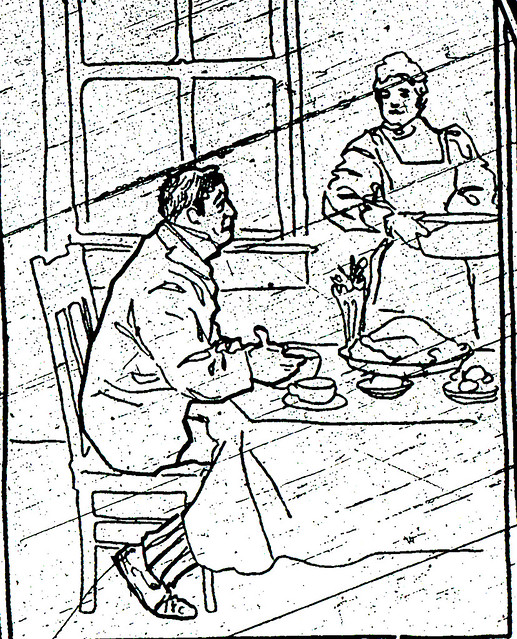
Hobo getting a free meal

Sometimes a hobo succeeded in getting a free meal.

The officer admitted there were too many hoboes and not enough room in the jail to house them.  He worried they would be “working the residence district for grub, hand-outs, punk, pie, panhandle, pellets, and any old thing they can get together.” Once they had food, Milligan claimed, the hoboes would “feed and gorge and lie around there like fat bears dormant in the winter time” until a bout of bad weather would send them on their way.

Five years later, the Joplin News Herald interviewed a railroad employee about the tramps who traveled through Joplin.  Watching a couple of hoboes jump off of a freight train in the Joplin rail yards, the railroad employee remarked, “See those fellows getting off up there? Now there is no telling where they got on, nor where they rode.” He shook his head.  “There’s another thing connected with this hauling of tramps.  Some of the most notorious criminals of the country have occupied places on the train and eluded the crew for hundreds of miles.”  According to the man, rail workers made every effort to assist law enforcement officers in locating wanted criminals who might be catching a ride on the trains.

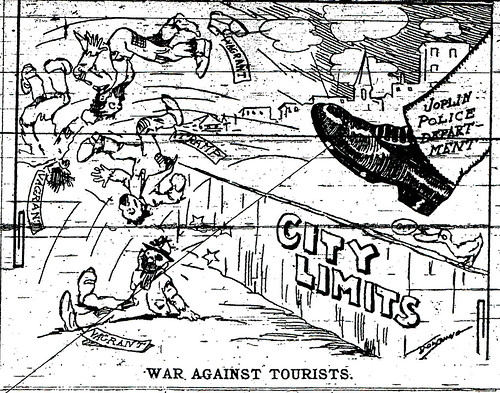
Joplin was still struggling with hoboes eleven years later when Chief of Police Joseph Myers directed his officers to sweep the town for any weary willies.  Six men were arrested on charges of vagrancy, jailed, and then told to move on.  But as long as there were trains rolling into Joplin, there were always tramps and hoboes to contend with.

Hobos kicked out of Joplin

Joplin Police kicking out bums and hobos

Hoboes were sometimes looked at in a humorous light.  A hobo celebration was held at the “hobo cave one mile and a half north of the union depot in the hills of Turkey Creek.  Twenty of the Ancient Sons of Leisure gathered there in the cool cave.” One of the hoboes stood up to deliver an impromptu address about the significance of the Fourth of July and said, “Fellow brothers, you all realize what this day means.  It was on this day in 1776 that George Washington crossed the Delaware, whipped fifty thousand Redcoats and whacked out the Declaration of Independence.  Since that time we have been independent.  We do not have to work.  I now propose a committee of three raid a [chicken] coop so we can have an elaborate dinner as befitting Washington’s birthday.”

By 1918, the day of the hobo in Joplin had begun to wane.  Despite Joplin remaining an “oasis  in the great American desert created by prohibition” it was no longer “possible for police to spread a drag net in the railroad yards and gather in anywhere from a dozen to fifty ‘Knights of the Open Road.’”
Tim Graney, a former Joplin police officer and station master at Union Depot, declared he had not seen more than half a dozen hoboes in the last year and not one in the past six months.  The camps where the tramps and hoboes once gathered were empty.  The Globe, unable to explain their absence, mused, “Maybe they have all gone to work…At any rate, they’re gone! The genus Hobo is no more!”

Sources: Joplin Globe, Joplin News Herald