The Lady in the Window

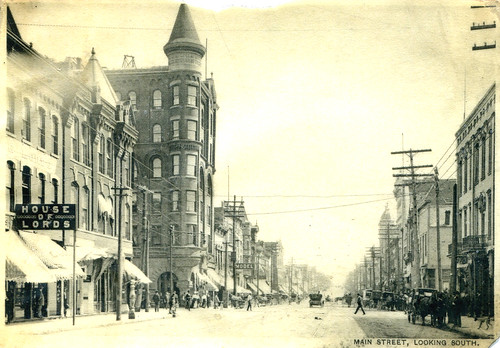
If you have ever lived in  Joplin, you have undoubtedly heard about the House of Lords.  Usually one hears a story that goes like this: Bar on the bottom floor, gambling on the second floor, and a brothel on the third floor.  After reading years of Joplin newspapers, we can honestly say that yes, there is truth in the story. There were slot machines, there were countless rounds served at the bar, and yes, there were prostitutes working the building. This excerpt from a letter describes what one resident saw one day while working downtown:

Joplin Main Street

On the left, the House of Lords, on the right, the Joplin Hotel. Neither quite shared the same clientele.

“Two weeks ago last Saturday night, I, stood in front of the Joplin Hotel, and such a sight as was seen on the opposite side of the street cannot be forgotten.  A drunken, brazen, disgusting prostitute stood in front of a window in the third story of the House of Lords as naked as when she came into the world, in plain view of the hundreds of people walking up and down the street, and not an officer with the courage or decency to prevent it.  Ladies were obliged to turn their faces or leave the street; and I am told that the proprietor of the hotel cannot assign a lady a front room because of the character of the occupants in the building across the street.  Sodom and Gomorrah were never sunk as deep in the depths of infamy and vice as this, and the prayers of the wives and mothers of Joplin will be answered.”

Twisters, Cyclones, and Tornadoes of Joplin’s Past: Part I

The tornado of May 22 was the worst to strike Joplin, but it was not the first.

In May, 1883, a tornado swept through Joplin and the news accounts of the event appear to echo recent events. Just this past week, a story about Laverne the cat, who was rescued after being trapped in the rubble after sixteen days aired on local news stations. In 1883, Charley Elliott’s dog was “in his store building when it fell. He was dug out next morning pretty badly bruised, but after a few hours he was alright. There were acts of generosity. E.R. Moffett, who would later die impoverished, walked up to an “old friend who he had worked with before he became a millionaire. ‘Crit, I’m damned sorry, I’m sorry $500,” and then gave a five hundred dollar check to the relief fund. Citizens scrambled to help each other. Judge Byers was “constantly busy distributing supplies to the needy who lost their all by the wild winds.” Doctors Fannie Williams and Mrs. Creech did “good work for the suffering ladies who were injured” during the storm. Miss Fannie Hall of Carthage gave her all to assist the suffering at the hospital. Oronogo, also hard hit by the storm, was the focus of a relief committee made up of some of Joplin’s leading socialites: Mrs. L.P. Cunningham, Mrs. J.B. Sergeant, Mrs. J.C. Gaston, and Mrs. Thomas Heathwood. Together these women sought to collect food, clothing, and bedding for those effected by the storm.

For others, the tornado brought excitement and curiosity. The Daily Herald remarked, “Some of the visitors Monday night seemed to regard the occasion in the light of a picnic. Frivolities and flirtations were engaged in that would have been regarded impudent at a circus. No apparent sympathy was exhibited for the crippled, bereaved, and homeless, while silly children took the place of sober sense.” Sightseers came to stare at a “bushel basket that lodged in the top of a large tree near the railroad track.” Telegraph poles at the train depot reportedly looked like “they had passed through a storm of musketry.”

And then there were those that lost their lives. Preliminary reports reported that the bodies of a Mr. Goodwin and his daughter were killed by the tornado. It is unknown how many others lost their lives.

The next significant tornado to hit Joplin was in April, 1902. The News-Herald proclaimed it was, “[The] Worst That Joplin Has Known.” A wind, hail, and rain storm converged upon Joplin around 4:25 p.m. in the afternoon in an area described as covering “Seventh Street on the north and as far as Seventeenth Street on the south” with the worst areas at Moffett and Bird streets from Thirteenth to Sixteenth streets and at Moonshine Hill. Property along Main and Ninth streets received substantial damage.

The News-Herald reporter must have not known about the Tornado of 1883 as they declared, “As Joplin has never experienced a real tornado, the people were unprepared and as it came upon them so unexpectedly, it as a wonder that more fatalities are not recorded.” Telephone and trolley poles were twisted beyond recognition making communication with neighboring communities impossible. Streetcars were unable to run due to the lack of electricity and piles of debris covering the tracks. One car caught at Twelfth and Main, Car Number 41, was struck by a telephone pole. Passengers inside were “thoroughly frightened and several actually said their prayers.” Strong wind was not the only threat to human lives. The pole was described as having fifteen double cross arms with three large cables and several hundred telephone wires. Workers roped off the street to prevent traffic and pedestrians from going near the car. Passengers shakily disembarked and walked home on foot.
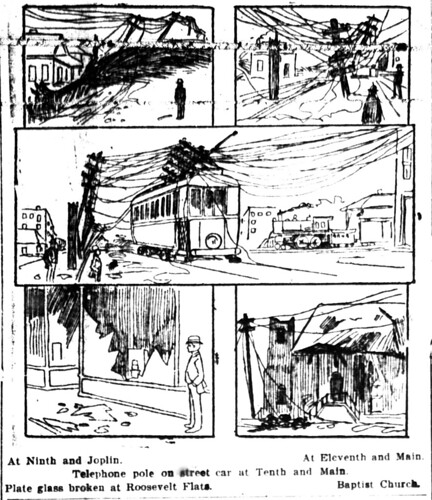
Illustration of the damage from the tornado.

A “solid sheet of water, besides some hail” fell, causing people to hide inside their homes. Willow Branch, the Tenth Street branch, and other small streams in and around Joplin began to flood, leaving many to seek dry ground as the streams became “turbulent torrent[s] of water, mud, and wreckage.”

The storm indiscriminately took human lives and property. It was reported that the two room house of William Hunter, who lived on the east side of Moonshine Hill, was carried for a long distance before it shattered. Mrs. Hunter, holding her baby Esther in her arms, was about to flee the house when the storm hit. A plank of wood flew past and hit her child in the head, mortally wounding it, while Mrs. Hunter sustained serious injuries. Her husband, a miner, was at work at the Dividend Mine when the storm rolled through Joplin. A neighbor, Charley Whitehead, came to Mrs. Hunter’s rescue. Other residents of Moonshine Hill suffered the same fate. Will Douglass’ home was obliterated. Lee Whitehead [perhaps related to Charley] and family also lost their home. The Methodist church on Moonshine Hill was a complete loss.

Arthur Cox, owner of Cox Baseball Park, was one of the “heaviest losers.” The storm destroyed the baseball park’s fence, the grand stand’s roof ripped off, and sustained overall heavy damage. The losses were estimated at $1,000. Cox, however, was not one to stand idly by. Within a day, W.J. Wagy was hired to rebuild the park in time for a game just a day after the tornado struck.
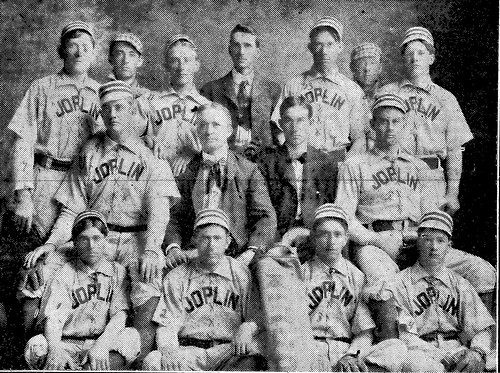
The Joplin Miners

The Joplin Miners of 1902 who temporarily lost their home.

At the corner of West Ninth and Tenth streets, several homes were damaged, if not utterly ruined. An African-American family named Smith lost their house and P.B. Moser’s home was demolished. A.J. Stockton was fortunate — he only lost his kitchen.

For the impoverished residents who lived in “shanties” north of the Missouri Pacific roundhouse between Grand Avenue and the Frisco and Kansas City Southern tracks, their impermanent residences were blown away.

White and black churches were not left untouched. The First Baptist Church was “badly wrecked.” The Methodist Episcopal Church’s South Mission location at Tenth and Grand was “completely wiped away.” The African Methodist Episcopal Church on East Seventh street was also destroyed. Despite being a substantial frame structure, the roof was torn off and the walls subsequently caved in.
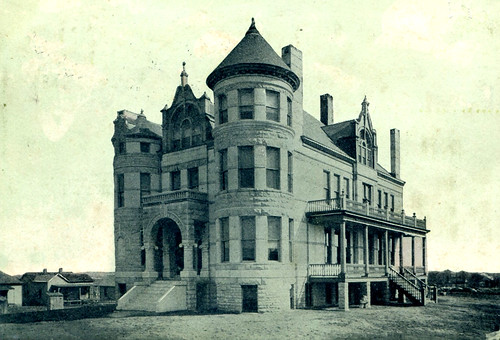
St. John's Hospital

The nuns at St. John’s Hospital were “buffeted and blown about by the wind as they strove in vain to keep out the sheets of water thrown against the west end south of the building which stands high and unprotected.”

Property damage was estimated at $50,000 and an estimated fifty to sixty houses destroyed. As soon as the storm passed, “ambulances and relief crews found work to do for many hours.” Mayor John C. Trigg released a proclamation that read:

“To the Citizens of Joplin — Authentic information having been received that the cyclone which visited the city of Joplin on yesterday, caused incalculable damage to many of our citizens and has been especially destructive to the poorer classes of our citizens in many instances to the extent of destroying everything they owned, leaving them destitute, houseless and homeless.

Therefore, for the purpose of alleviating the distress which prevails in the city and vicinity and to devise ways and means by the organization of relief corps, or by such practicable methods as may be suggested and agreed upon at a meeting of the citizens is hereby called to be held at the Commercial Club rooms, on the 25 inst., at the hour of 3 o’clock p.m. to consider the premises and take such appropriate action as may be deemed necessary therein.”

Mayor John C. Trigg

Joplin has always taken care of its own in times of need. When the committee met, it was agreed that many of those effected by the storm were impoverished miners who were in badly need of assistance, and a relief fund was created. Thomas W. Cunningham reported that when he checked on his rental properties in the damaged section of town he found that one of the families renting from him had been forced to cut their way out of the house. He decided that they “deserved the house” and “made them a deed for it.” His act of kindness was heartily applauded. It was thought that the family was that of I.W. Reynolds who lived at Thirteenth and Ivy. Mr. Wolfarth of Junge Baking Company pledged free bread to those in need. Arthur Cox and Don Stuart pledged the proceeds of the next baseball game to the relief fund. The Wilbur-Kirwin Opera Company decided to give a benefit performance for Joplin’s tornado victims.

Joplin rebuilt only to face another tornado six years later in 1908. That story and more in our next installment.

[Conclusion of Part I]
Guest Piece: Chapters Erased from Joplin’s Architectural History – Leslie Simpson

CHAPTERS ERASED FROM JOPLIN’S ARCHITECTURAL HISTORY

By Leslie Simpson

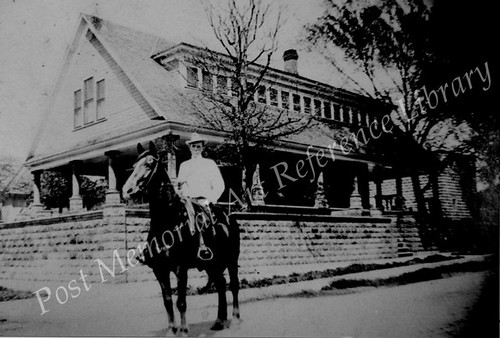
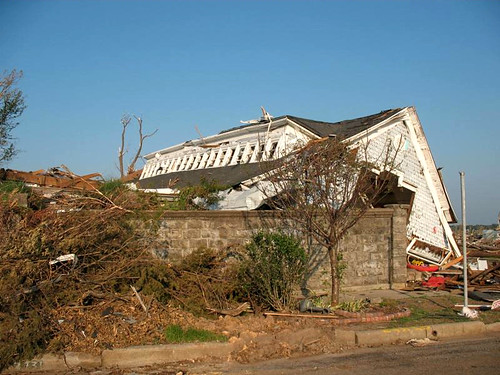
caption for photo: Carl Owen house at 2431 Porter. Built ca. 1911. Destroyed by tornado May 22, 2011 via Post Memorial Art Reference Library

I am having a difficult time knowing what to say.  In fact, I hesitate to even write anything about brick and mortar, when human life, hopes, and dreams are what really matter.  However, since I have written so much about Joplin’s architecture through the years, I feel compelled to say something.  I have had several CNN reporters contact me for interviews, but I have not wanted to talk to them.  First of all, I had not personally seen all the damage.  It is impossible to get around, and I did not want to get in the way of emergency workers nor be a voyeur.  Secondly, I just did not think I could articulate what has happened to my beloved Joplin.  So now I will attempt some general (and unofficial) impressions of Joplin’s historic identity and how this incomprehensible tragedy has affected it.  Also, rather than catalog specific buildings that have been lost, I will focus on three historic residential areas.

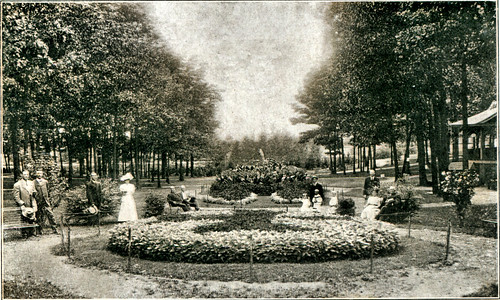
I begin with the historic town of Blendville in southwest Joplin, which was established in 1876 as “Cox Diggings.”  The prosperous little community incorporated as Blendville, so-named because of the huge amounts of zinc blende in the ground.  Thomas Cunningham owned the residential area, which he divided into lots and sold at low rates so that miners could afford their own homes.  The city of Joplin extended its streetcar line to Blendville, with lines going south on Main to 19th Street, west to Byers, south to 21st Street, west to Murphy, then south to 26th.  In 1892, Joplin annexed the village.  Thomas Cunningham donated “Cunningham Grove” as Joplin’s first city park.  The tornado took out most of the original Blendville area, including Cunningham Park and the historic water plant with some of the original equipment preserved inside.


The next area of historic significance is “Schifferdecker’s First Addition”, a residential area developed in south Joplin beginning in 1900.  The Joplin Globe referred to the area lying south of 20th Street and fronting on Wall, Joplin, and Main Street as “a beautiful new addition affording the most desirable building property” to be found anywhere in the city.  A second addition continued development south of 20th on Virginia, Kentucky, and Pennsylvania Avenues as well as along 21st, 22nd, and 23rd Streets to the east and west.  The residential district continued to expand to the south throughout the teens, twenties, thirties.  The homes in the region ranged from high Victorian styles to bungalows and eclectic Tudors, Colonial Revivals, Spanish mission, etc.  Tragically, this charming old neighborhood has been wiped out.

After World War II ended, Joplin families faced a housing shortage.  Some Camp Crowder buildings were moved to Joplin, while others were dismantled to provide construction materials.  Hundreds of small efficiency houses were mass-produced for veterans and financed through FHA.  Many of these were built in the Eastmoreland area.  As people prospered in the 1960s and 1970s, they built more substantial brick homes east and south of the new high school at 20th and Indiana.  Although most people do not think of these homes as historic, they do have their own place in Joplin’s architectural history, and their loss is devastating as well.

Entire chapters of Joplin’s history have been forever erased.  I have not even touched on the loss of churches, schools, medical buildings, and businesses.   Again, I am not relating the loss of our buildings to the loss of our people.   Joplin will rebuild.  It has already begun.   During the first week after the tornado, I saw a business being rebuilt in the midst of the war zone surrounding West 26th Street!

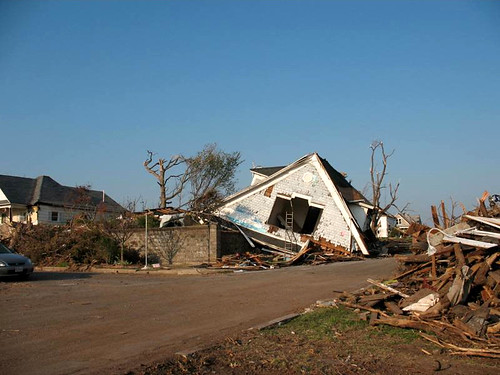
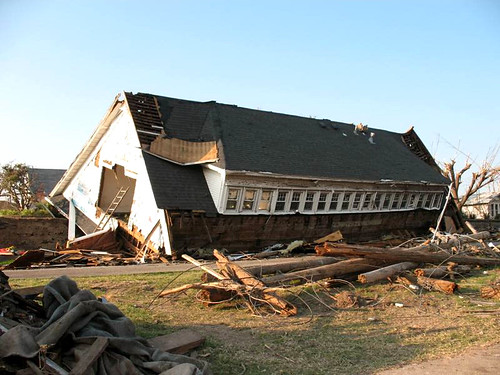
Porter House following Joplin Tornado. Photo by Leslie Simpson

Porter House following Joplin Tornado. Photo by Leslie Simpson

Porter House following Joplin Tornado. Photo by Leslie Simpson

Leslie Simpson, an expert on Joplin history and architecture, is the director of the Post Memorial Art Reference Library, located within the Joplin Public Library. She is the author of From Lincoln Logs to Lego Blocks: How Joplin Was Built, Now and Then and Again: Joplin Historic Architecture. and the soon to be released, Joplin: A Postcard History.

Guest Post: Down Not Out – Leslie Simpson

DOWN NOT OUT

By Leslie Simpson

On a pleasant Sunday evening, May 22, 2011, an EF-5 tornado suddenly raged through densely-populated south Joplin.  It destroyed almost everything in its path for 13.8 miles in distance and up to a mile in width.

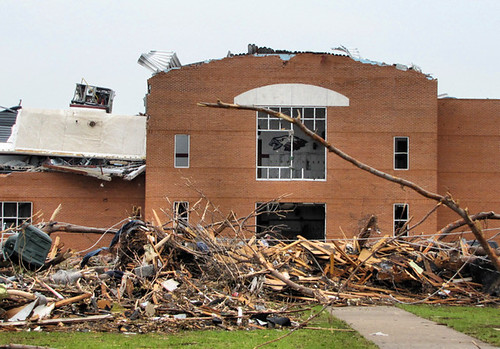
The tornado smashed down in southwest Joplin, wrecking residential areas, Cunningham Park, schools, medical offices, and a major hospital complex, St. John’s. It headed east, obliterating untold acres of late nineteenth and early twentieth century houses.  The storm’s wrath intensified as it forged east, razing businesses along Main Street, more neighborhoods, and Joplin High School.  It wiped out much of the lifeblood of Joplin’s economy, the commercial strip on Range Line Road, then rampaged on, demolishing housing, banks, industrial buildings, and more schools and churches.  It finally dissipated east of Joplin, after destroying or damaging an estimated 8,000 homes and businesses.

At the time of this writing, authorities have confirmed 138 fatalities, a number which continues to rise.  More than 1,150 people sustained injuries.  The Joplin tornado, the deadliest since modern record keeping began in 1950, ranks eighth among the deadliest tornadoes in U.S. history.

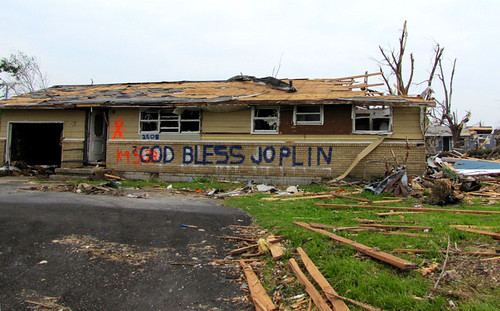
We are in shock.  We drive familiar streets yet cannot even recognize where we are.  The cruel landscape of endless rubble and shredded trees reminds us of shattered lives and endless grief.  We have lost so much, and we are hurting on many levels.  But our spirit is strong, as evidenced by the person who spray-painted “Down not out” on the shards of his former home.

Leslie Simpson, an expert on Joplin history and architecture, is the director of the Post Memorial Art Reference Library, located within the Joplin Public Library. She is the author of From Lincoln Logs to Lego Blocks: How Joplin Was Built, Now and Then and Again: Joplin Historic Architecture. and the soon to be released, Joplin: A Postcard History.

The Olivia Apartments: Before and Now

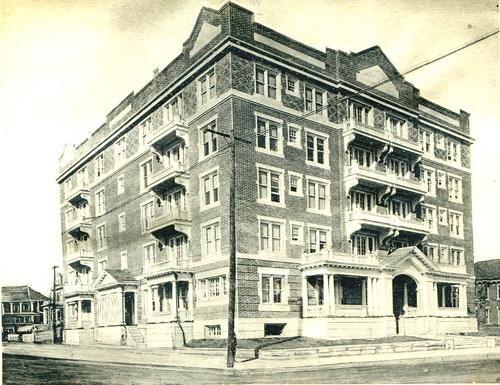
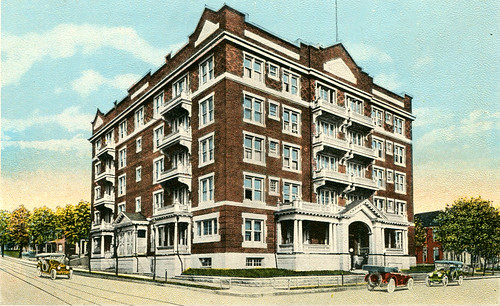
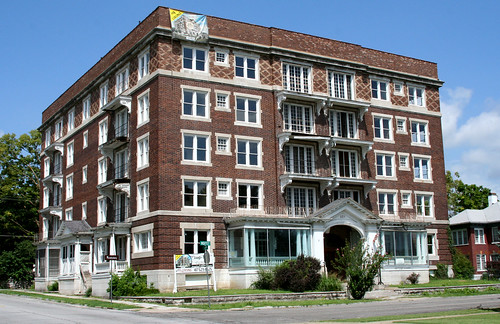
One of the more luxurious apartment buildings in Joplin’s early history were the Olivia Apartments.  The building was built in 1906 by Dieter and Wenzel construction firm on plans designed by one of Joplin’s widely used architects, Austin Allen.  The man footing the $150,000 bill was Anton E. Bendelari, who had made his fortune in mining.  The building was named for his daughter, Olivia.  We’ll offer a more detailed history of the Olivia in the future, but for now here’s a look at the building’s past and its present (August 2010).   As you may notice, while a survivor of over a 100 years, the Olivia has lost some of her exterior features.

The Olivia sometime after 1906.

The Olivia sometime in the late teens or early 1920s.

The Olivia as of August, 2010, during its restoration.

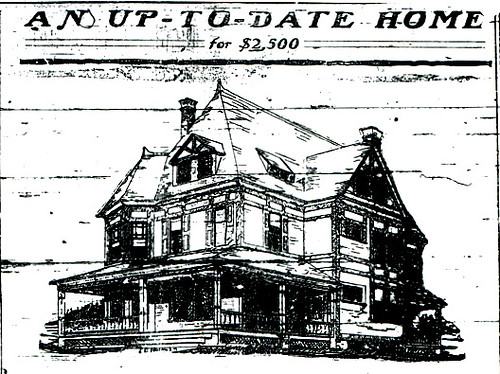
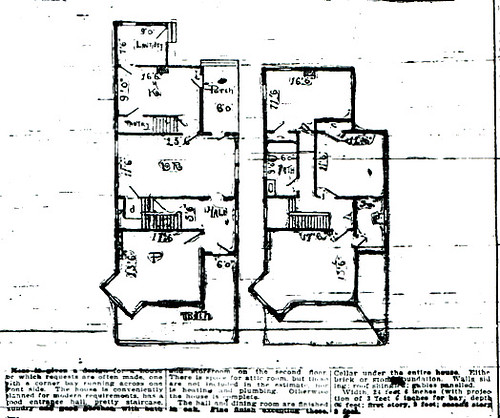
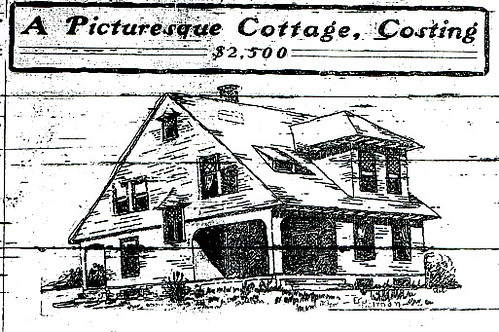
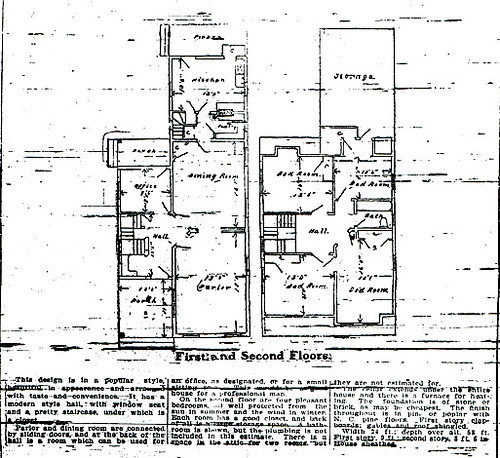
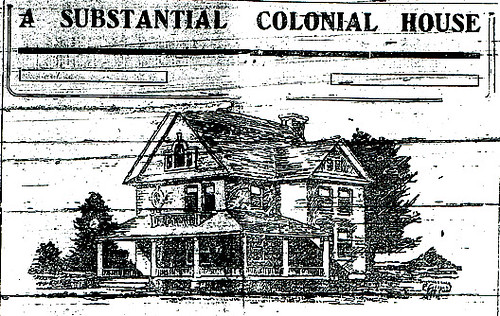
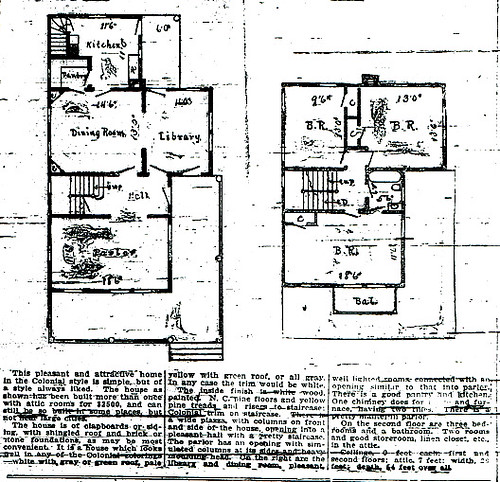
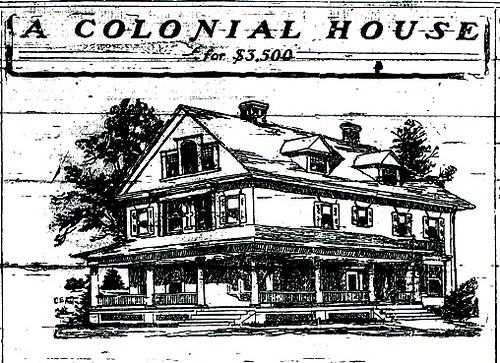
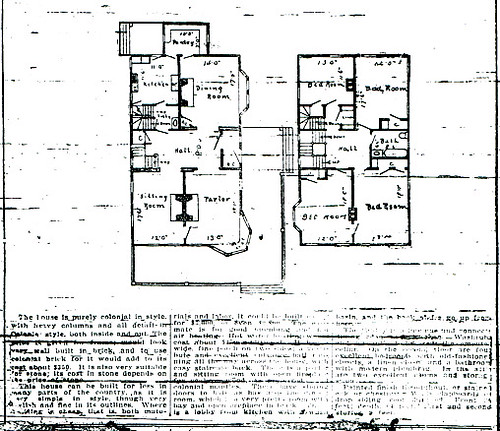
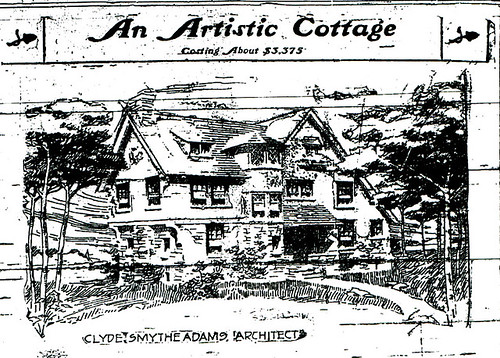
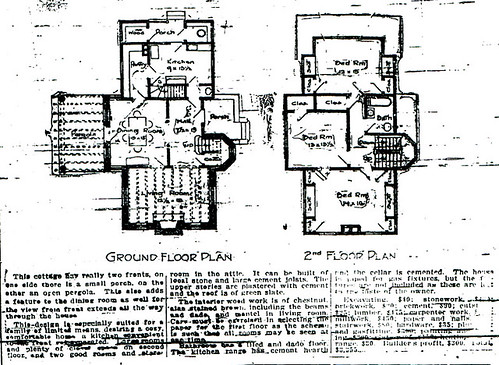
Homes for Joplinites, 1904.

For those Joplinites who wanted the latest in housing in 1904, they needed only to turn to the local paper for pre-designed house plans.  Below are a few of the options the people of Joplin could choose from along with their price tag.

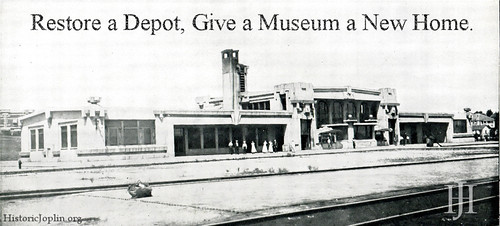
JMC Board Approves Next Step in Depot Plan, April 13, 2011

In a pleasantly surprising move, the Joplin Globe reports this morning that the boards which control the Joplin Museum Complex voted to approve a move forward to the next phase of the plan to restore the Union Depot as a new home for the museum. It was not without some concerns, however, as the boards did manage to find something to worry over; that being the cost of moving to a restored depot building and then, bafflingly, the cost of staffing it. Apparently, the new expected operating budget must be higher than the present one for the museum, or at least the Boards assume such.

None the less, we applaud the JMC boards for voting to go forward and hope that they continue to be bold and engage the future of Joplin and the museum.  The final result will only be beneficial to both.

JMC Board Discusses Union Depot Plan, April 12, 2011

Tonight the combined boards that oversee the Joplin Museum Complex will meet to discuss and vote on the plan presented by City Manager, Mark Rohr, on moving the JMC to a restored Union Depot building.  While we believe the vote will be only to push for further investigation and feasibility, it’s an important step in the future of the JMC and for Joplin.

It is at this point that the JMC can reject the plan, and if the City Council refuses to throw its considerable heft into the question, thus will end the chance to bring history to history.  The SPARK program, outlined by Mr. Rohr in his recent guest column in the Joplin Globe is a dynamic and bold vision for the future of the city.  The transfer of the JMC to the Union  Depot is likely not a make or break element of SPARK, it should and will move on without the JMC if the Board chooses to vote against the plan.  However, to do so will result in the JMC failing to keep abreast with the future of the city and her people.  The museum, relegated to Schifferdecker Park, will remain out of sight and out of mind of most Joplin citizens.

This is a chance for the members of the Board to recognize the same spirit of Joplin that they charge themselves with protecting, the boldness of miners and merchants, and a people who saw only a bright future for the city at the edge of the great Southwest.  We urge the Board members to vote in favor the of the plan or be left behind as the rest of Joplin moves forward into the future.


City Manager Mark Rohr Guest Column – April 10, 2011

In today’s issue of the Joplin Globe,a guest column was penned by City Manager Mark Rohr. Rohr, who has been responsible for much of the downtown revitalization, discussed the city’s SPARK plan. SPARK, as Mr. Rohr explained, stands for Stimulating Progress through Arts, Recreation, and Knowledge of the past. SPARK is composed of three major points, the construction of a large gathering place known as the Town Green, construction of a Joplin Regional Arts and Performance Center, and lastly, the restoration of the Union Depot as a new home to the Joplin Museum Complex. Mr. Rohr argues in the column that by pushing forward on SPARK, it will result in more jobs and make Joplin home to more interesting pastimes and activities.

Part of this plan, hinges in theory, if not necessarily in fact, on the Joplin Museum Complex boards which will be meeting on Tuesday to discuss Mr. Rohr’s proposal to move the JMC to a renovated and restored Union Depot. While theoretically the City Council holds the purse strings of the JMC, it has so far been reluctant to support Mr. Rohr’s plans for Joplin’s future by reminding the JMC boards where the majority of the museum’s funds originate from. If you know someone on one of the two boards which oversee the museum, urge them to support the plan. It’s not just a plan to bring jobs to Joplin or money and entertainment to the city, but also a chance to help preserve one of the most important structures left in a city that has unfortunately watched too much of its history demolished and paved over.

JMC Representatives Tour Depot

An article published yesterday in the Globe, brought us up to date on the recent developments concerning the restoration of the Union Depot and the potential plan to move the Joplin Museum Complex (JMC) to the site.

The current news is still pretty much the same news from a couple weeks ago. A group of the Museum Board’s members were given a tour of the depot by architect, Chad Greer, and city manager, Mark Rohr. The tour was an extension of the proposal pitched by Mr. Rohr near the middle of March. In response, the board, represented by Allen Shirley, declared that the JMC board planned to have a meeting on April 12, 2011, to discuss whether further study would be needed concerning the plan.

We are unsure if this means that the JMC board wants further study because they favor the plan or if it means they want further study to be convinced to go along with it. Given the history of the board over the last year, our inclination is toward the latter of the two theories.

We strongly urge the board members to press ahead with the plan. True, the removal of the museum from its present location at Schifferdecker Park would be one of the boldest moves by the JMC since its inception and move to its current home. True, as well, the JMC did try to occupy Memorial Hall, a plan which seemed to spring from the left field of Miner’s Park and was largely unsupported. Here’s the chance for the JMC to at least resume the energy of its failed proposal and to align it with the popularly supported idea of moving to the Depot. One would like to think that in such a scenario, everyone wins.

For the moment, however, the history of Joplin remains for the most part hostage to an organization that has yet so far proved as immobile as its mineral displays toward ideas that have not originated from its own body. The very collections which the JMC haphazardly safeguards were donated and initially overseen by those passionate about Joplin and passionate about Joplin’s history. One would like to think that they would support a move which would benefit the museum by placing it in one of the remaining architectural treasures of the city; a building which was once a symbol of progress and can be again as a foundation for the continuing restoration of north Main Street. It’s time to shake off the collected dust of decades and be bold.