City Celebrates Newman Building’s 100th

Last week the Joplin Globe ran a story on the 100th birthday of the Newman Building, present home to the Joplin city government.  This week, on November 16th (Tuesday), the city will be hosting a celebration of the event starting at 11 am.  The news release offered the following activities:

“Some people may have various pieces in their closets that can work for an outfit — with a little creative thinking and design. If nothing else — scarves with pendants were a big hit during that time — as were HATS!! So if wanting to participate these options might be a little easier and not too hard to find the items.

In addition, vintage cars will line 6th street for viewing and will make a nice backdrop if you would like to get a photo taken by a downtown photographer. These pictures could make a nice holiday gift for friends and family. The cars will be here from approximately 10 a.m. to 12 noon or so. The Newman Building is located at 602 South Main.”

Here’s to another 100!

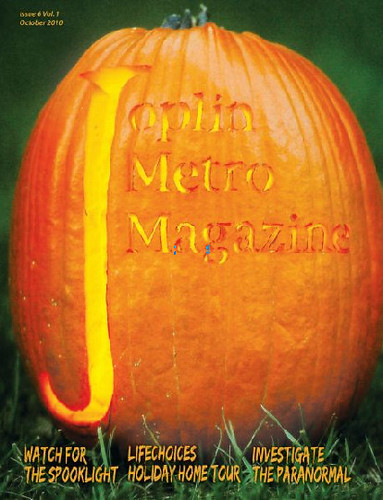
Joplin Metro Magazine – Issue 6

This Month's Cover - click on the Image to Read the Issue

We recently offered an approving review of the Joplin Metro Magazine for its coverage of topics of local history.  The coverage continues with the 6th issue of the magazine designated as a Halloween / Fall issue.  The issue focuses on Joplin’s resident Spooklight, though perhaps not delving as much into the past attempts to figure out the mystery behind the light, as well the earliest encounters.  It’s still a good primer to anyone unfamiliar with the spooklight.

The best part of the issue concerned the survey of haunted sights and places in the Joplin area, which included short histories behind the locations.  Such places included the old Freeman Hospital (with photograph), Carthage’s Kendrick Place (with photograph), as well Peace Church Cemetery, where one of Joplin’s most notorious murderers now resides in an unmarked grave.  It’s articles such as this one which help show how fascinating the history right around one’s corner can really be.  Last is an article about haunted Ozark battlefields.  If you haven’t had a chance to read Issue 6 of the Joplin Metro Magazine, you might be able to still find hard copies located around town or you can read it online at this location (click here!).

Joplin Globe Coverage of the Newman Building’s 100th Birthday

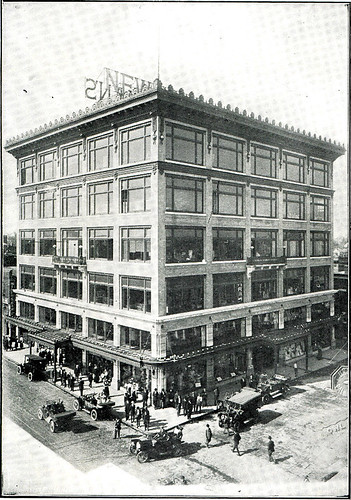
In case you missed it, last Saturday the Joplin Globe ran an article on the 100th birthday of one of downtown’s most illustrious surviving buildings, the Newman Building.  The article, by Debby Woodin,  offers both a brief history of the Newman retail business and the building.  Additionally with the article are some nice era photographs of the interior of the building when it was at its height.  Now the home of city hall, the building is one of the shining examples of why it’s so important to preserve Joplin’s past.

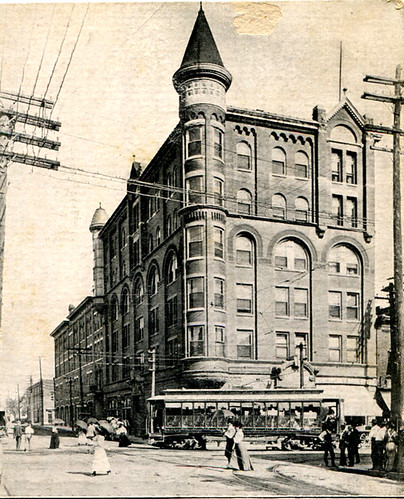
The Newman Building circa 1913.

Source: Joplin Globe, Historic Joplin Collection

A Bed In Joplin

Curious to know how much it would have cost to stay in some of Joplin’s hotels?

In 1914, Joplin had an estimated population of 32,073 and had 21 hotels.

Here’s what it would have cost you to stay at some of Joplin’s finer establishments:

Blende Hotel

D.H. McHeeman, Proprietor

Rates: 50 cents and $1.00 per day

Clarendon Hotel

L.S. Branum, Proprietor

Rates: $1.00 per day

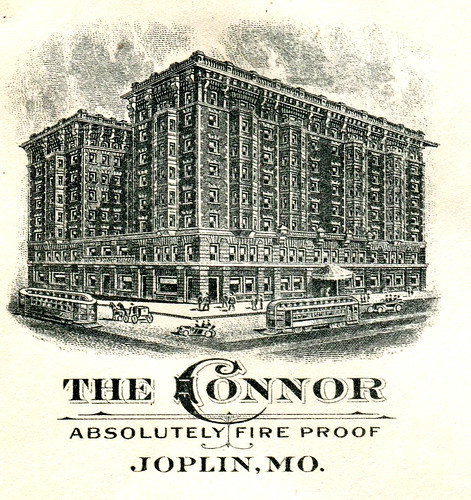
Connor Hotel

T.B. Baker, Proprietor

Rates: $1.00 per day and up

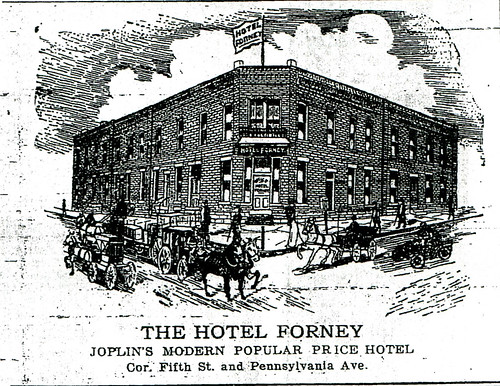
An illustration of the Hotel Forney from an advertisement.

Hotel Forney

I.P. Forney, Proprietor

Rates: $1.50 and up

Keystone Hotel

W.P. Walton, Proprietor

Rates: 75 cents and up

South Joplin Hotel

Gus Searr, Proprietor

Rates: $1.00 and up

Turner Hotel

William D. Turner, Proprietor

Rates: $1.25 per day

Yates Hotel

C.E. Yates, Proprietor

Rates: 1.75 per day

Robert Avett, proprietor of the House of Lords, did not respond to the questionnaire and thus while the hotel was listed in the directory, the cost of a room was not listed. The same went for many other Joplin hotels, including the following: Roosevelt Hotel, La Grand Hotel, Clarkton Hotel, Cliff House, Southern Hotel, Crescent Hotel, and Crystal Hotel.

Hotels in Springfield, hailed as the Queen City of the Ozarks and Joplin’s rival, had similar rates. The finer hotels, such as the Colonial, charged $2.50 and up per day in comparison to Joplin’s Connor Hotel, which charged $1.00 and up.

Source: Official Hotel Directory of Missouri

The Hobo Dog

In the past we’ve covered hoboes creating problems in Joplin, but this time we’ve found the story of a hobo dog. Brakemen and conductors who worked the run between Joplin and Mena, Arkansas, reported that a large Newfoundland dog was riding the rails. Although it was unknown if the dog jumped on the train in Mena, it was first noticed there “sneaking in and out of boxcars.” A brakeman, checking the cars for tramps, found the dog asleep in one of the cars and left it in peace. At the next stop, however, the dog was shooed off the train.
 
The dog, though, had other ideas and jumped unobserved back on board the train. At the next stop, however, the Newfoundland was once again discovered, and was put in charge of the stationmaster. Somehow the crafty dog managed to sneak away and jumped on board the next train. He was discovered by a porter who ushered him off the train. The dog could not be deterred and continued hopping trains until he was discovered in Neosho. A brakeman who had previously kicked the dog off a train in Arkansas was surprised to find the Newfoundland perched inside of a large furniture car. The brakeman decided to let the dog ride the train to Joplin.
 
As the engine pulled into Joplin, the dog began to bark, and once the train had stopped, it jumped from the car, and headed off to parts unknown. The Globe remarked, “It is the only incident of the kind that ever happened on the Kansas City Southern line, and perhaps the only one that ever did happen; and a dog that would have intelligence enough to ride in such a manner, instead of walking, should be highly valued by his master.”

As a present day aside, stray dogs in Moscow have also learned the benefits of riding the train.

Source: Joplin Globe

The Joplin Metro Magazine — A Review

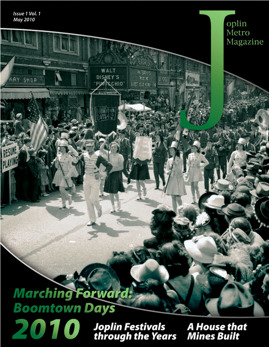
Cover of the Joplin Metro Magazine

Cover of the Joplin Metro Magazine, published by the Joplin Globe. Click on the image to go to the magazine's facebook page.

In May, 2010, the Joplin Globe began the publication of the Joplin Metro Magazine and in the process introduced a new source to learn Joplin’s history.  The monthly magazine is not dedicated to the history of Joplin, but it has on several occasions covered Joplin’s history.   As the magazine’s editor, Scott Meeker wrote in its first issue, the magazine is “a celebration of our city’s past, present and future…”

In its first issue, Joplin Metro set a fascinating beginning with coverage of the history behind Boomtown Days and then featured an article about the Post Memorial Reference Library with extensive quotes from its director, Leslie Simpson (Joplin’s expert on the city’s architecture and history).  The issue concluded its historic coverage with a piece on the presently dilapidated Union Depot (the restoration of which has been an ongoing topic for us here at HJ).

Following issues, such as issue 3, had a cover article on the Bonnie and Clyde Joplin Hide Out, owned and operated by Phillip McClendon.  It was then followed by perhaps its most comprehensive coverage yet of Joplin’s history, with several pages dedicated to a number of the city landmarks, both remaining and vanished.  This included brief histories about the House of Lords, both Freeman’s and St. John’s hospitals, and the Crystal Cave.  Other topics were the Joplin Little Theater and the Civil War violence that occurred on nearby Rader Farm.  Concluding the history coverage was an article on a Webb City man and the World War One memorabilia collection that arose from his personal interest in his grandfather.

The strengths of the magazine’s coverage of Joplin’s history are the humanistic approach to the topics, bringing them forward in an easily accessible format and the photographs used to illustrate the topics.  The weakness, if it can be applied in this case, is that the coverage is not meant to be academic in nature and can be just too brief to satisfy one’s appetite for the topic.  Also, not every issue is as plentiful in the coverage of historic topics.  None the less, Joplin Metro excels as a magazine offering coverage of Joplin’s history.  It exists as a great source to inspire further and deeper research into the fascinating aspects of the city, something that we definitely support.

For those interested in the Joplin Metro Magazine, issues are shipped to those with subscriptions to the Globe, and can also be found in a variety of places around town.

Glimpses of Yesterday

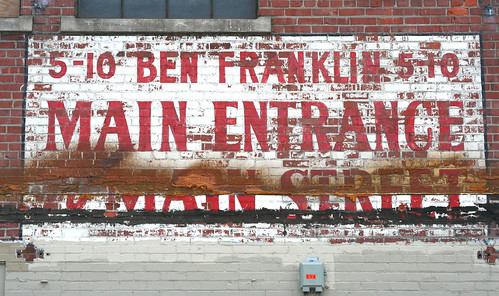
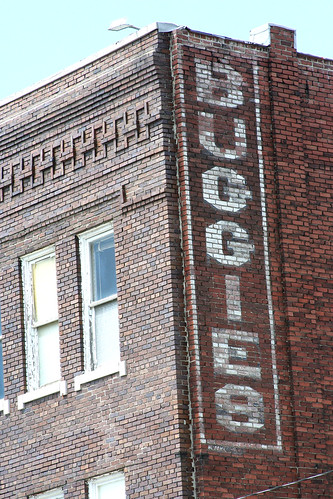
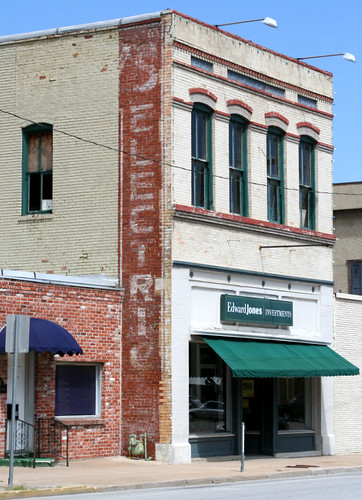
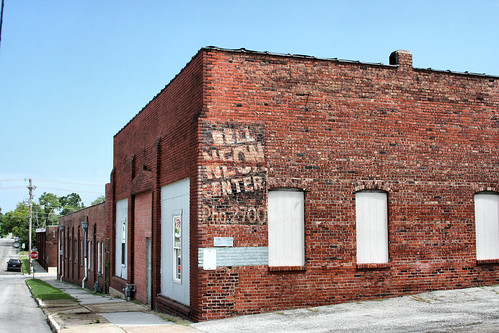
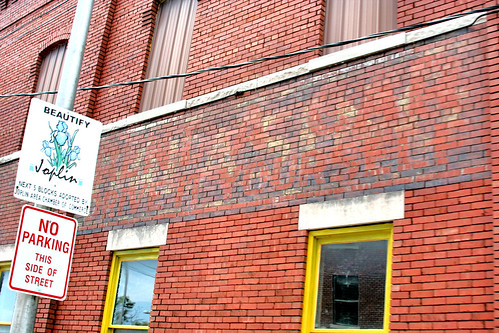
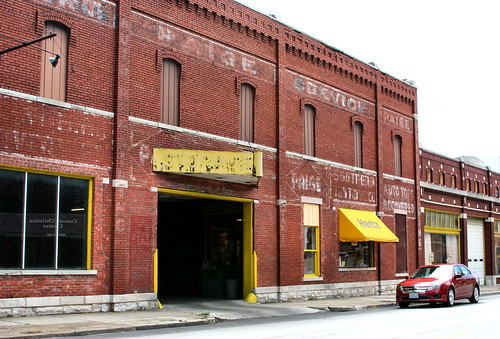
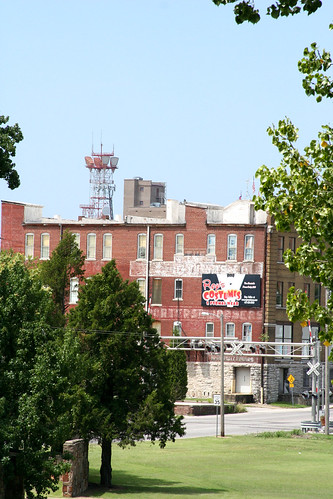
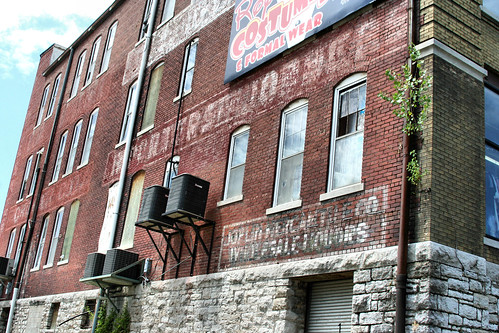
Painted on the sides and fronts of buildings are glimpses of another time in Joplin.  Prior to the more popular use of neon, plastic, and other materials, paint, often applied straight onto the building, was the most common form of advertising.  A drive around downtown Joplin reveals the remnants of these past days long gone.  Below are a number of shots of some, but not all such wonderful instances:

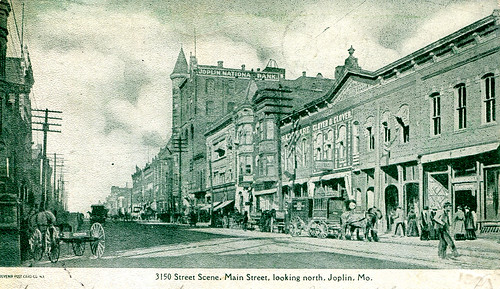
Joplin Main Street

An early photo of Joplin's Main Street reveals a number of painted signs.

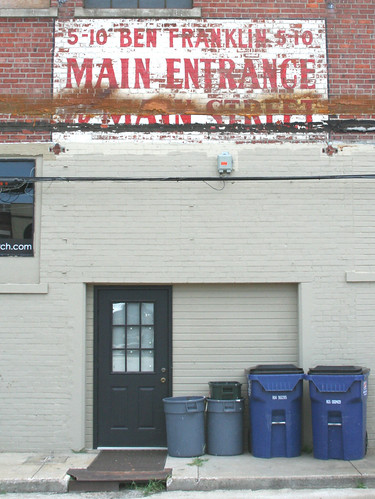
Joplin's Ben Franklin Five and Dime

Ben Franklin Five and Dime

Franklin Five and Dime close up

Close up of the previous image.

Buggies

Buggies

Select Right

'S Electric

Bell Neon Center

Bell Neon Center

Bell Neon Center close up

Note the length of the phone number for the business.

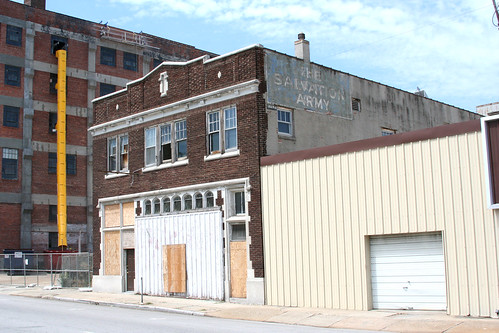
Salvation Army

Salvation Army sign on the Hulbert Chapel (which is part of the next proposed historic district)

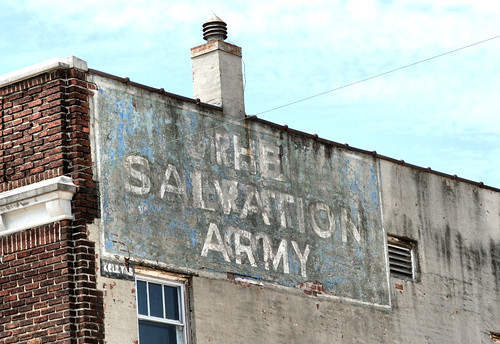
Salvation Army Close Up

Close Up of the Salvation Army sign

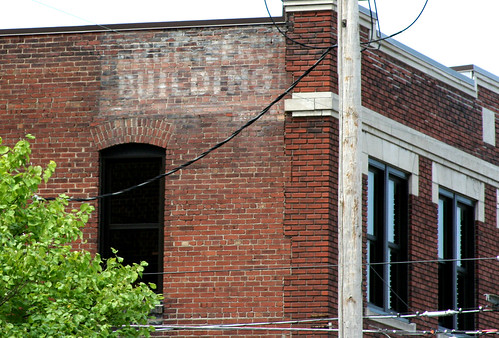
Engineers Building

Engineers Building

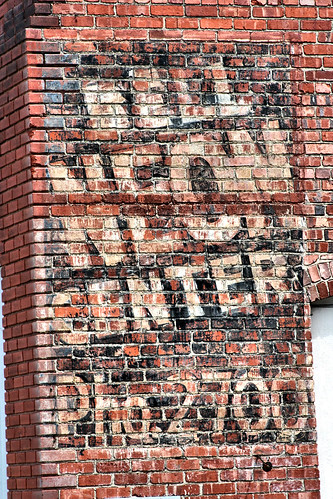
Rent-A-Car

Rent-A-Car / Drive Yourself

Paige Service

Paige Service

Joplin Mercantile Company

Joplin Mercantile Company

Joplin Mercantile Company close up

Joplin Mercantile Company close up

These legacies of the past are easily lost, be it from neglect or intentional destruction.  Let’s treasure the ones we have, as they serve as a direct connection to the past and offer a glimpse of another time.

A Town Called Joplin

Although it is now considered a ghost town, Joplin, Virginia, was named after Joplin, Missouri. William Crow, a native of Jasper County, Missouri, and brother to former Missouri Attorney General E.C. Crow, settled in Virginia. He became a justice of the peace, notary public, and postmaster. As postmaster, he had the privilege of naming the small hamlet in Virginia. He chose the name Joplin. When asked why, Crow replied, “Because the postal department wanted a name with as few letters as possible, and one that would be easy to remember. When [I was] a boy, I made many visits to Joplin, Missouri, as I was reared at Carthage.”

Crow returned to Joplin, Missouri, in 1931, and recalled, “I remember when there was no Joplin, no Webb City, no Galena, Kansas. And as a boy I knew that country when it was all open and wild. Baxter Springs was an Indian trading post.” Upon finding out that Joplin had grown in the years since he had left, Crow remarked, “I can only say that anyone who leaves the boyhood home and remains away for 20 to 40 years should never visit that place; he is sure up for a great disappointment.”

When asked about the origins of Joplin, Montana, residents had no clue why the town was named Joplin. George L. Brennan, the agent for the Great Northern Railway, recalled that before 1909, Joplin, Montana, “was a blind-siding on the main line of the Great Northern Railway.” The area, he said, was used for sheep and cattle ranches until the federal government opened it up for settlement just before 1909, and an influx of settlers quickly snapped up all the available land. Some of these settlers may have been from the Joplin, Missouri, area. Today Joplin, Montana, has an estimated population of 210 residents.

If anyone is aware of any other hamlets, villages, towns, or cities named Joplin, let us know.

Source: Joplin Globe

Joplin Miners, 1902 – 1904 Team Photos

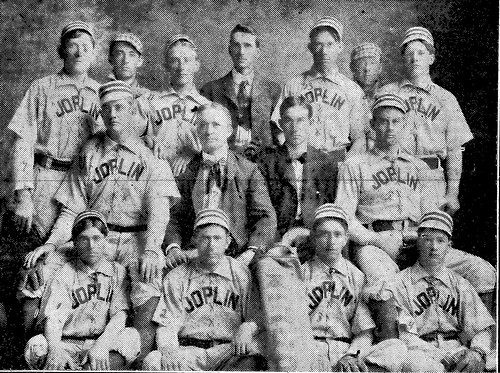
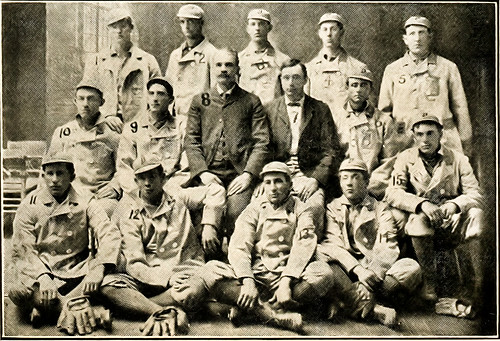
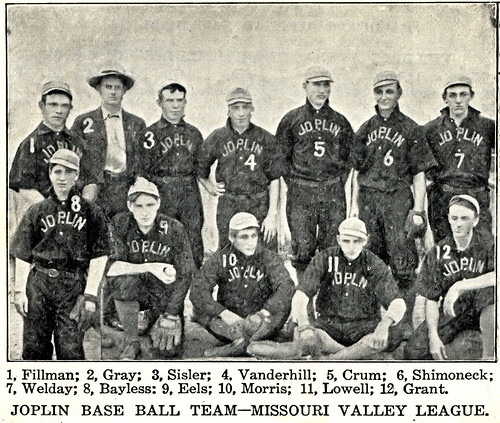
For today’s post, we thought we’d toss in something new with a couple things previously seen just for the fun of having a comparison.  That comparison is the Joplin Miners, from 1902 to 1904, in team photographs.  In chronological order, three years worth of the Joplin Miners baseball team.

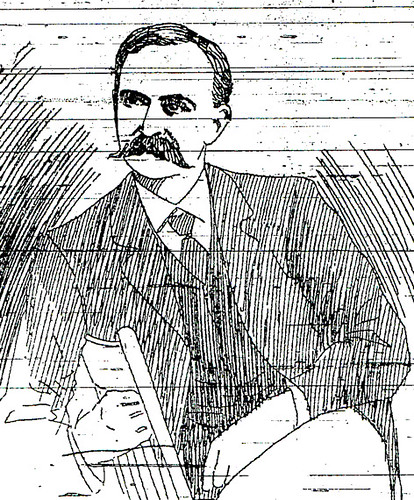
A March 21, 1902 article, accompanied by a not very flattering sketch of pitcher Arthur Ragan, reported of some of the men pictured below:

“The local management received contracts yesterday from Andrew Brophy, one of last year’s most popular players and who will again be behind the bat for Joplin, from C.W. Wickizer, a heavy hitter with Nevada last year, and who is considered one of the best utility men in the southwest, from Arthur Ragan of Cherokee, Kas., a pitcher whose work will interest the fans for, while his engagement with Joplin will be his first professional ball, competent judges who have seen the young man work, declare that he is a comer. “

The Joplin Miners

The Joplin Miners of 1902

Top Row — Wright Wickizer, catcher; an unnamed pitcher; Bert Dunn, pitcher; Claud Marcum, manager; Arthur “Rip” Reagan, pitcher; Peck Harrington, catcher and outfielder; and Lefty Greer, pitcher.  Middle Row — Earl Taylor, pitcher, Don Stewart, secretary of the club; Arthur “Art” Cox, treasurer of the club; and William “Dolly” Gray, first baseman.  Bottom Row — Bert “Monk” Senter, shortstop; Jimmie Underwood, outfielder; Fred Tullar, third base; and Dick Bayless, outfielder.

1903 Joplin Miners

The 1903 Joplin Miners

The 1903 Miners: 1. Morton; 2. Lowell; 3. Adam; 4. Stoner; 5. Wickheiser; 6. Woliver; 7. McCullough; 8. Evans; 9. Allen, Captain; 10. Weldy; 11. Jones; 12. Fillman; 13. Driscoll; 14. Herrington; 15. Roedell.

1904 Joplin Miners

1904 Joplin Miners

Sources: Historic Joplin Collection, Joplin Daily Globe

Joplin’s Own Kit Carson

A.W. "Kit" Carson

A sketch of Carson from a 1890 photograph.

Local newspaper baron Alexander Washington “Kit” Carson was one of the most influential individuals in the early development of Joplin. While he was not a capitalist like Thomas Connor, Carson left his own indelible mark on the city he called home.

The red-headed Carson was born near Cadis, Ohio, in 1842. During the Civil War, he served with Company C of the Forty-Third Ohio Volunteer Infantry. After the war ended, he headed west, and taught school at Marshfield, Missouri. Carson left Marshfield a few years later and arrived in Joplin where he began publishing the Joplin News-Herald in February, 1877. Years later Carson, a lifelong bachelor, was still living in his apartment located in the News-Herald building located on Fourth Street. He could often be seen sitting outside the building in a chair reading his old paper. Carson’s friend John Power was an early resident of Joplin and recalled both Carson and the glory days of Joplin’s journalism community in a newspaper article.
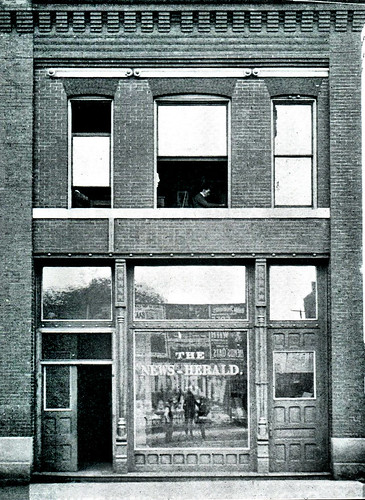
The Joplin Daily News Herald Office, circa 1902.

Together with Columbus “Lum” Farrar, Carson founded the Joplin News-Herald, and soon became sole owner after Farrar found journalism to be hard work. Carson bought out Farrar’s interest in the paper and remained sole proprietor. He put in long hours as the News-Herald was the morning paper. Carson stayed up all night furnishing the copy, proof-reading, making up forms, and then printing the paper on an old Washington hand-crank printing press. By the time he sold the paper in 1888, the News-Herald had become “hard to kill” with a first rate printing press and loyal readership. After he sold the paper, he became known for his eccentric, yet gentle personality.

Power related one story in which Carson had a number of young calves in his lot. A man passing by happened to see the calves and asked Carson if they were for sale. Carson replied that they were. The man offered $7 for each calf and Carson agreed to sale them. The buyer then told Carson he had to go uptown to get cash and would return shortly to pay for the calves. Upon the man’s return, he began to feel the calves. Carson, suspecting the man was a butcher, asked if he was indeed a butcher. The man replied that he was. Carson replied, “You haven’t money enough to buy those calves…I would about as soon allow children to be killed.”

On another occasion, Carson sold some pedigreed hens worth $2-$5 apiece to a woman for only 25 cents apiece, thinking that she would use them for eggs. He stopped by the woman’s house a few days later only to discover that she had eaten all of the chickens. Carson, in tears, remarked that had he known she was going to eat them he would have kept them, as he had hand-raised the chicks after they were orphaned.

He also had a soft heart when it came to his friends. Power recalled on one occasion when the two were out in Carson’s buggy and stopped to visit one of Carson’s old friends. The men talked briefly and then Carson pulled away, remarking that his friend’s coal bin was empty. Carson’s next act was to order a ton of coal and have it delivered to his friend’s residence.

Upon Carson’s death, Peter Schnur (who would die the next year) remarked, “Although we were business competitors, he was one of the closest personal friends I had. The squarest man in business, honest, trustworthy, companionable, fearless but gentled, the heat of campaign nor the struggles of business competition never affected the strong friendship between us.” He ended by observing, “Mr. Carson was a man of peculiarities.”

And peculiar he was. In his will, A.W. Carson specified that $1,000 of his money be spent on the dissemination of Mark Twain’s “How to Be a Gentleman.” The only problem was is that no such work existed.
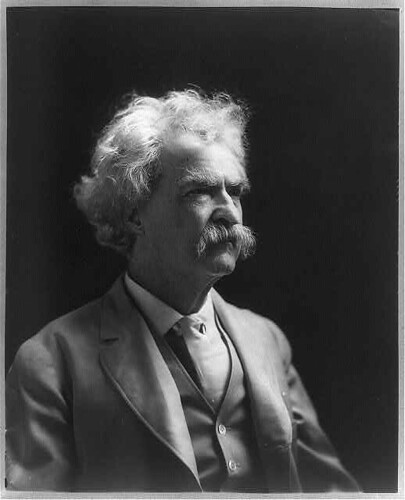
Mark Twain

Mark Twain, whose non-existing idea of a gentleman was the focus of Carson's will. Library of Congress.

A few days after Carson’s will was read, Twain was asked about his advice for the young after he finished a speaking engagement at the Majestic theater in New York City. He remarked how the subject often came up, “Here is such a request,” Twain said, “It is a telegram from Joplin, Mo., and it reads: ‘In what one of your works can be found the definition of a gentleman among the young.”

Twain declared he had never attempted to define a gentleman, but added, “I might say that a gentleman was — well, a biped who is not a lady. That might take it all in, but it seems to me that there was a verse read here from the Bible about justice, mercy — what was that third one? yes, kindness, Oh, yes, kindness.”

He then concluded by offering a few remarks about his former servant Patrick McAleer who had recently passed away. Twain concluded, “In all the long years Patrick never made a mistake. He never needed an order; he never received a command. He knew. I have been asked for my idea of an ideal gentleman, and I give it to you — Patrick McAleer.”

As for A.W. Carson, he left behind many friends who were faced with one last peculiar act of an eccentric man who did much to contribute to the success of Joplin.

Sources: Joplin Globe, Joplin News-Herald