The Other Crystal Cave — Pack Your Canoe

In the spring of 1910, miners of the Lincoln Mine in nearby Duenweg set off a charge in the walls of the mine.  The earth shuddered and thunder rumbled from the earth instead of the sky.  Then something not quite expected happened, water poured out of the breach in the wall and flooded the mine.  As a precaution, the miners had set off the charges from a safe distance and the subterranean flood caused only disruption of mining activities and no physical harm.

In the weeks that followed the water was pumped out and finally miners with their sunshine lamps beamed light into what appeared to be a cavern 240 feet beneath the earth.  The light glistened off of walls and a ceiling of calcite crystals and the reflective surface of an underground lake.  The lake ran north south within the crystal cavern that averaged forty feet in width and fifty feet in height.  The miners quickly hauled down a canoe with which to explore the length of the lake and noted that the cave’s “beauty far eclipses anything heretofore discovered in the district.”  The exploration was short lived as a “monster tiff crystal” suddenly detached from the ceiling and smashed through the middle of the miners’ craft.

As the water continued to be pumped, the lake receded from a pitched ceiling of razor sharp crystals and the miners slowly gained more and more access to the lake via both canoe and by foot.  Eventually, as such barriers as the sharp crystals and the dark waters presented fully pinpointing the cave’s end, the miners believed the cavern ran from at least 800 feet to thousands of feet into the earth.  While the ground was probed for zinc or lead, the mining company ran into the problem of falling crystals.  Every shot and blast from elsewhere in the mine or neighboring mines shook the earth and caused the razor edged calcite crystals to plummet from the ceiling.  For at least then, the miners had to settle for a bounty of beauty, if not jack and lead.

The present state of this other crystal cave is unknown, but like its better known associate within Joplin’s city limits, its likely once again filled with water, perhaps someday to be plied again by canoe.

Source: Joplin News Herald
Historic Ozark Memorial Park Threatened with Auction

In today’s Joplin Globe is an article covering the current financial status of Ozark Memorial Park.  The cemetery, located at the corner of St. Louis and Langston Hughes Broadway, was established in 1928 by George W. Crocker.  The cemetery has remained a family business ever since, but several judgments by the state and county for failure to pay taxes may result in the cemetery business being sold at auction.

Renovated Union Depot Proposed Home For Museum

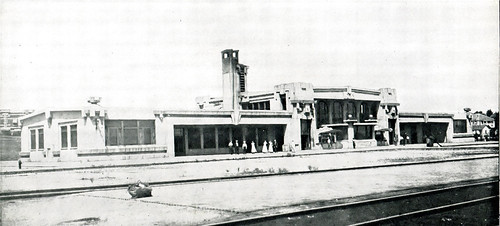
At last night’s City Council meeting, City Manager Mark Rohr proposed that the Union Depot be renovated to be used as a new home for the Joplin Museum Complex. As covered by the Joplin Globe, Rohr believes that existing sources of funding exist and as a result, no new taxes would be required for the project.

Joplin Union Depot

The Joplin Union Depot not long after it was opened. A great future home for the Joplin Museum Complex.

We, here at Historic Joplin, strongly support this proposal.  We hope that it becomes reality and that someday in the near future, we can walk in and enjoy a beautifully restored depot.  Even though the Carnegie Library appears not to have been part of the new plan, we hope it too has a bright future.

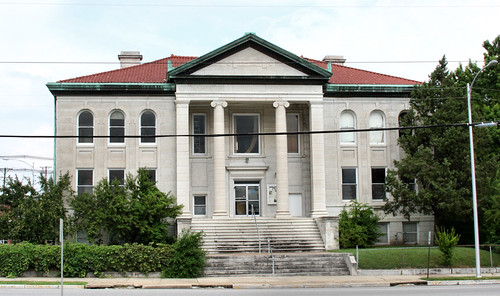
Joplin Carnegie Library

The Joplin Carnegie Library as it appears in 2010.

Joplin Carnegie Library – Then and Now

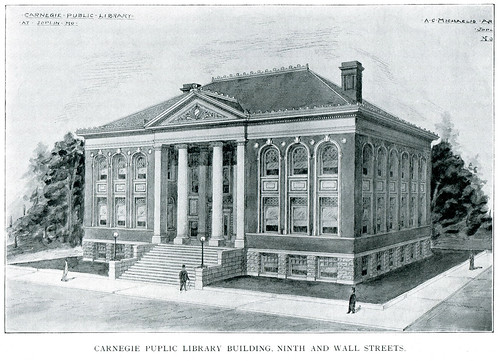
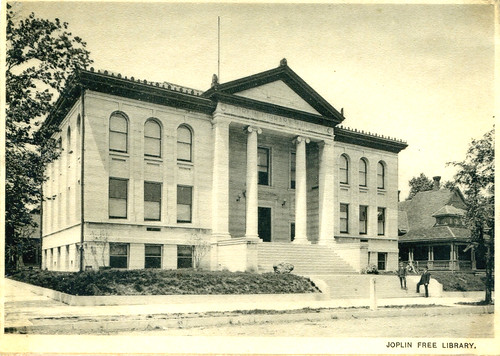
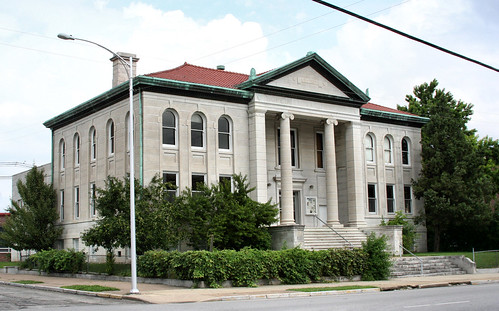
The Joplin Carnegie Library may come up in a city plan to be discussed tonight, July 6, 2010, by City Manager Mark Rohr, as part of the redevelopment plan for the city. As such, we figured to show a series of photographs (and one drawing) of the Joplin Carnegie Library.

First, we have the award winning sketch of the library by August Michaelis, a distinguished Joplin architect of the time.

August Michaelis' winning design for Joplin's Carnegie Library

August Michaelis' winning design for Joplin's Carnegie Library

Next we have a photograph not long after it was built:

The Joplin Carnegie Library

The Joplin Carnegie Library not long after completion.

Now we have the library as it appears today. It is privately owned, but in need of restoration. It is easily one of the most beautiful buildings in Joplin.

Joplin Carnegie Library

The Joplin Carnegie Library as it appears today.

Source: Historic Joplin Collection

Joplin’s Potter’s Field

“Every wooden headstone in the potter’s field bears a name — some name.  No one guarantees it to be the correct name, but the name is there just the same.”

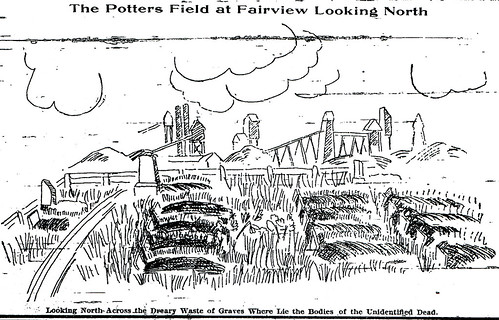
The unknown dead were the unwanted in Joplin just a few years after the turn of the century.  For those who perished in the city, without anyone present to claim their body, there were several cemeteries to be laid to rest.  For those unfortunates who died without any present to witness to their name or identity, a specific place in the earth was reserved.  It was located in Potter’s Field, a traditional name for burial spots for the poor and forgotten.  Joplin’s Potter’s Field was found at the western fringe of Joplin’s westernmost major cemetery, Fairview Cemetery.  There the dead rested beneath a landscape dominated by mines, from the mining houses to the chat piles.  It was a barren and lonely place.

The Potter's Field in Joplin, Missouri

A sketch of Joplin's Potter's Field.

The Joplin News Herald reflected on the visitors to the pauper’s cemetery, mothers in search for sons, brothers looking for brothers.  There was one exception, the News-Herald reported.  Husbands rarely, if ever, sought their wives in Joplin’s potter’s field, though it was surmised that sometimes it was husbands who sent their wives there to sleep amid the mines.

Source: Joplin News Herald